
“I’m making a fence”
The studio environment shifted dramatically for this session. The lights were dimmed and black light filled the room, transforming the space into a glowing environment. Neon materials became illuminated, paint, objects, and previously placed circular stickers on the wall began to glow.
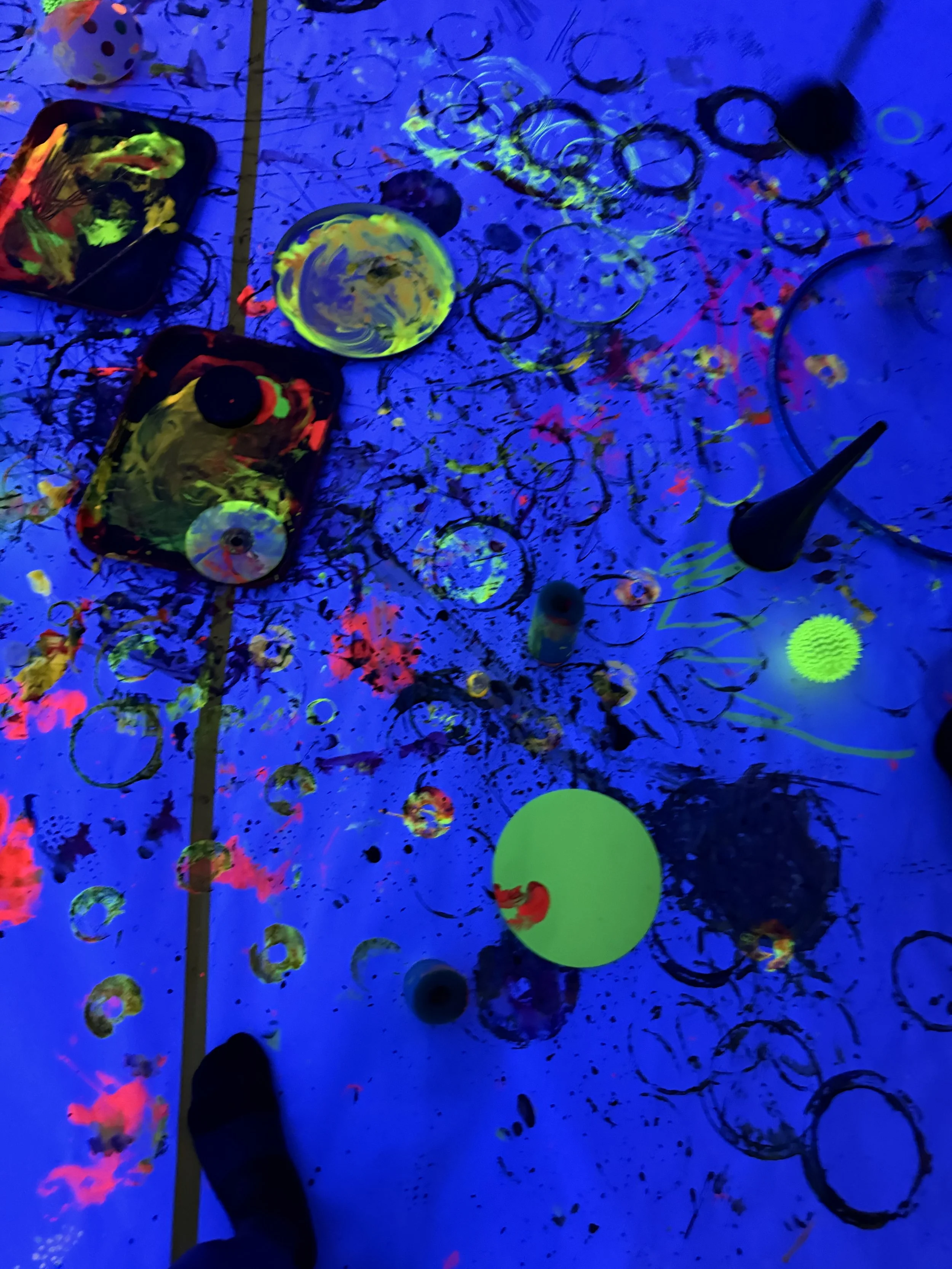
What was once a bright, airy studio became an immersive, low-light installation where circles appeared through light and color.
The Kusama-inspired corner, once subtle, now pulsed with repeating dots of light. Circles appeared not only as objects, but as glowing patterns across walls, floors, and surfaces.
On the tables, invitations were prepared: empty canvases, brushes, neon paint, glue, cut pool noodles, and cardboard rolls. Each material offered a circular form or the possibility to create one. Around the room, circular installations from previous sessions remained visible, now altered by the light, emphasizing repetition and pattern in a new way.
As the children entered, they paused, taking in the shift in environment. The glow of the room immediately drew their attention.
I invited them to join me for an experiment.
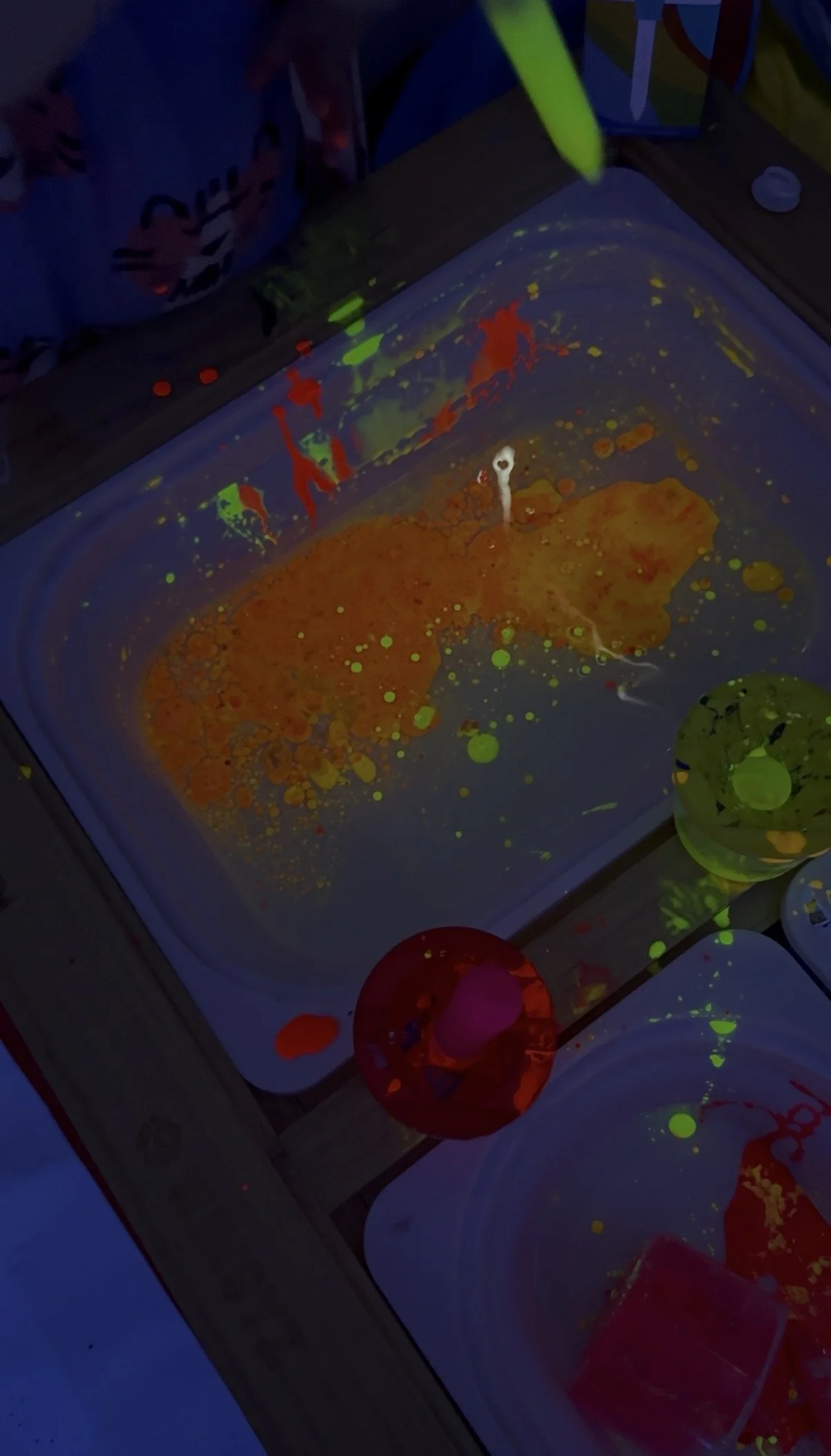
Theo, Mateo, and Dylan gathered closely as I introduced the materials: oil, milk, and neon watercolor. I poured the oil in the bin and mixed the milk wi each each cup of watercolor. After putting on their smocks, the children used droppers to release color into the bins.
As the paint entered the milk, it began to spread and move. When it met the oil, the colors resisted, separating and swirling in unexpected ways. The surface shifted continuously, forming layered, glowing patterns.
The children watched closely, adding more drops, observing how each action changed the movement of color. With each addition, the containers transformed, becoming pools of moving light, shifting between separation and blending.
At the table, children were introduced to a second invitation using neon paint, glue, and circular materials such as pool noodles and cardboard rolls. There was no single direction, only an invitation to explore.
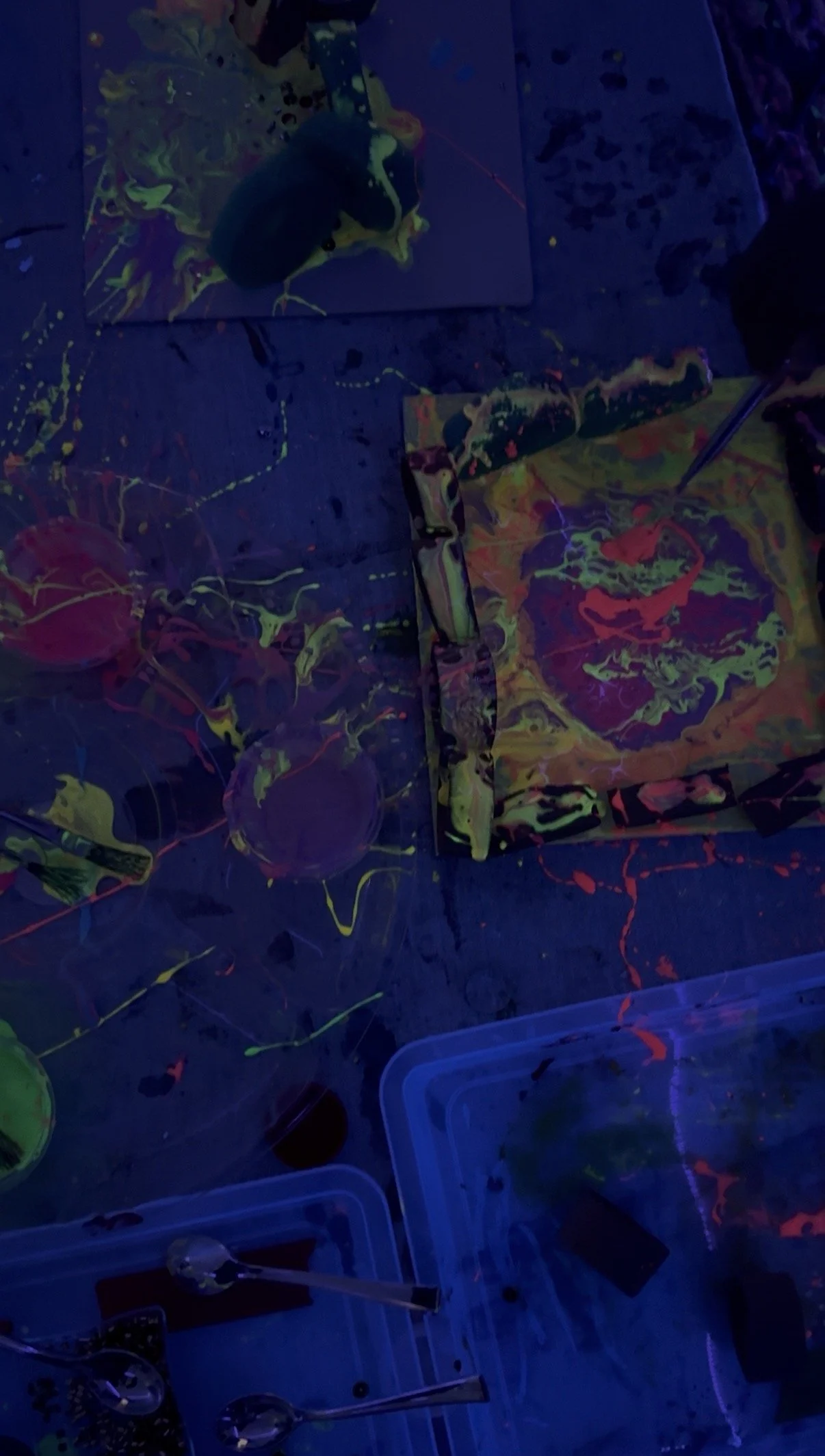
Mateo arranged circular objects around the edge of his canvas, forming a boundary, and stated, “I’m making a square.” Within the space, he added layers of paint, observing how colors blended and marbled together.
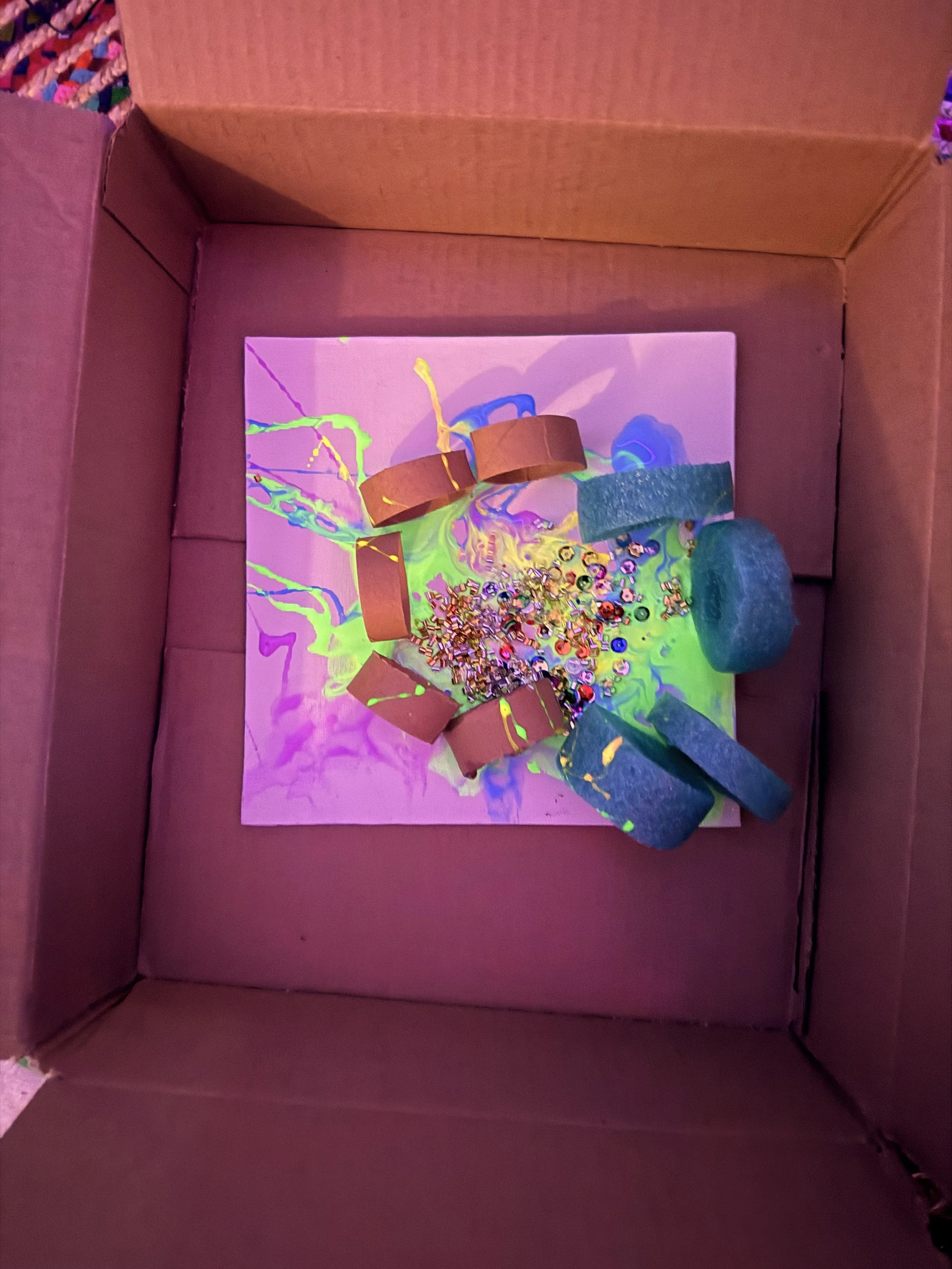
Theo described his work as a “fence,” placing materials in a circular formation and filling the center with paint and layered materials.
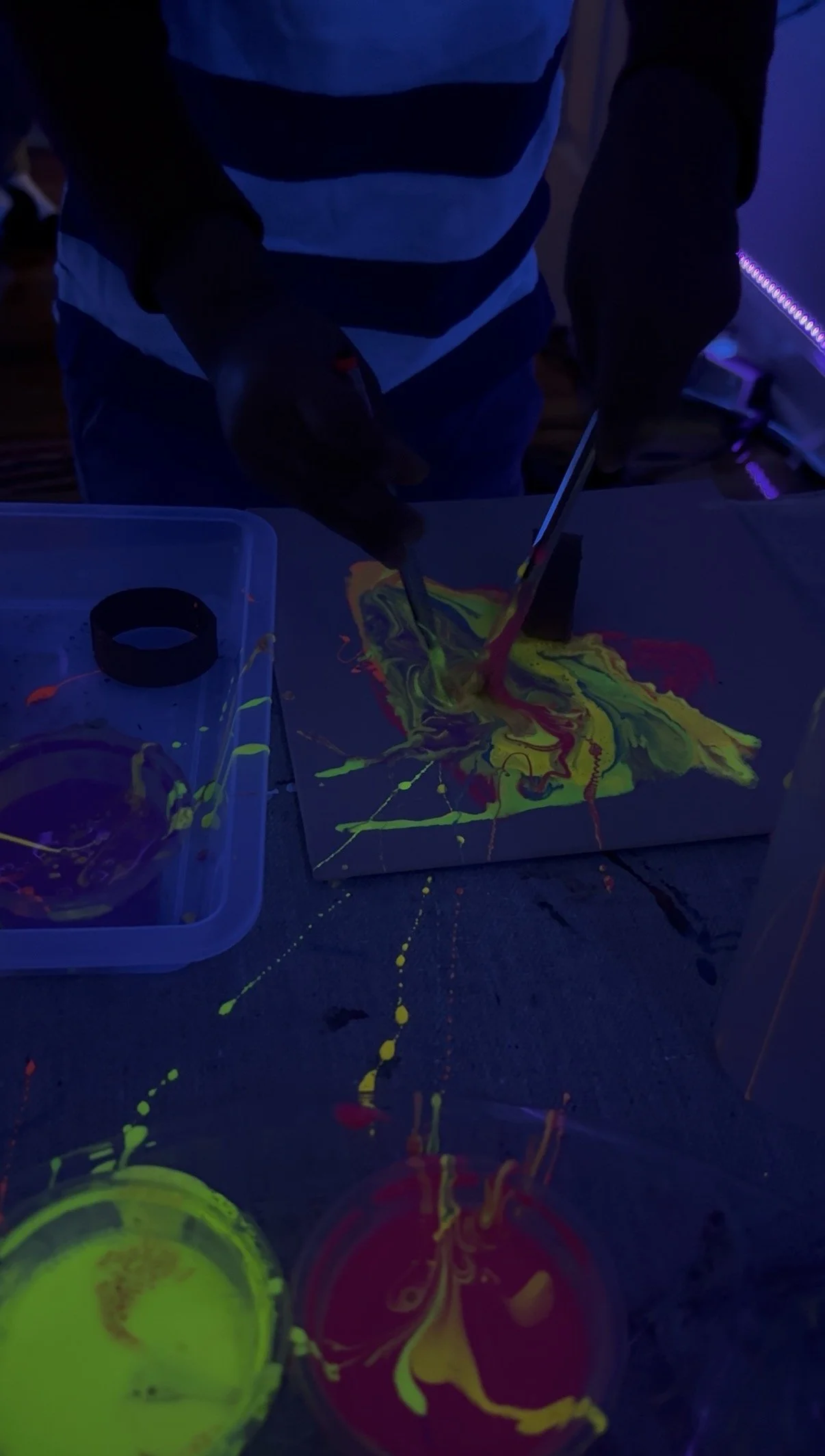
Dylan used two brushes simultaneously, spreading paint in circular motions before adding materials and continuing to mix colors across the surface.
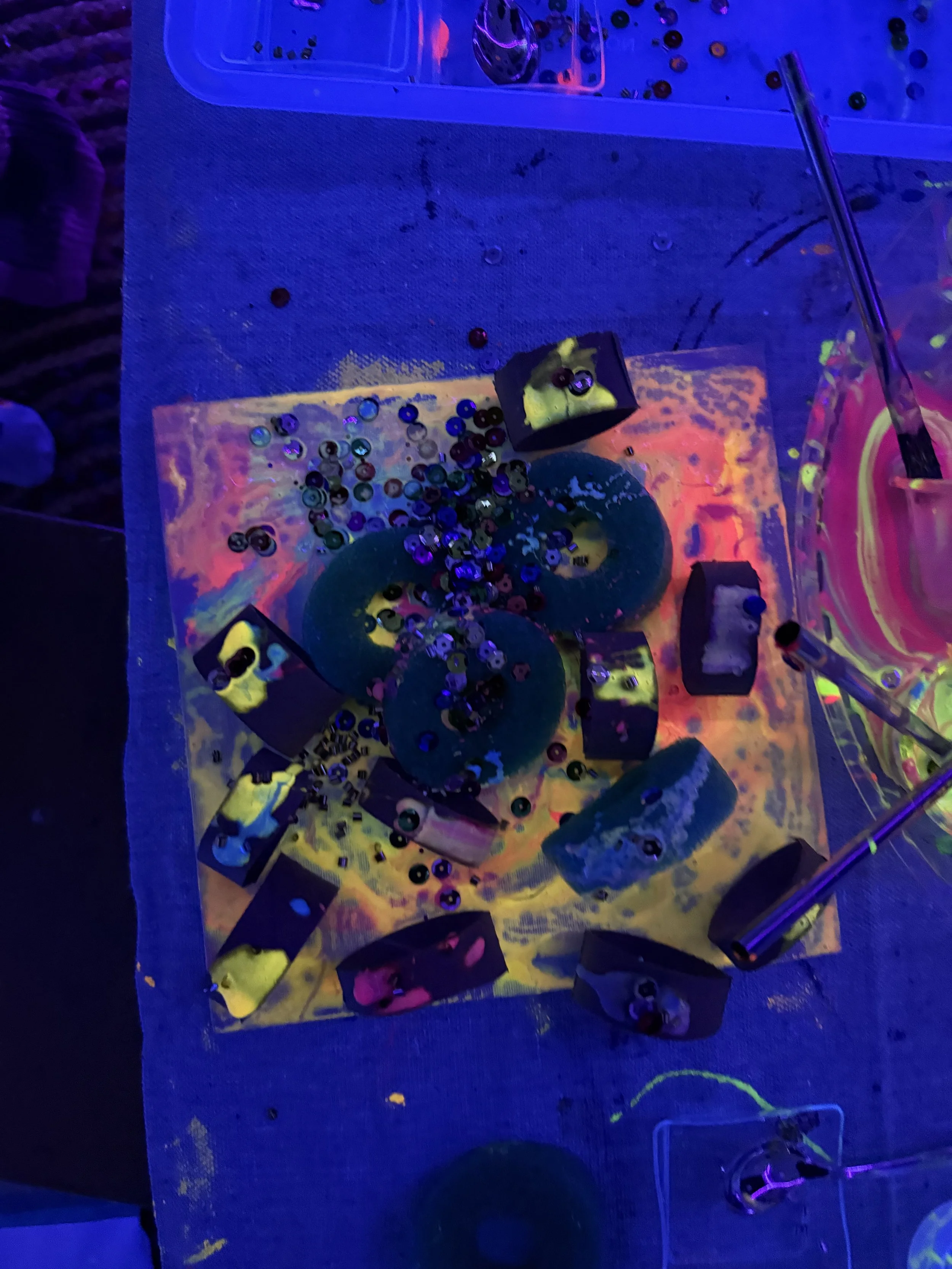
Harper covered her entire canvas with paint before arranging the rolls across the surface and adding additional materials on top.
Each child approached the materials differently, testing placement, layering, and movement, but the outcomes varied based on their decisions, movements, and interpretations.
After working at the table, children moved back into the larger studio space. The glowing environment invited continued experimentation.
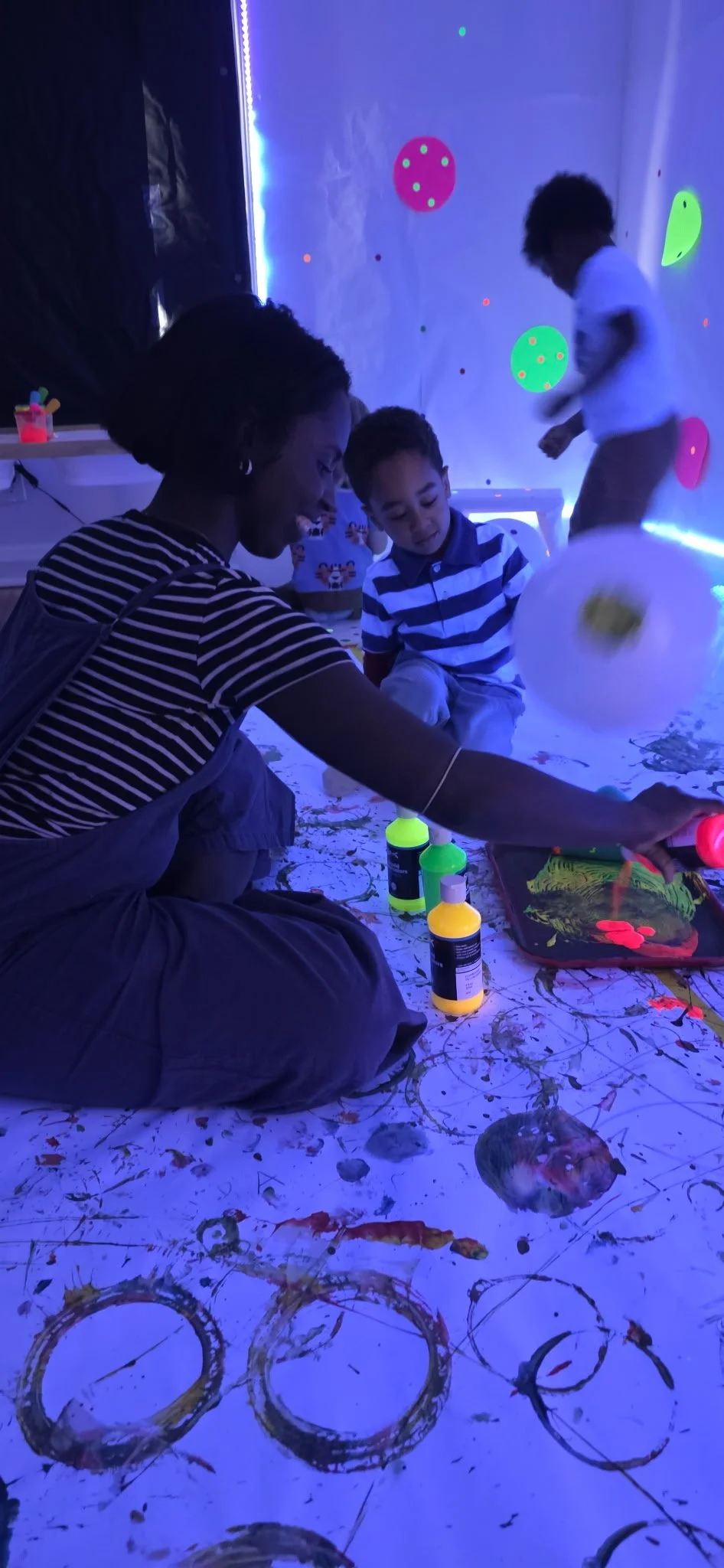
The children interacted with the Kusama-inspired installation by adding stickers to balloons and surfaces.
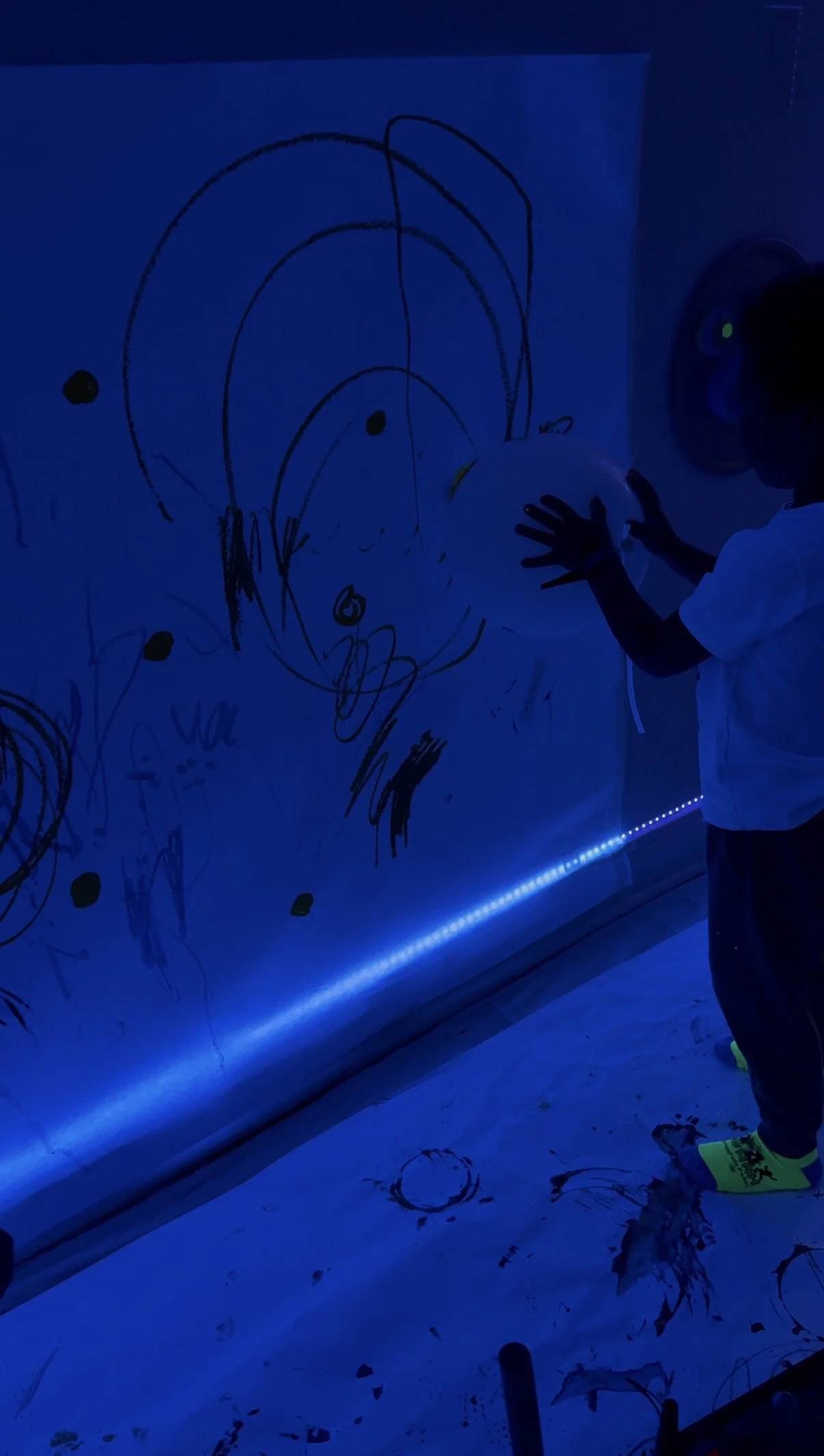
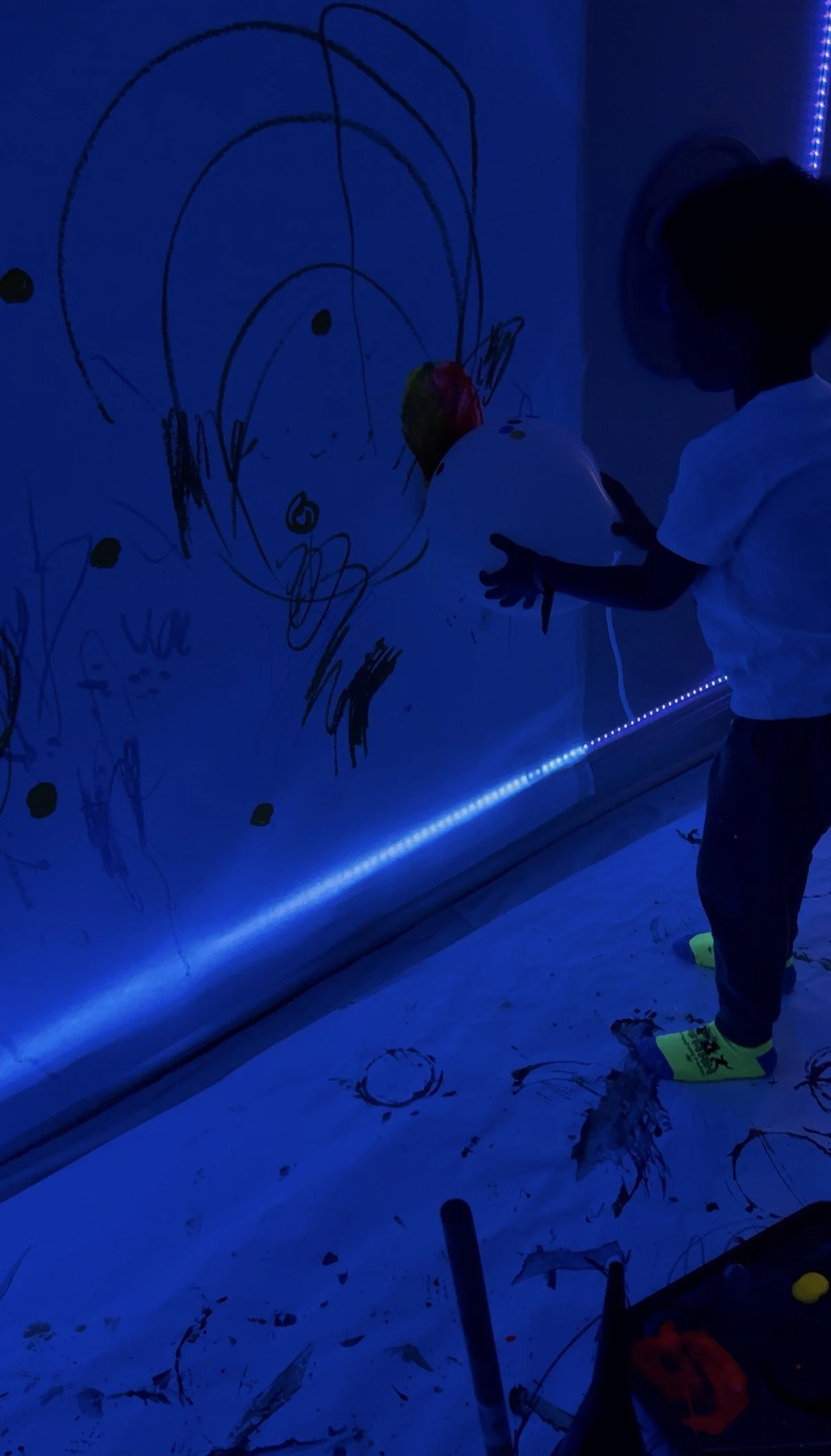
Mateo dipped a balloon into paint and pressed it against the wall, slowly lifting and dragging it to create glowing prints.
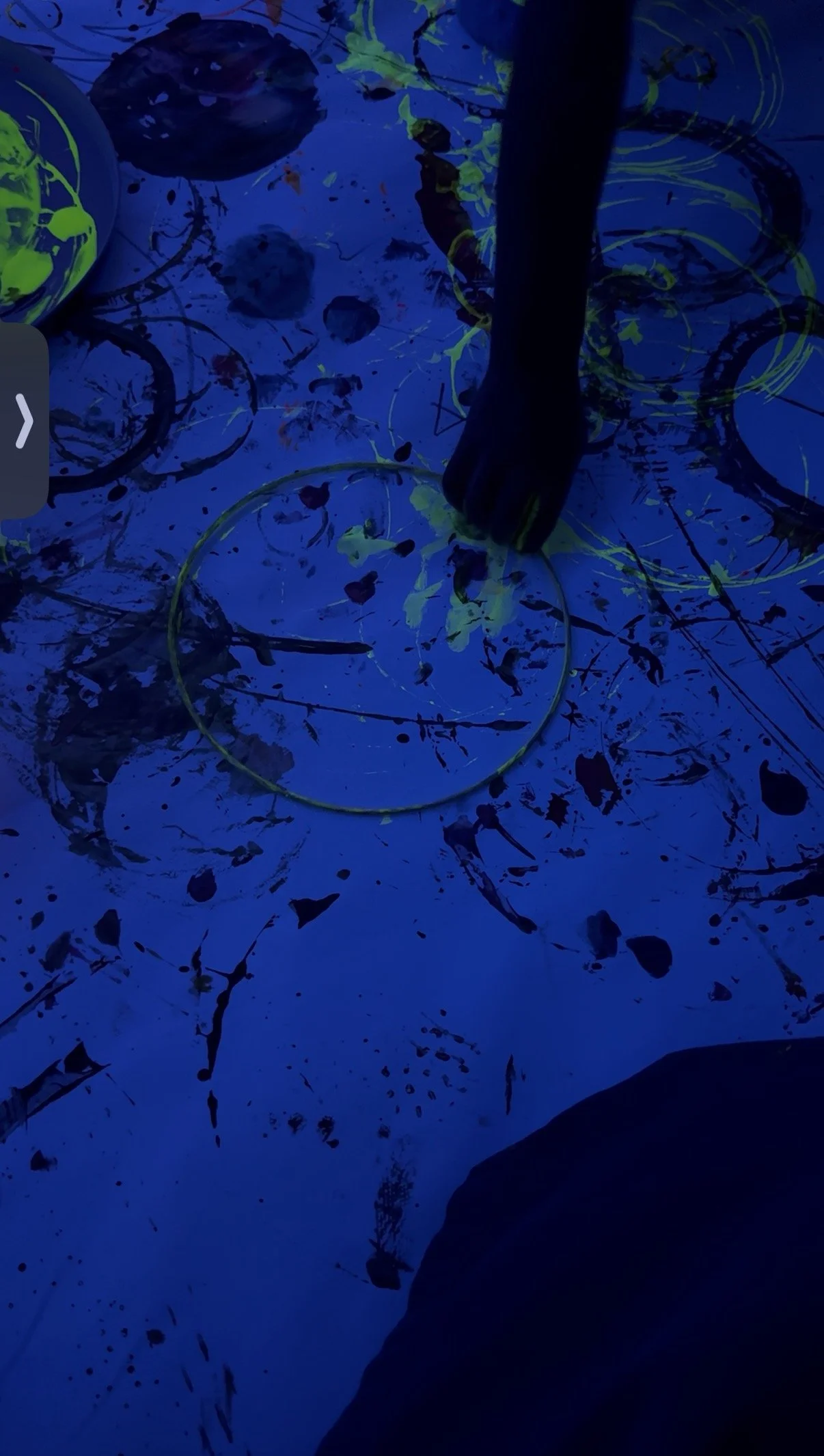
He also spun a metal ring, observing how the paint transferred through movement.
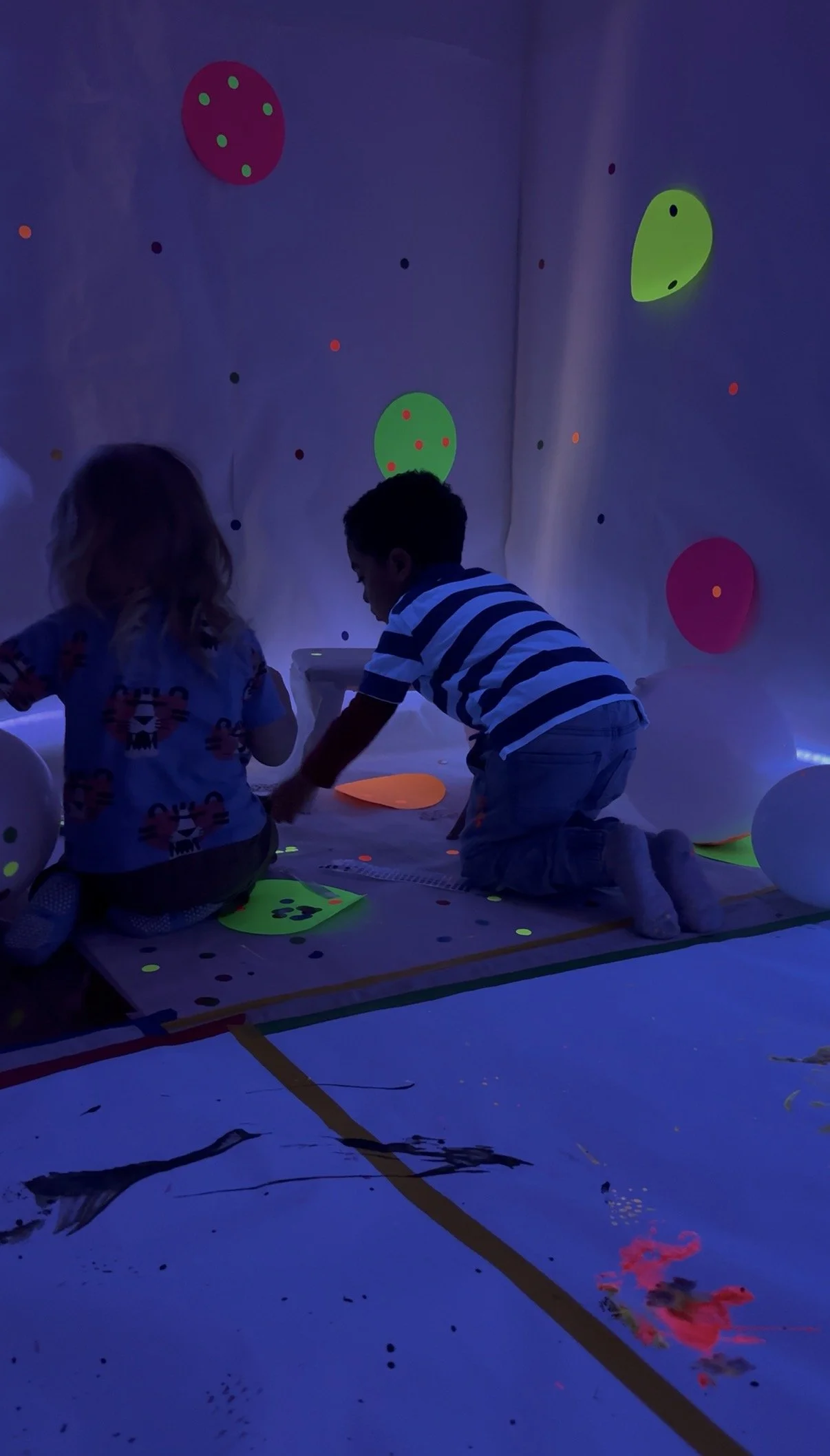
Theo and Dylan collaborated, adding stickers to both the wall and balloons.
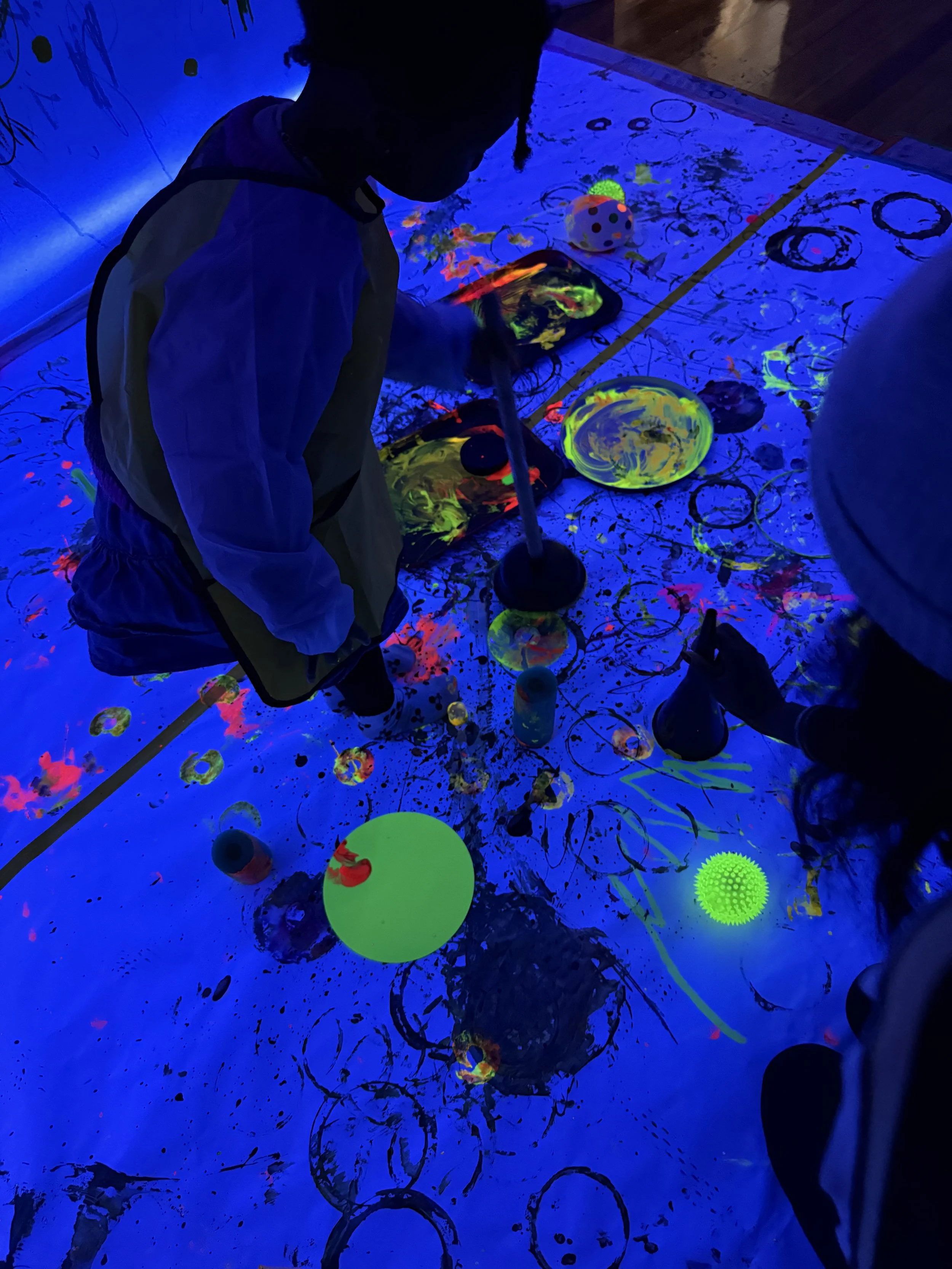
Harper experimented with tools such as a plunger and funnel to create prints on the floor, then used paint sticks to add marks to the balloon surfaces.
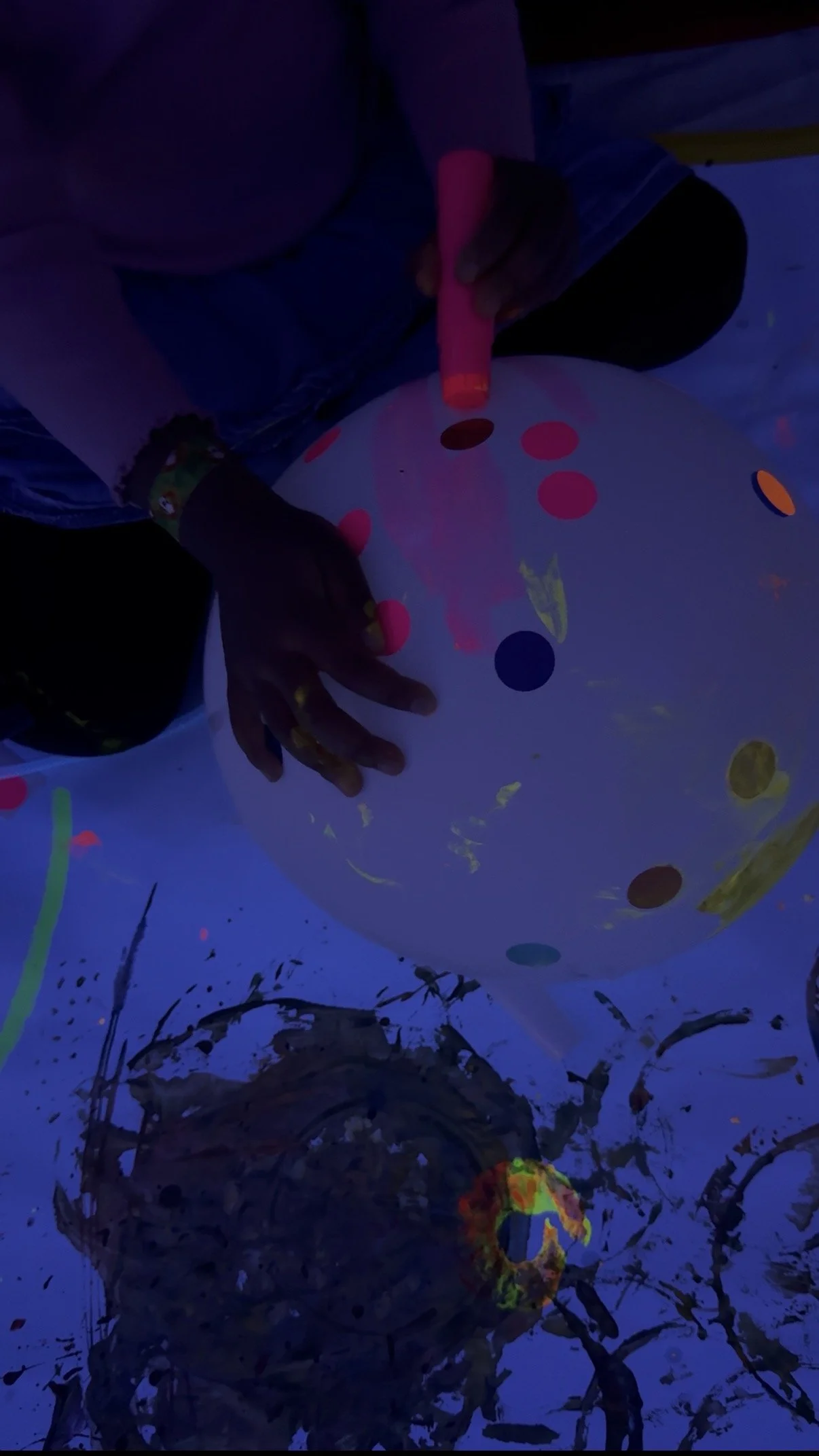
At the end of our session, we read Circles by Yusuke Yonezu. The book uses simple, bold illustrations to show how circles can transform into familiar objects, such as animals, fruits, and everyday items. Each page invites children to see how a single shape can change depending on how it is viewed and combined. The story reinforces the idea that circles are not just shapes, but building blocks for creativity, imagination, and recognition.
During this Circle-ish exploration, children engaged in a range of interconnected learning experiences through hands-on interaction with materials, light, and movement. As they experimented with oil, milk, and neon paint, they observed how substances interact, noticing separation, movement, and changes in color, supporting early scientific thinking and cause-and-effect understanding. Through spinning rings, pressing balloons, and layering paint, they explored motion, force, and rotation, while also developing fine motor control and coordination through actions such as squeezing droppers, rotating wrists, and placing materials with intention. At the table, children made decisions about arrangement, scale, and composition as they organized circular materials, demonstrating spatial reasoning and early mathematical thinking. Their work also reflected symbolic thinking, as materials were used to represent ideas such as fences, squares, and boundaries. Across the environment, children moved between individual and collaborative exploration, building on each other’s ideas and extending their investigations across surfaces. Overall, the experience supported scientific inquiry, artistic expression, problem-solving, and independent decision-making within a process-oriented environment.