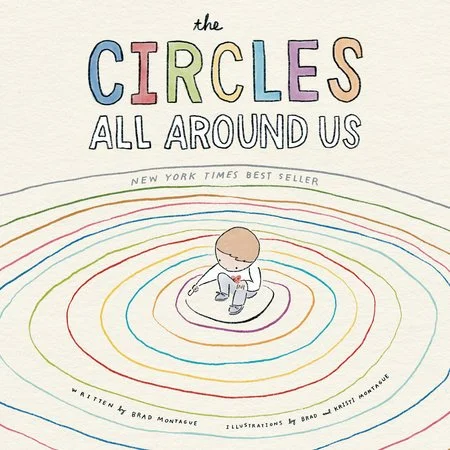
“It Spins!”
As children entered the studio, previously installed circular materials remained available for continued investigation. Noah entered the space and observed as Mateo demonstrated prior work. Mateo showed how he had inserted foam pool noodle rings into a plastic link chain and reattached the extended chain to the suspended sculpture. Noah stood nearby and watched the connection process.
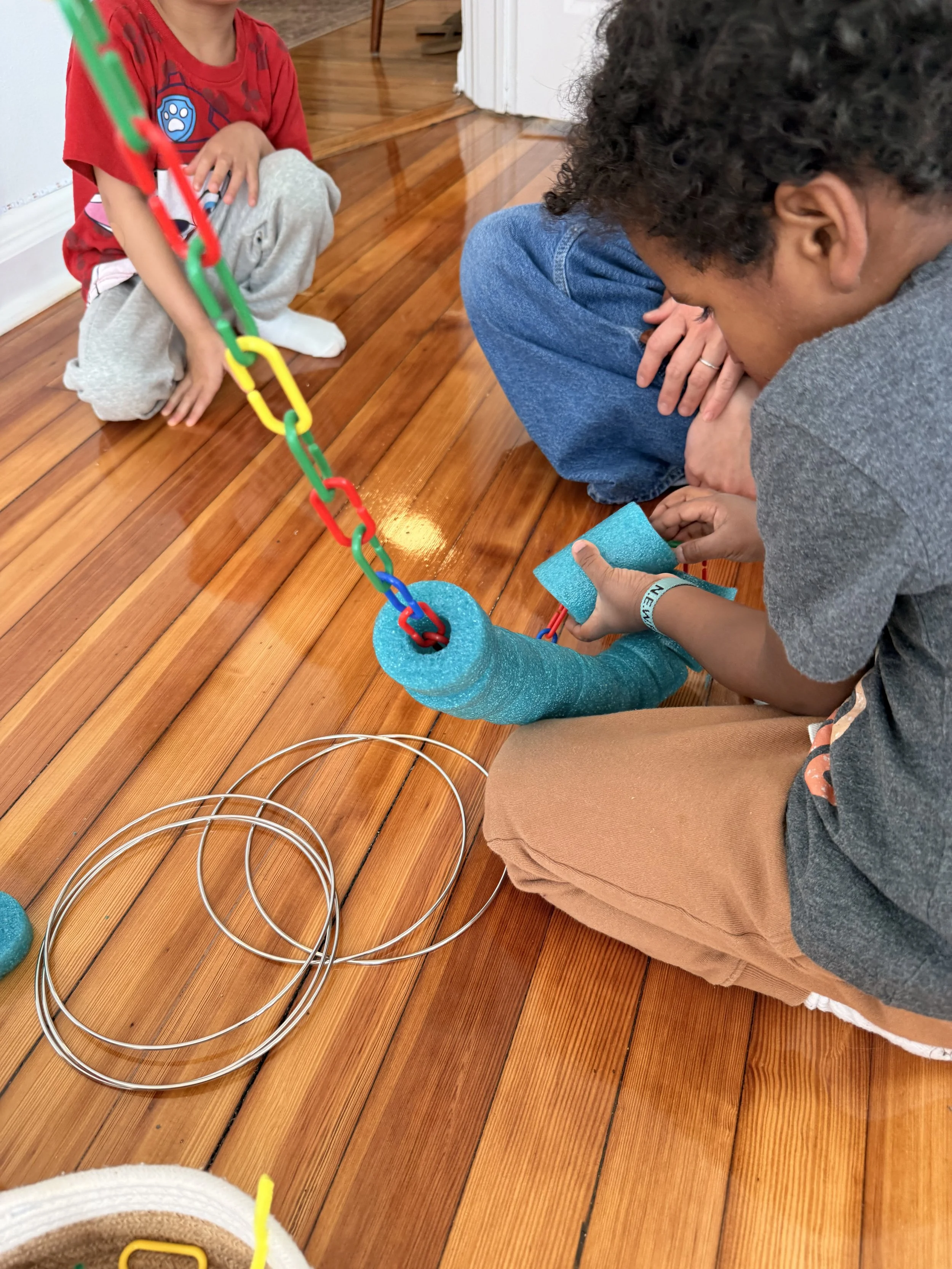
Mateo then placed two macramé metal rings onto his arm and examined them like bracelets. Mateo and Noah’s mother slid the rings back and forth between their arms, testing their size and weight. Mateo picked up a hula hoop from the floor and initiated rotational movement by spinning it rapidly. “It spins!,” he exclaimed. The children observed the speed and duration of its rotation.
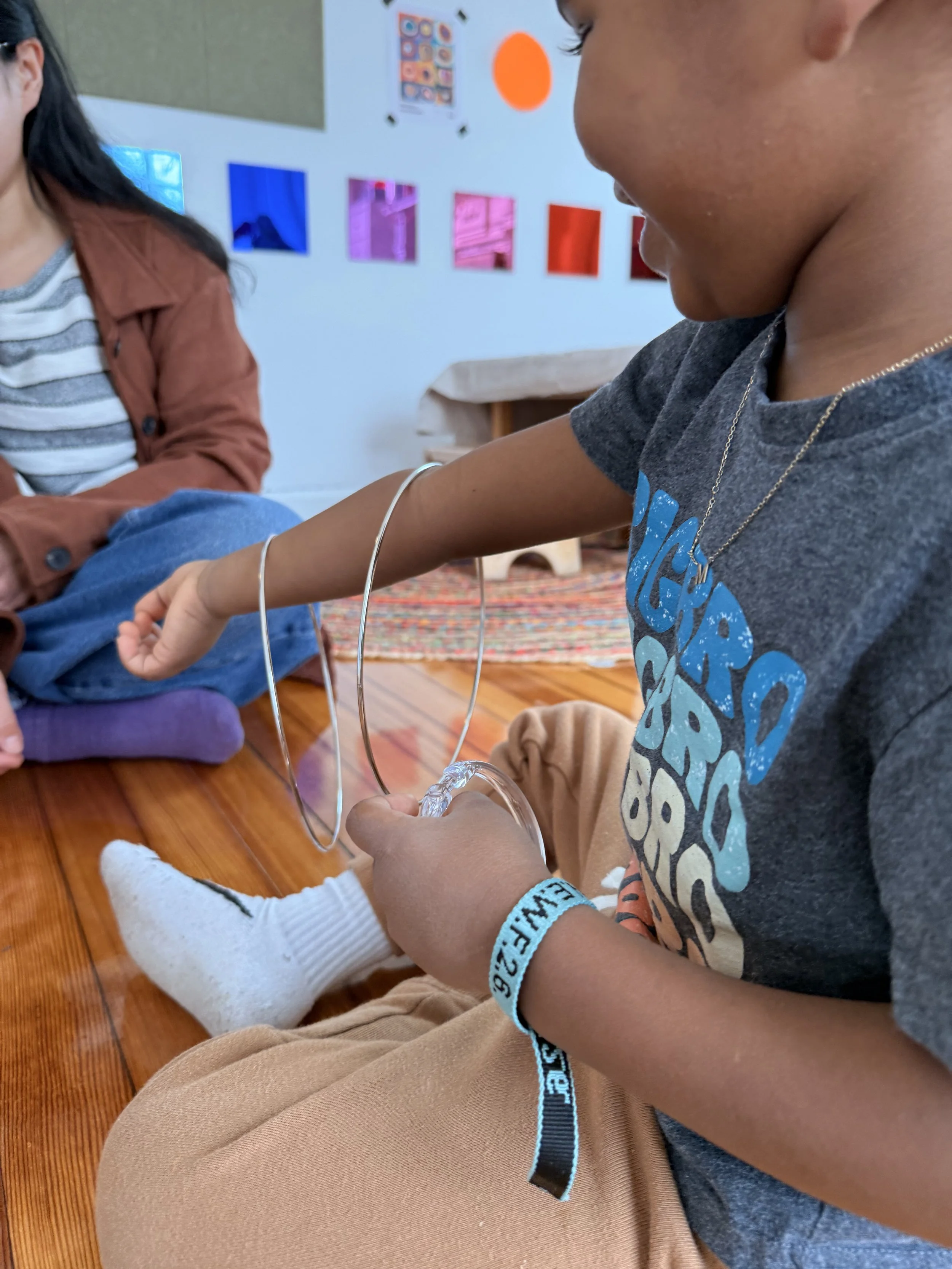
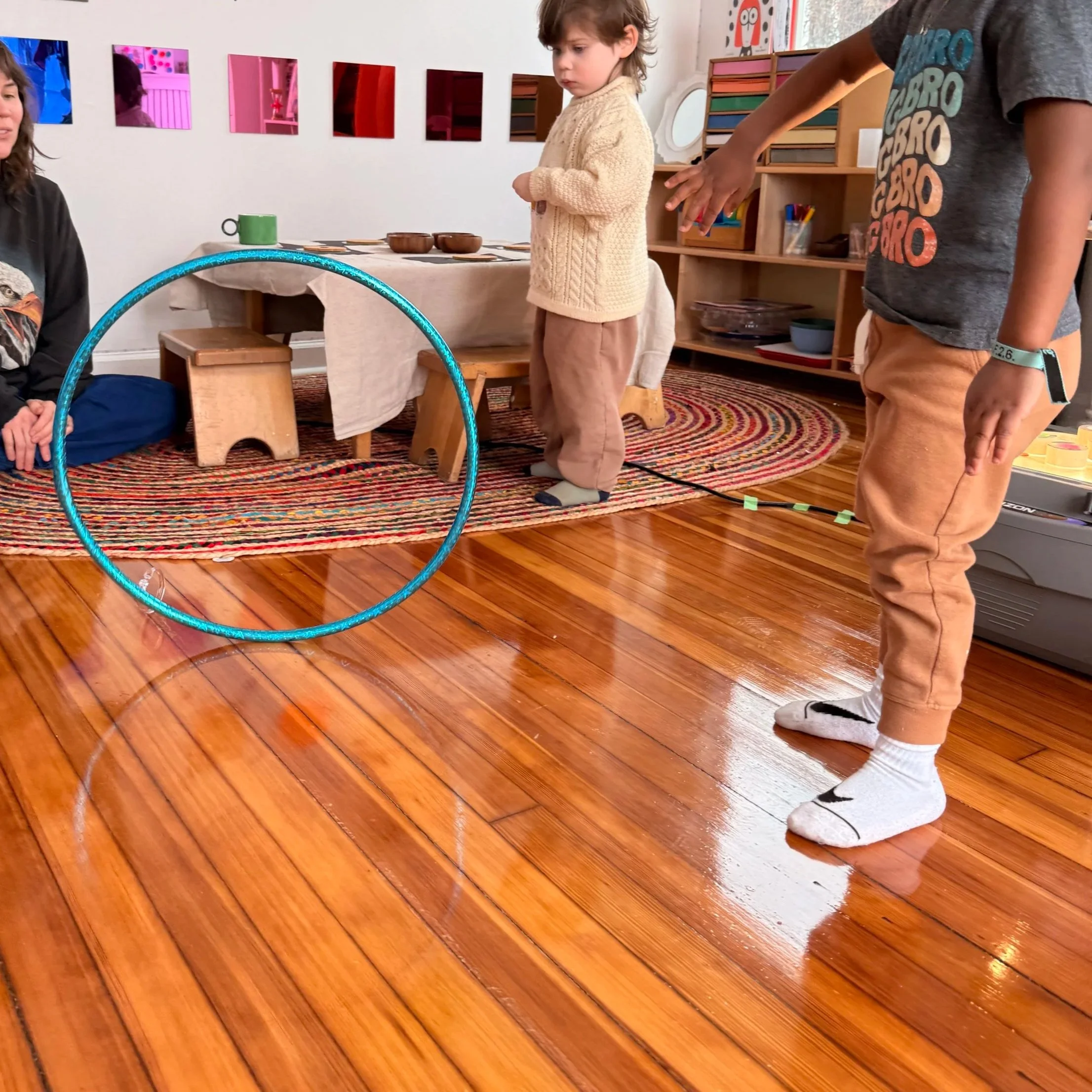
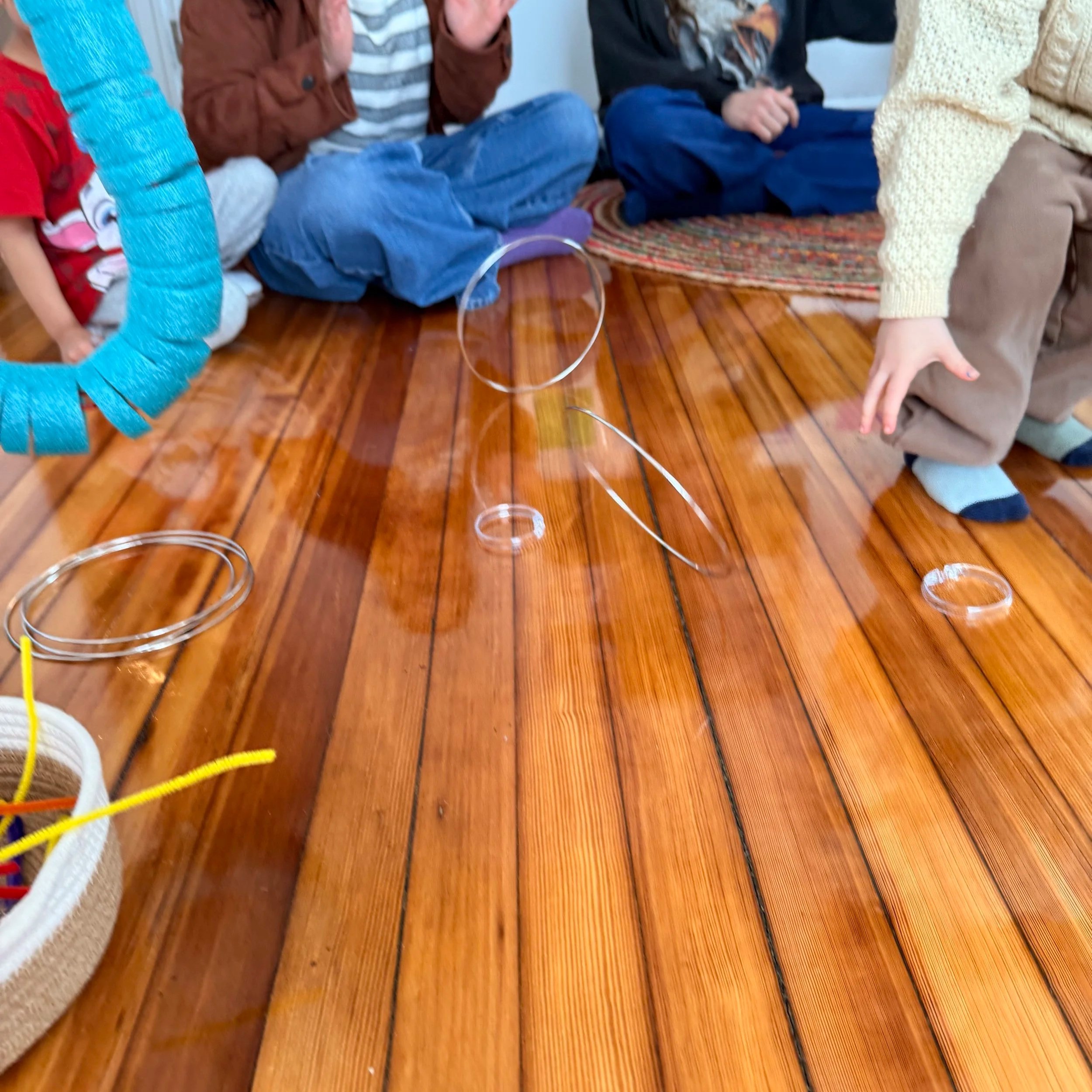
Aksel selected a shower curtain ring and experimented with spinning it before transitioning to a larger hula hoop. Noah spun a metal ring with support from his mother, observing the speed of its motion.
A large sheet of white paper was taped to the floor. Two trays containing red, blue, and yellow paint were placed beside it. Children were invited to dip metal rings into paint and rotate them across the paper surface.
Mateo began immediately, pressing the ring into paint and spinning it along the paper. The rotational movement produced circular marks that varied in thickness and density depending on pressure and speed. Aksel joined him, layering additional circular prints. Theo observed the process and provided verbal commentary while watching the marks accumulate.
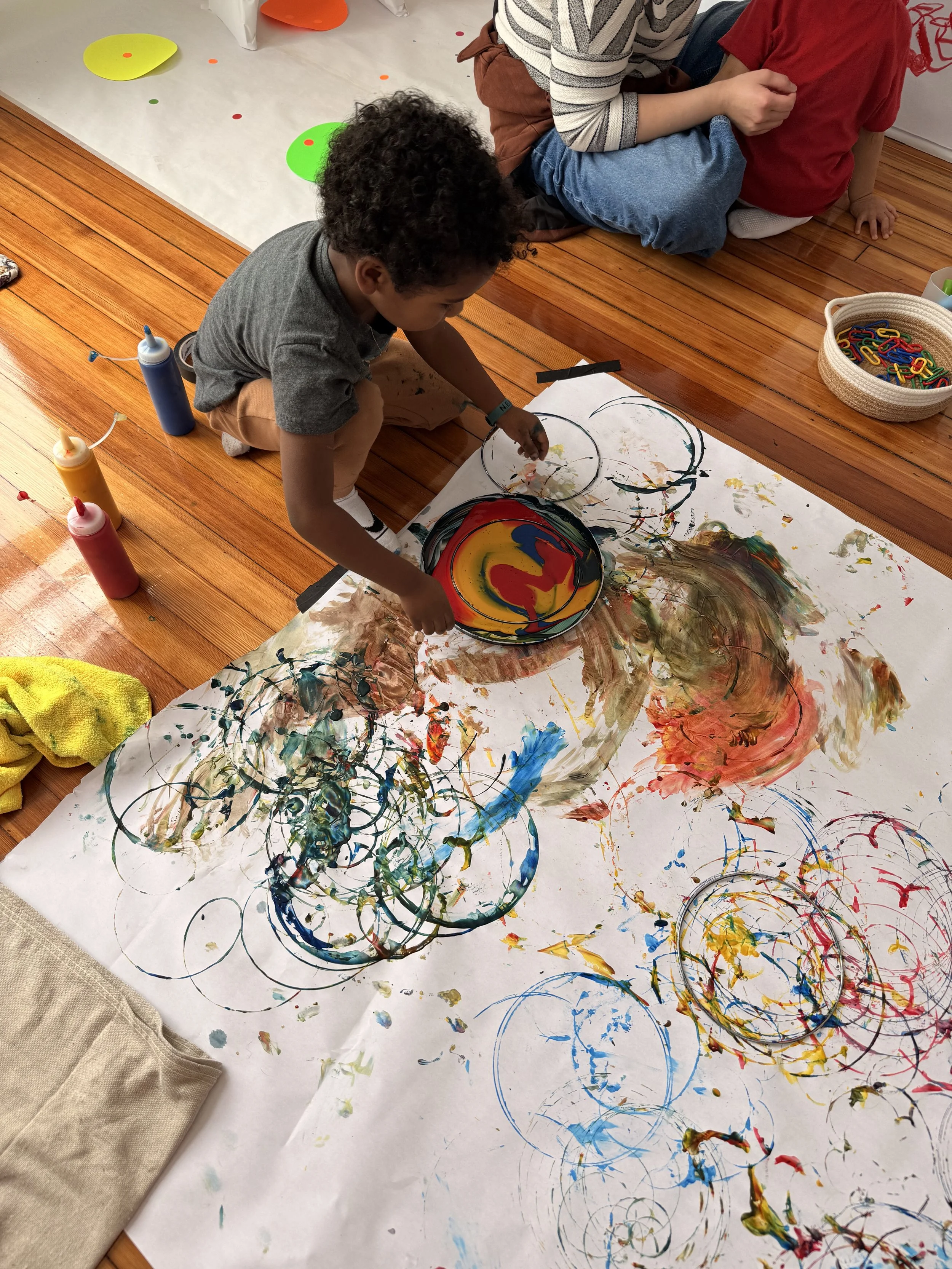
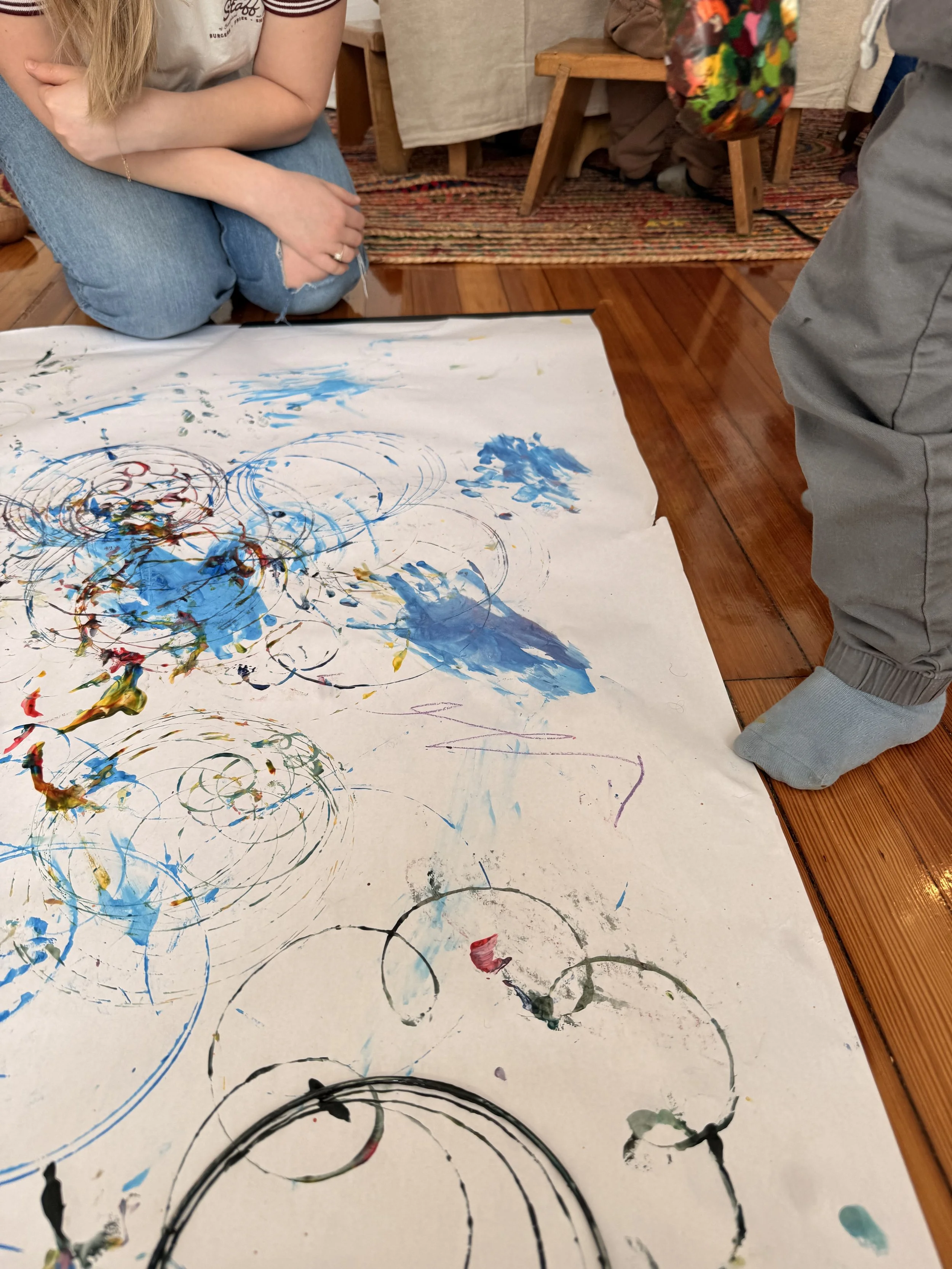
The activity required coordinated arm movement, wrist rotation, and controlled force to sustain circular motion.
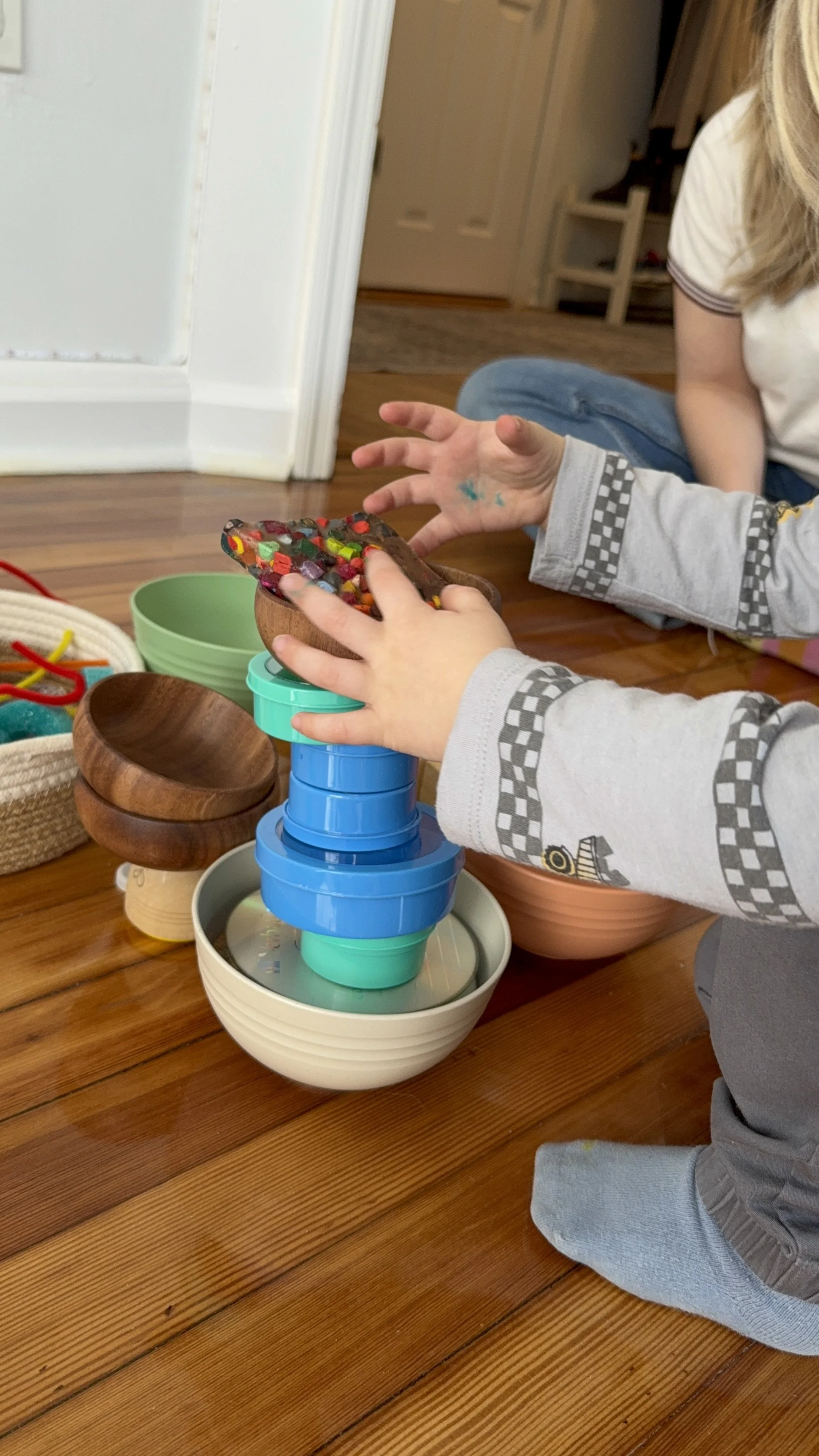
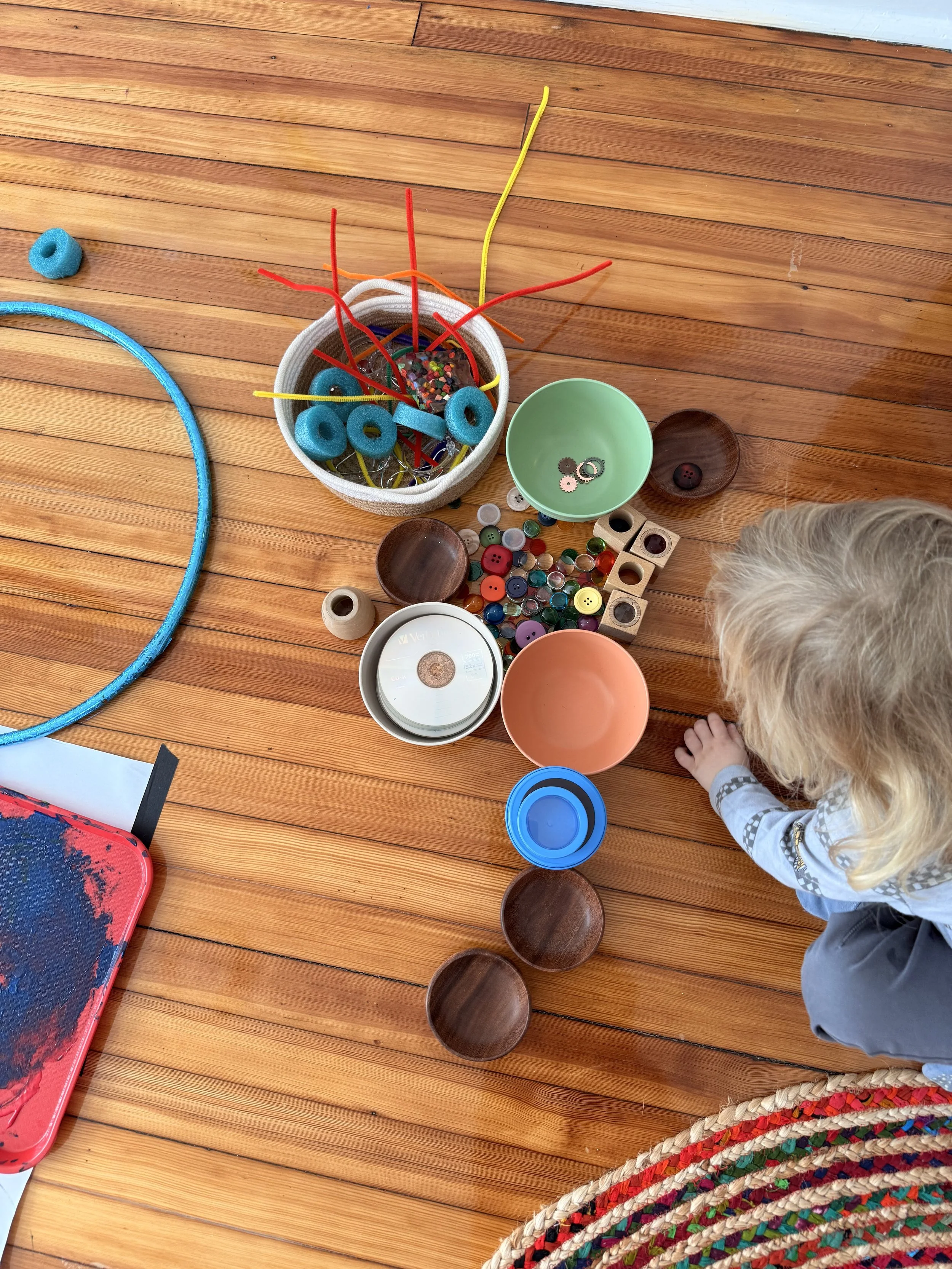
Theo later gathered materials to construct what he described as “a volcano.” He arranged counting chips, glass gems, and buttons in a central area and identified them as lava. Bowls were placed around the structure. He demonstrated how his mama might move around the lava without stepping into it by placing his fingers in and out of the bowls, illustrating spatial boundaries and movement pathways.
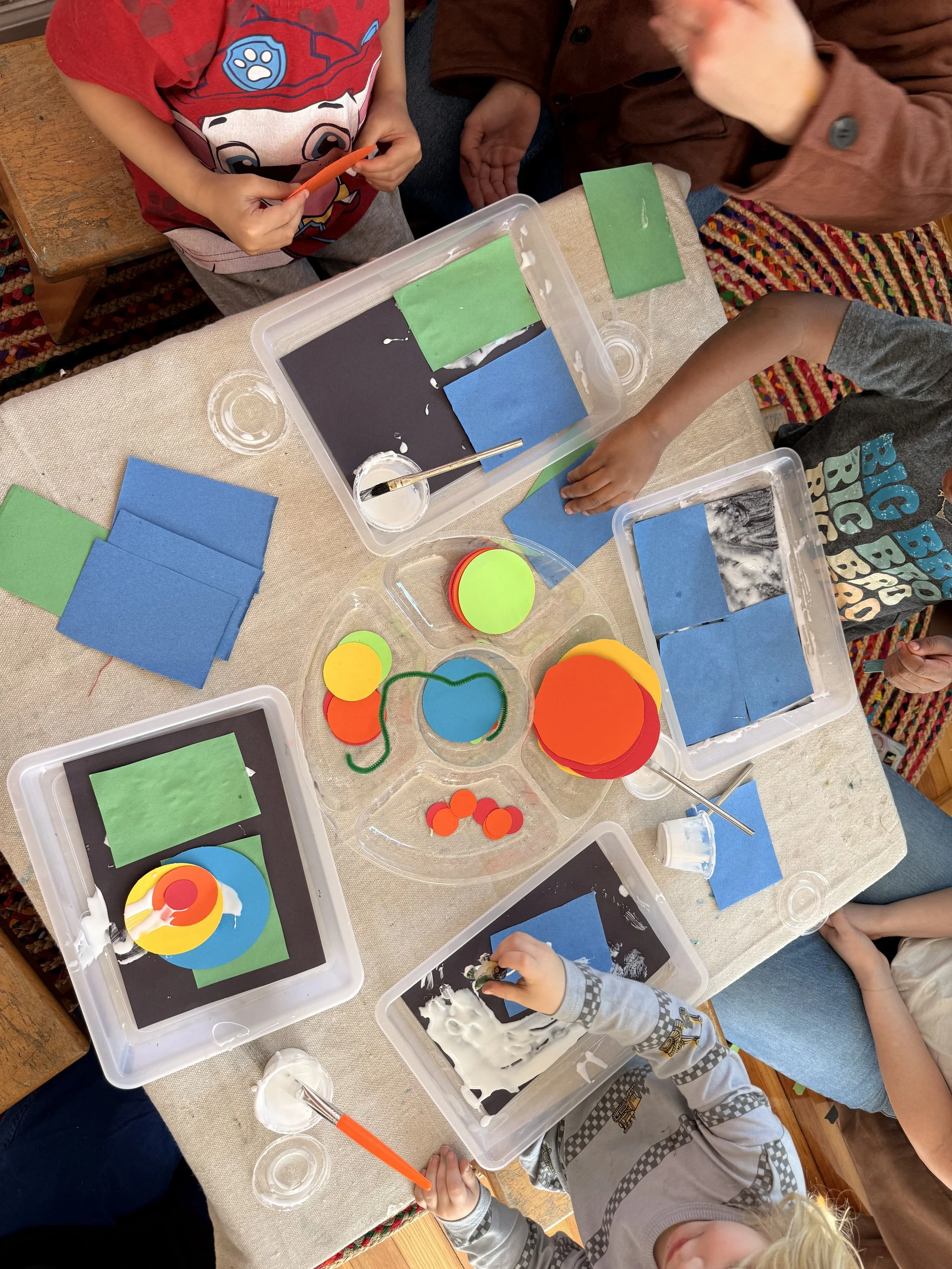
At the table, children were provided with circular paper cutouts in varying sizes, glue, and square paper bases. With adult support as needed, each child arranged circles from largest to smallest, experimenting with placement, overlap, and color relationships inspired by Wassily Kandinsky.
The session concluded with a reading of The Circles Around Us. The book explores the idea of circles beyond physical shape, extending into social and relational contexts. As the story described different types of circles, family circles, community circles, and friendship circles, children were invited to consider how circles can represent inclusion and belonging.