“We’re making it beautiful.”
How many ways can a child explore a pumpkin before it becomes something entirely new?
What happens when we move beyond simply observing an object and begin transforming it?
Over the past few days, our pumpkins have taken on many different roles. They have been objects to discover, compare, draw, roll, and stack. As the children’s curiosity continued to unfold, we wondered what other possibilities these familiar autumn objects might offer.
Building upon our previous sensory explorations, we prepared an environment that invited the children to investigate pumpkins through water, color, tools, movement, and transparent materials. Rather than introducing a predetermined outcome, we allowed the materials to suggest possibilities and the children to decide where their curiosity would lead.
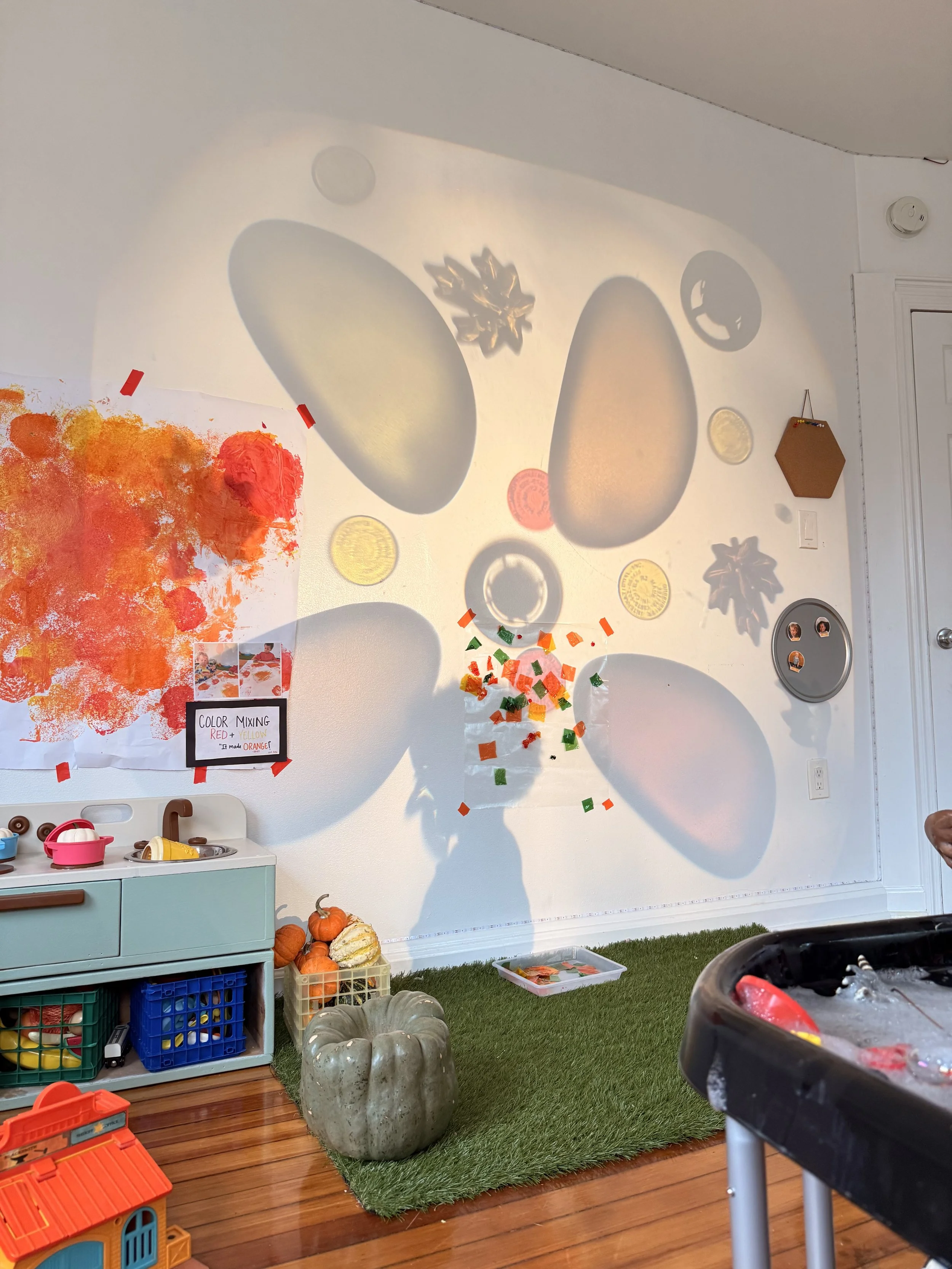
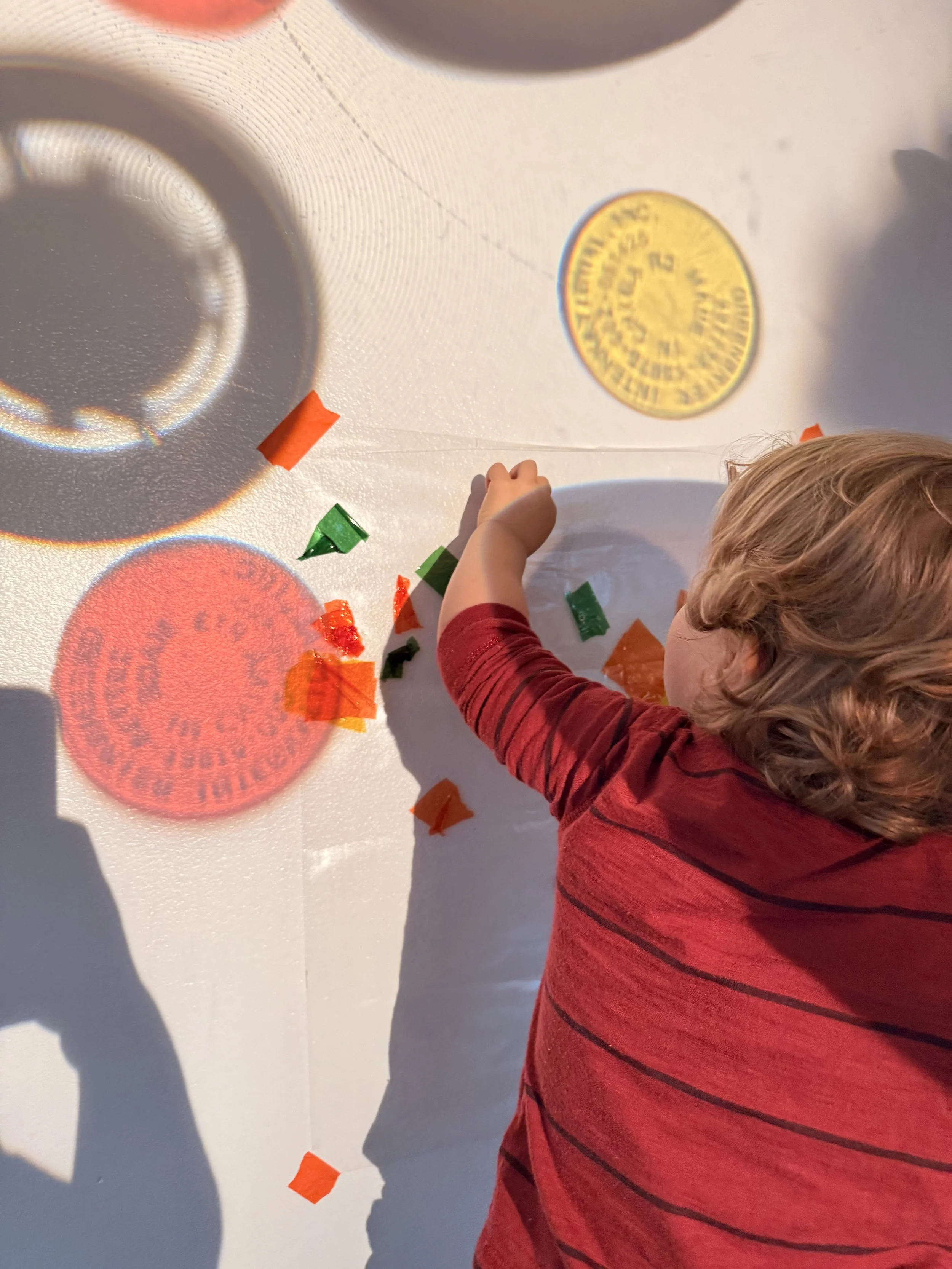
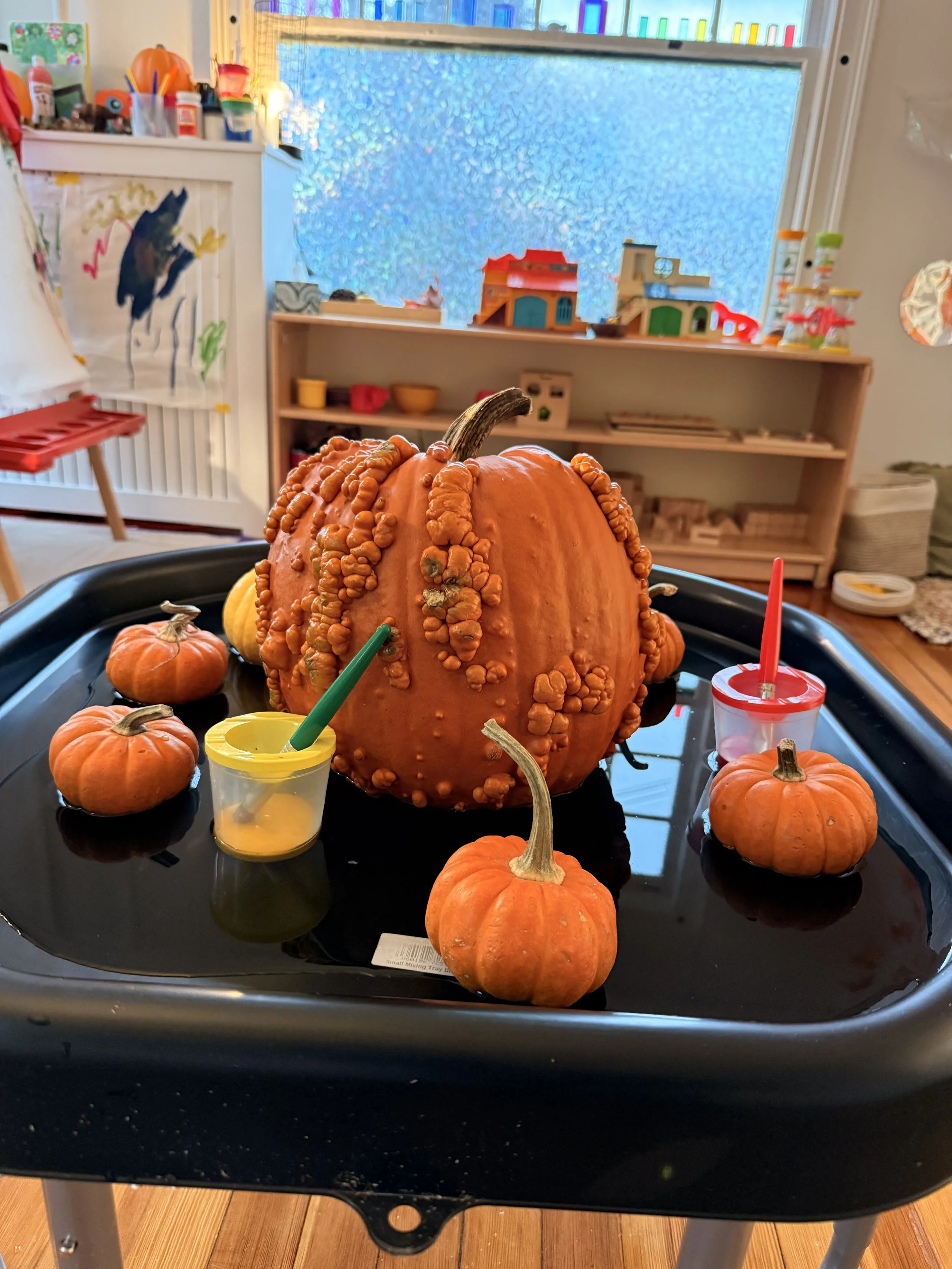
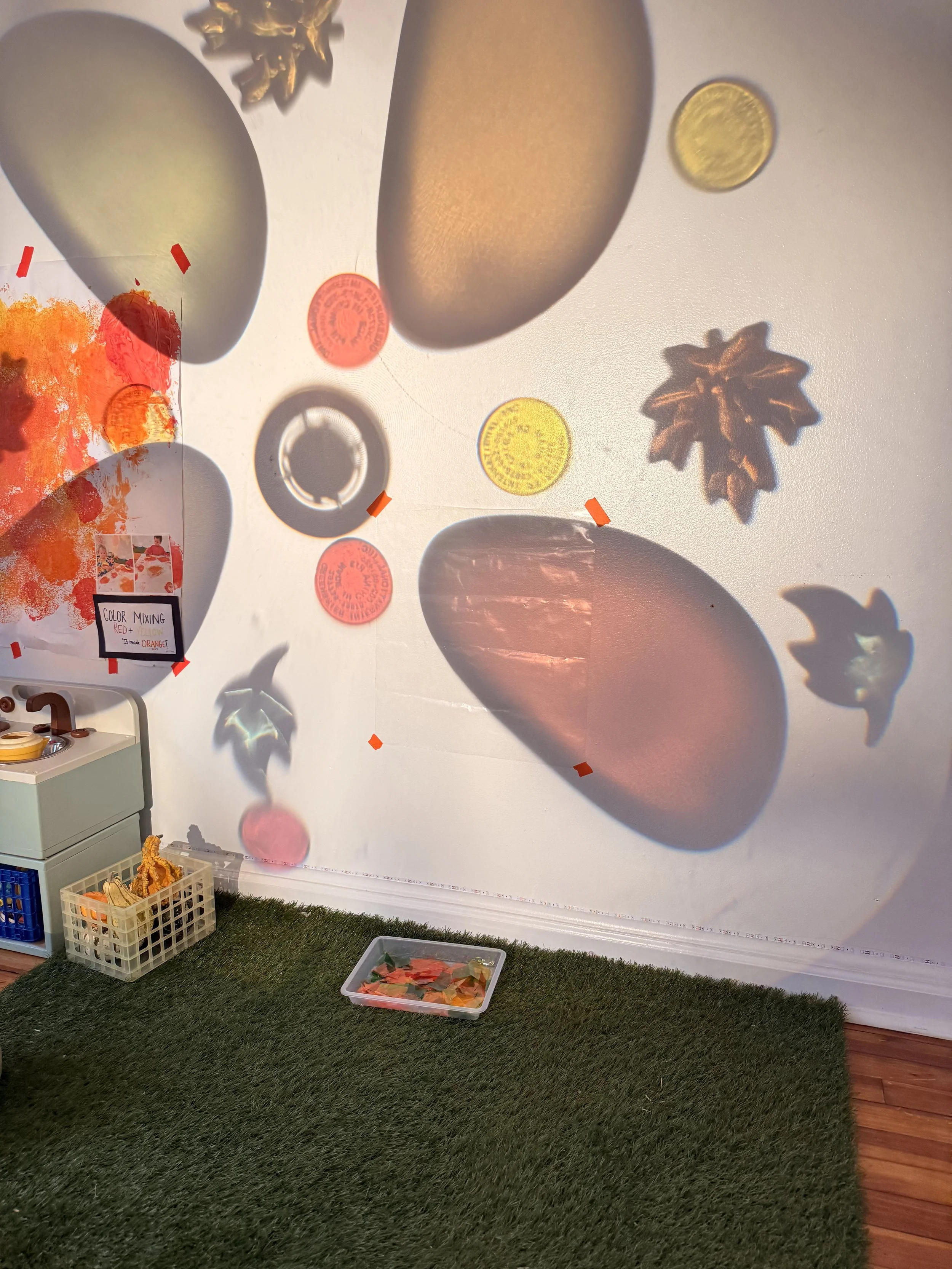
Our atelier was thoughtfully arranged with several invitations to explore. On the Tuff tray, the hay from our previous investigations had been replaced with water. Pumpkins rested in and around the water, accompanied by cups of blue, red, and yellow paint and paintbrushes. At the table, a large orange pumpkin was surrounded by colorful tape, scissors, golf tees, and hammers. These materials offered opportunities to explore how tools could be used to alter the pumpkin’s surface. On the wall, a large sheet of transparent contact paper was secured with tape, its sticky surface exposed. Nearby, a tray of translucent cellophane sheets in red, orange, yellow, and green invited the children to experiment with color, light, and composition.
Each area presented a different possibility, yet they were connected by a shared interest: discovering what could happen when familiar materials were used in unfamiliar ways.
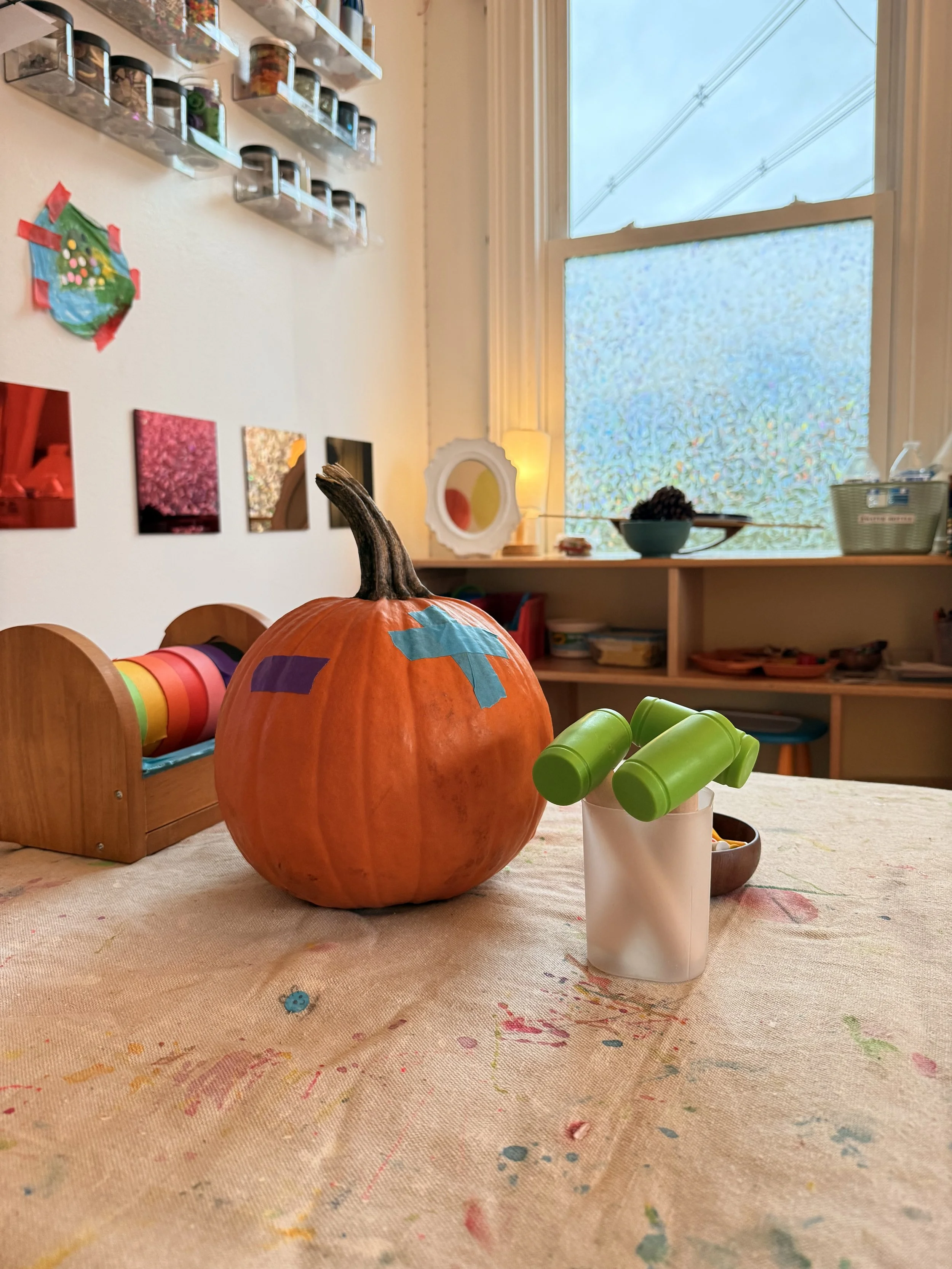
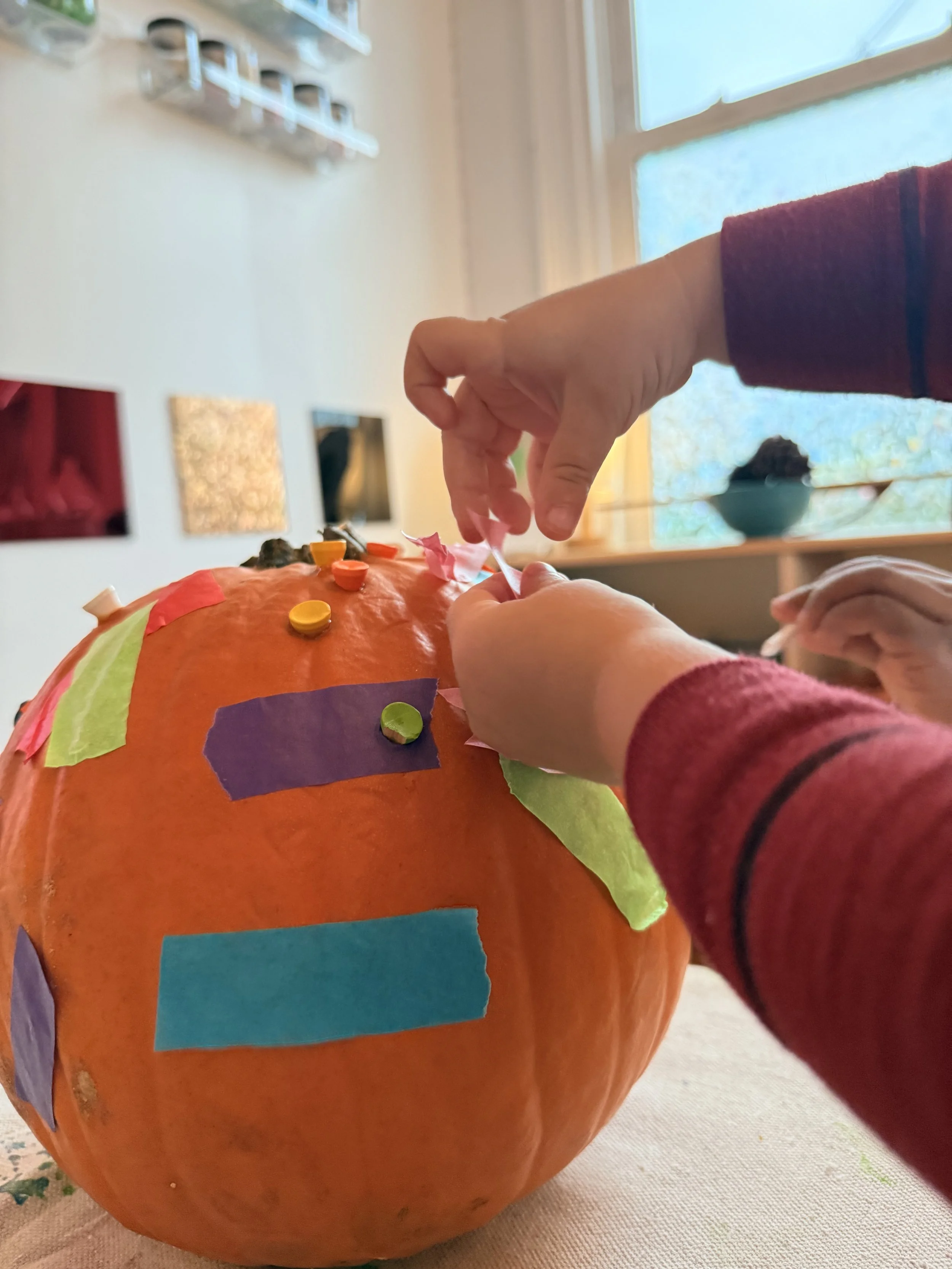
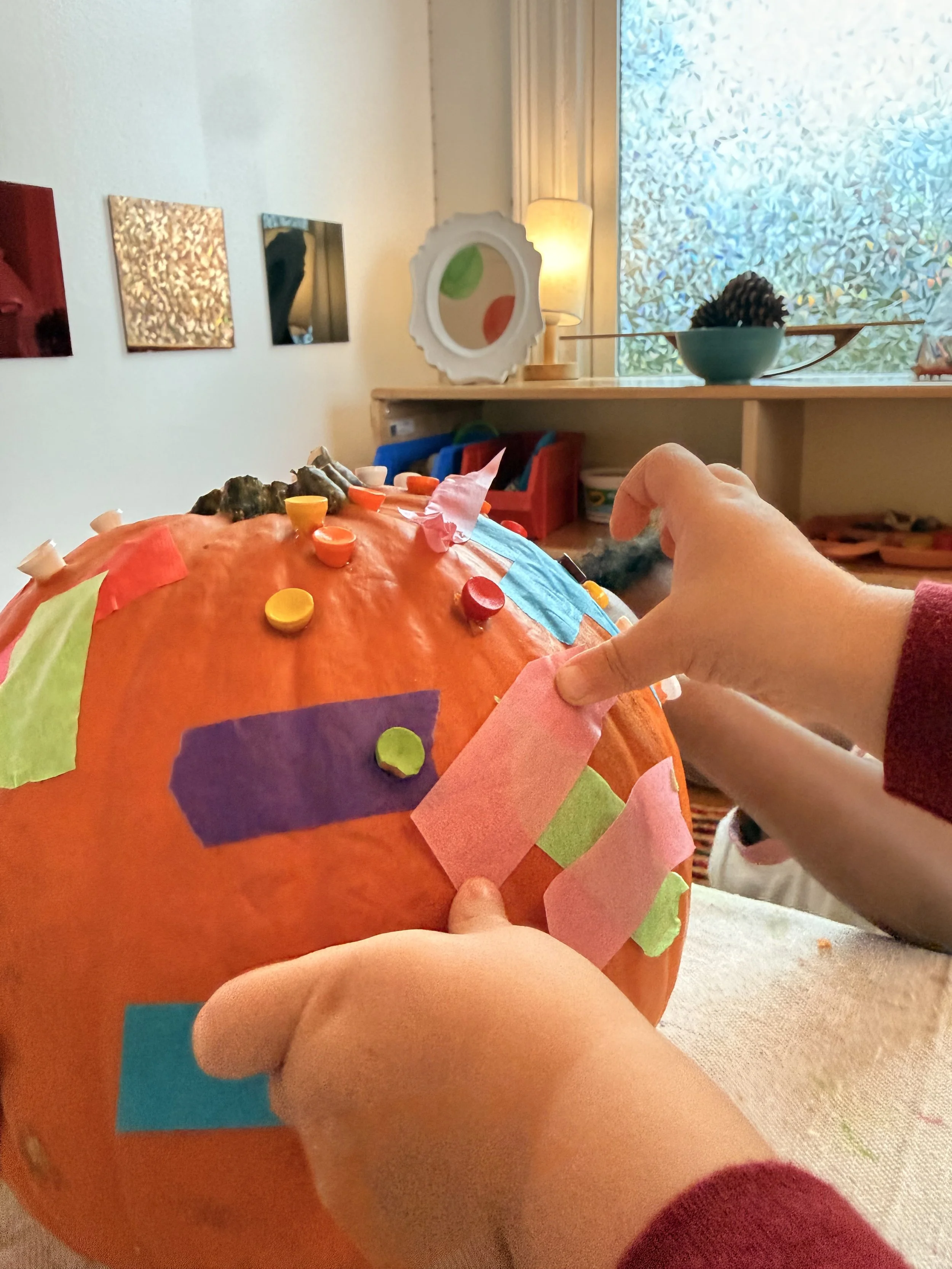
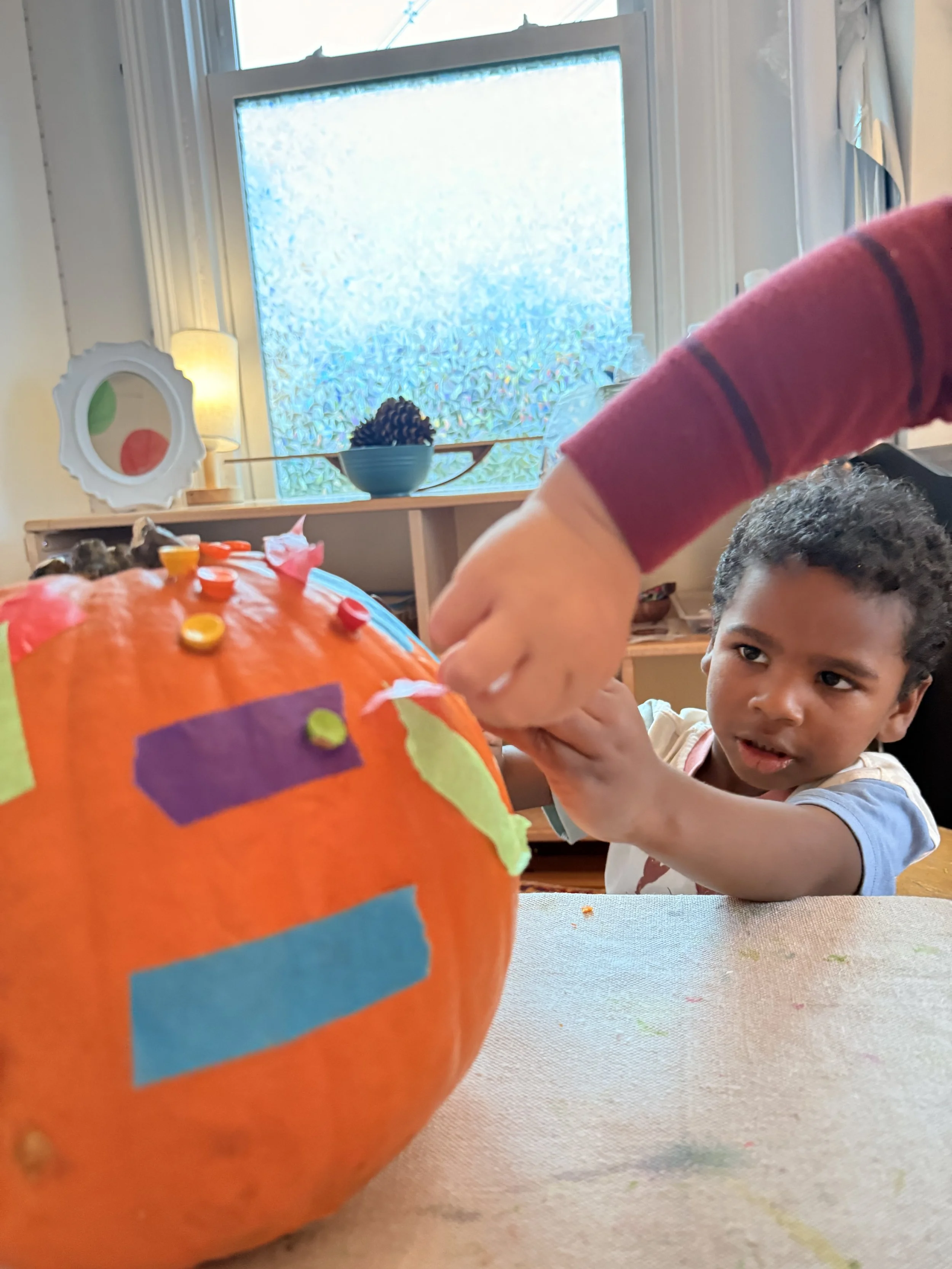
Bryce and Teo were immediately drawn to the large pumpkin at the table.With hammers in hand, they began carefully positioning golf tees against the pumpkin’s surface and attempting to drive them in. The task required concentration. Each golf tee needed to be held in place while the hammer was directed toward its small surface. The children repeated their movements, adjusting their hands and the force of their strikes as they worked. Bryce selected a blue golf tee and explained that he was going to use it to make the pumpkin beautiful. His intention was clear. He was not simply hammering objects into the pumpkin; he was making decisions about how he wanted it to look. After adding the golf tee, Bryce decided that the pumpkin needed something more. First came blue tape, followed by green tape. With each addition, he reconsidered his creation, introducing new colors and materials to expand his original idea.
Beside him, Teo was deeply engaged in hammering golf tees into the pumpkin. He continued adding them, one after another, until the pumpkin’s surface was dotted with colorful pieces. Looking at their work, Teo proudly announced:
“We’re making it beautiful.”
I was particularly interested in this statement. For the children, beauty did not necessarily mean creating something polished or symmetrical. It seemed to emerge through the process of adding, arranging, changing, and making something their own. The pumpkin was becoming a collaborative creation, carrying evidence of the children’s choices and persistence.
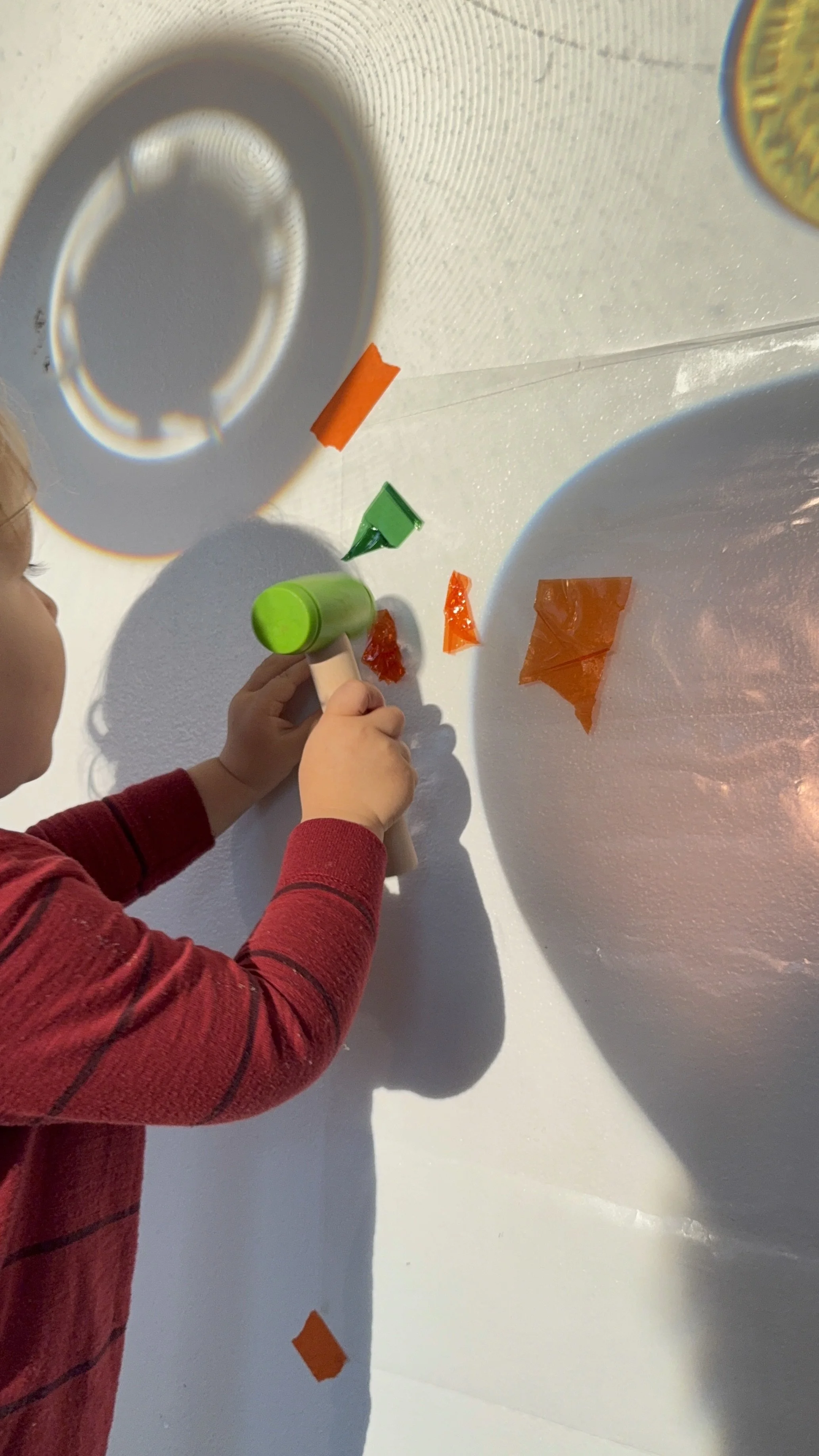
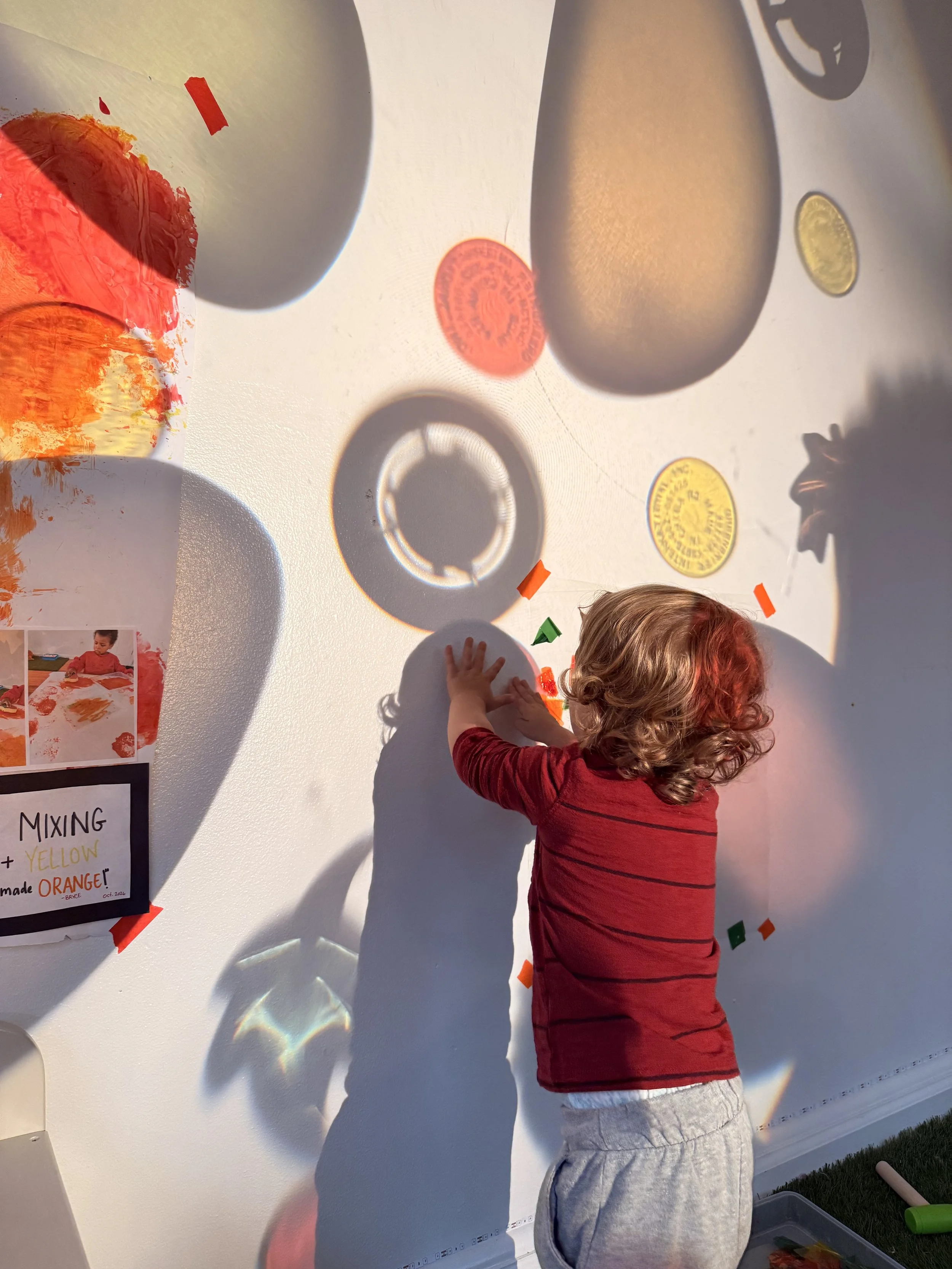
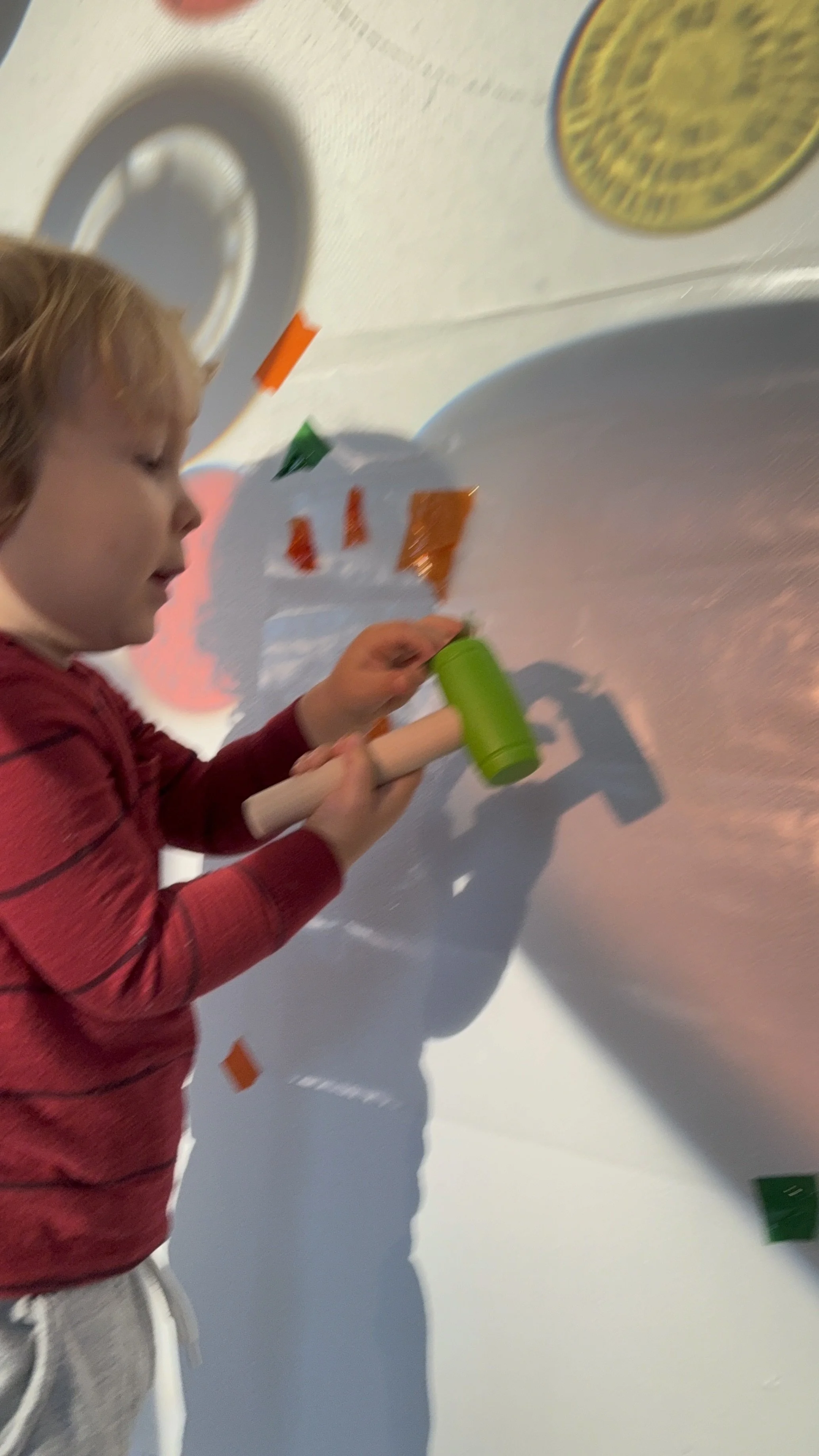
After spending considerable time hammering golf tees into the pumpkin, Bryce noticed the colorful cellophane sheets and sticky contact paper on the wall. Rather than leaving his hammer behind, he brought it with him. He had discovered another possible use for the tool. Bryce began placing small squares of cellophane onto the hammer before pressing the hammer against the contact paper. As he demonstrated his technique, he explained:
“I put it like this and…”
He then showed how he positioned the cellophane on the hammer and used the hammer to attach it to the sticky surface. It was a fascinating moment. A tool initially introduced for driving golf tees into a pumpkin had become part of an entirely different investigation. Bryce was transferring an idea from one experience to another. He had learned that the hammer could apply force, and now he was experimenting with whether that same action could help him attach materials to another surface. What stood out was his willingness to challenge the expected purpose of an object. As adults, we often associate tools with specific functions. A hammer is for hammering nails or tees. But in Bryce’s hands, the hammer became a tool for arranging and attaching translucent materials. His discovery reminded me that children often see possibilities where adults see limitations.
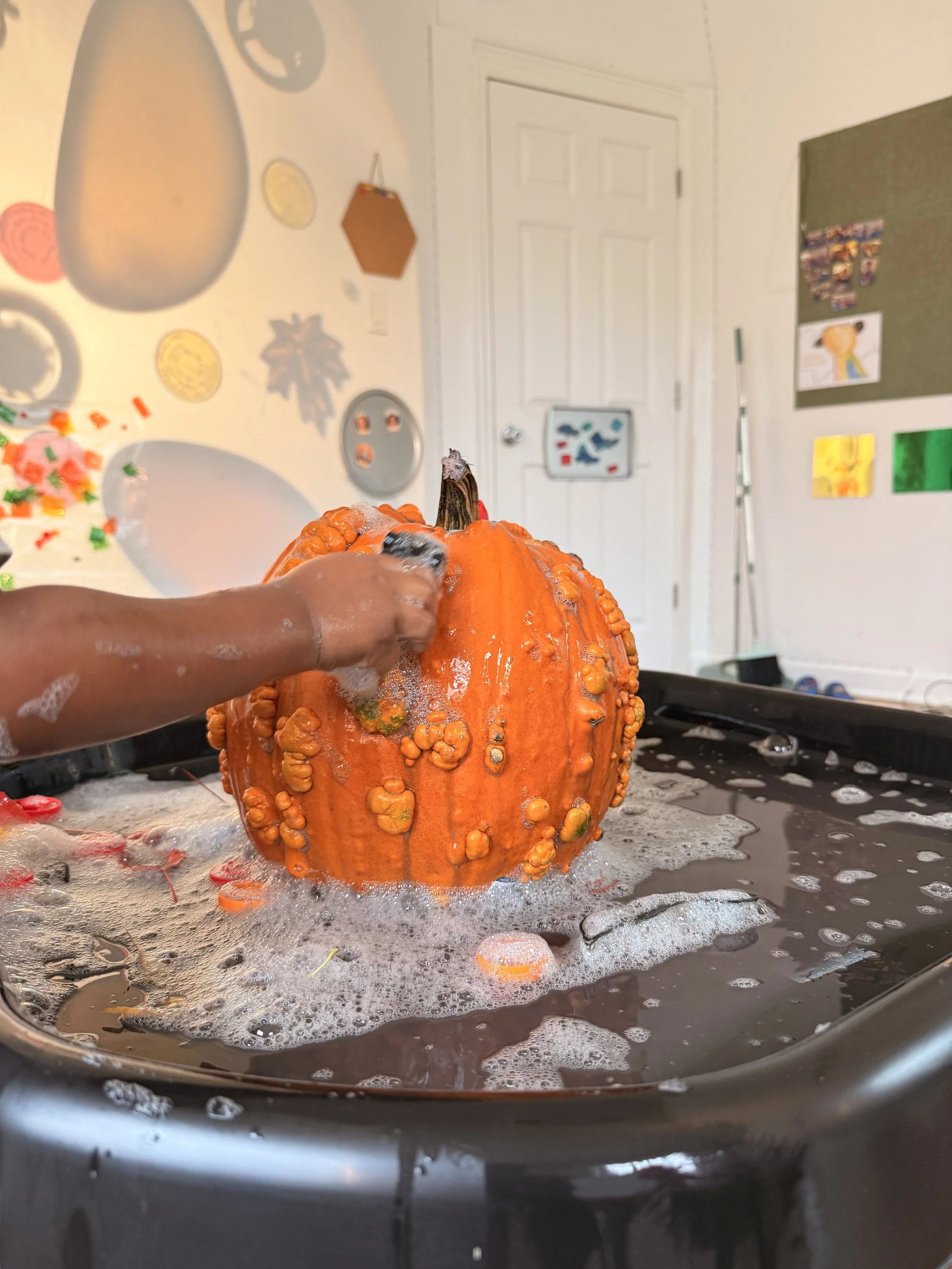
While Bryce and Teo explored the materials at the table, Aden found himself particularly drawn to the Tuff tray. He spent much of his time near the water, using a paintbrush to move and stir it. As he swished his brush through the water, small bubbles began appearing on the surface. Aden noticed. He moved the brush again. More bubbles appeared. He repeated the movement, seemingly interested in the relationship between the speed of his brush and the bubbles forming in the water. Observing his growing fascination, I wondered how we might extend this discovery. I brought over some soap and added it to the water. Aden immediately noticed the change. Without needing further instruction, he began moving his brush rapidly through the water. The faster he swished, the more bubbles appeared.
“Bubble!” he exclaimed.
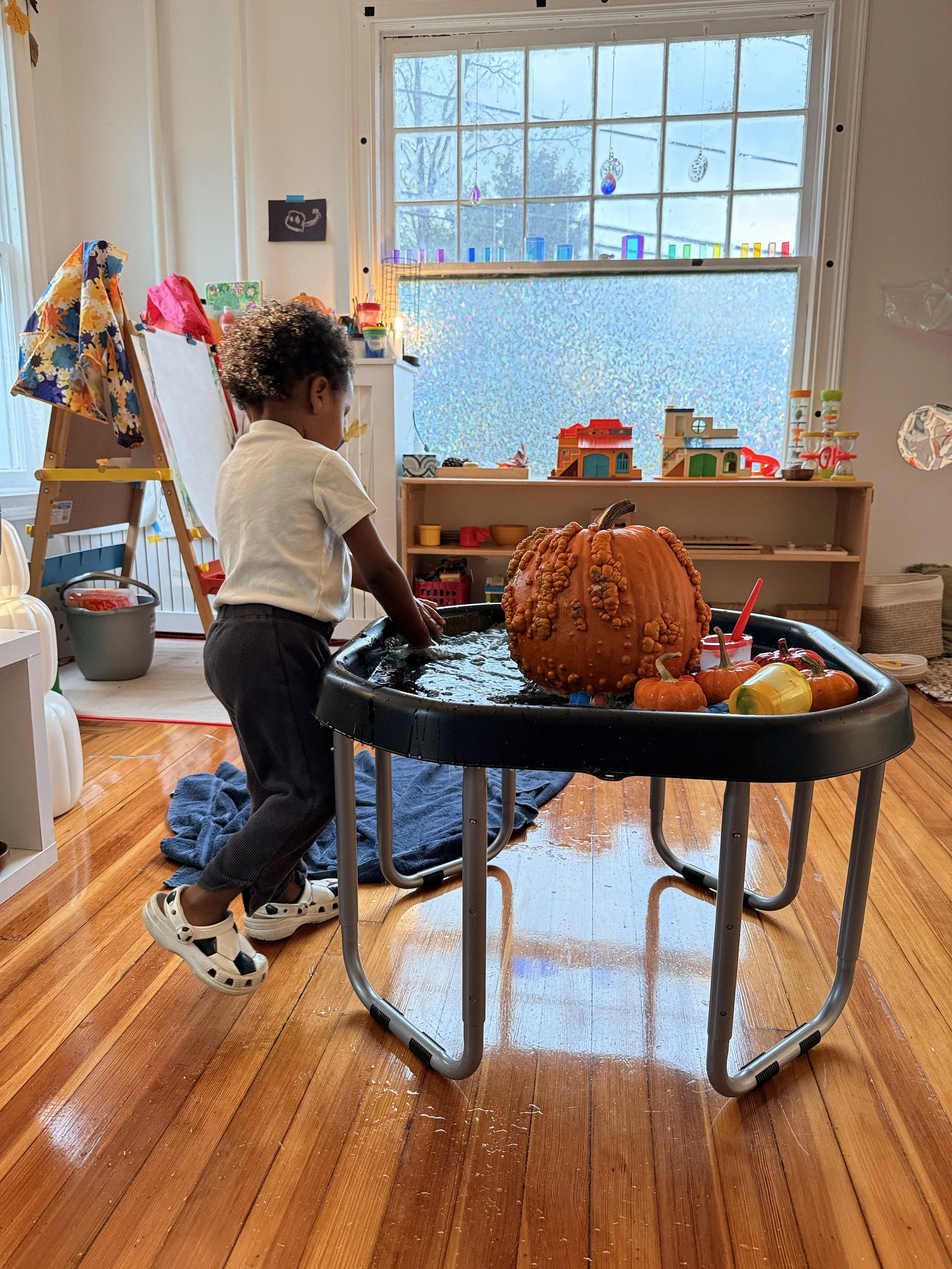
His excitement was unmistakable. What had begun as an exploration of water and paint had shifted into an investigation of movement, air, and bubbles. It felt almost as though we were having a conversation without words. Aden communicated his interest through his repeated actions, and the addition of soap offered another possibility for him to investigate. He then brought a pumpkin into the bubbling water, drawing attention to the bubbles forming around it and its red-painted surface. The pumpkin, which had originally been an object for painting, was now becoming part of a new sensory experience. Aden’s discovery soon captured the attention of the other children. Drawn by his enthusiasm, they joined him at the Tuff tray. Together, they began stirring the water, creating more bubbles, filling cups, and pouring water over the pumpkins. The water moved across their painted surfaces, carrying color and bubbles along with it. The children’s actions became increasingly collaborative. One child’s investigation had inspired an experience that the others wanted to explore for themselves.
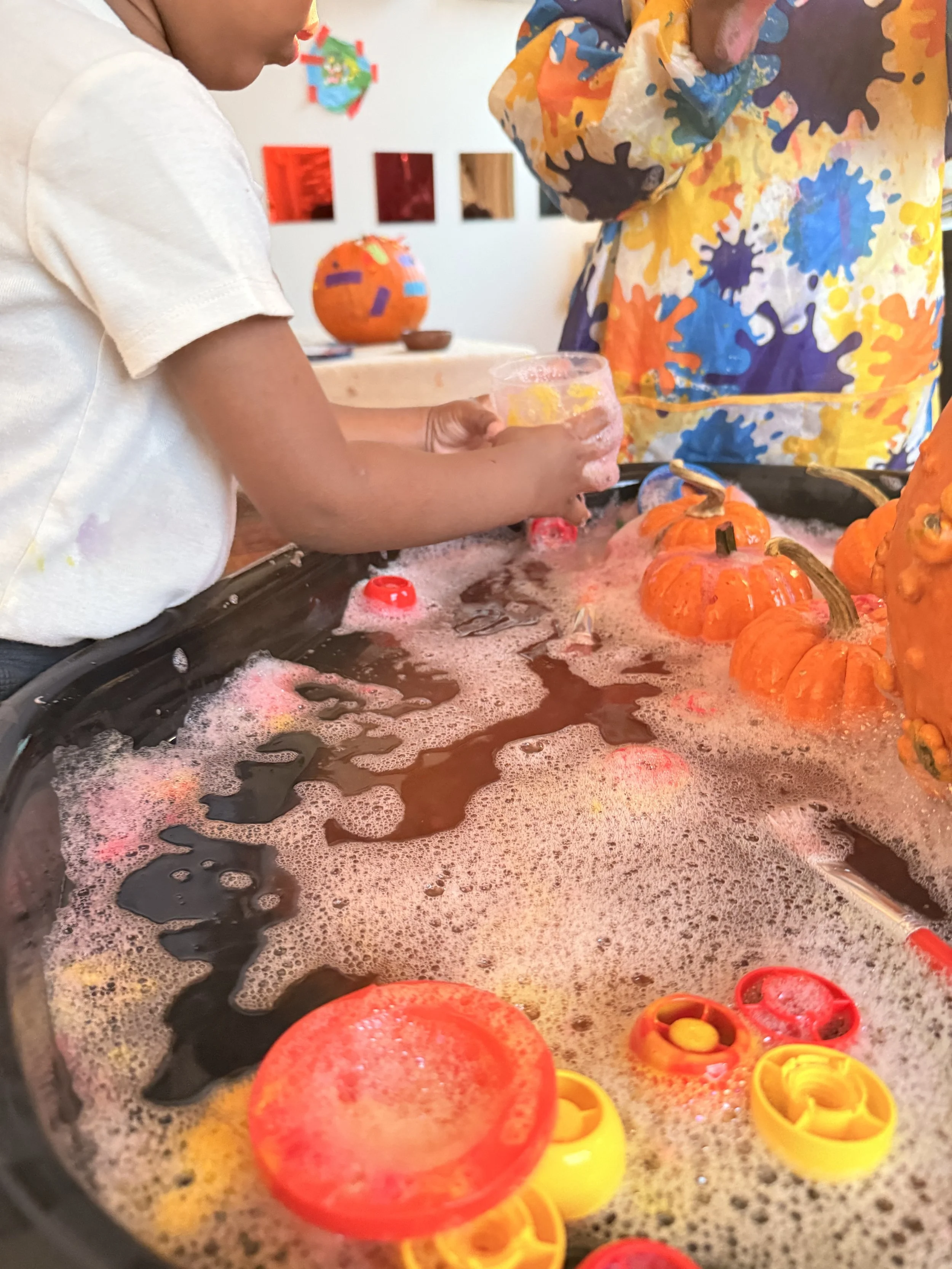
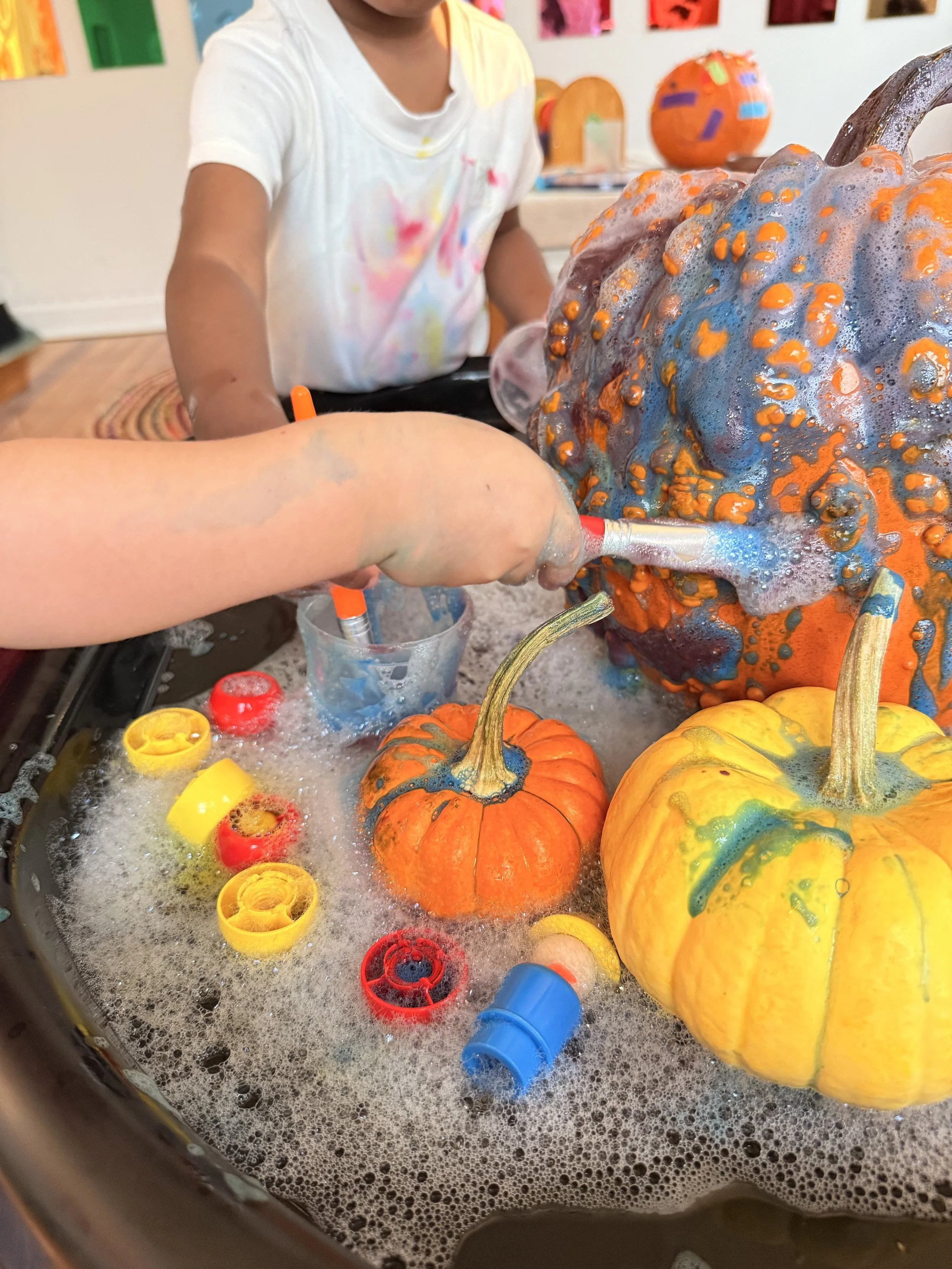
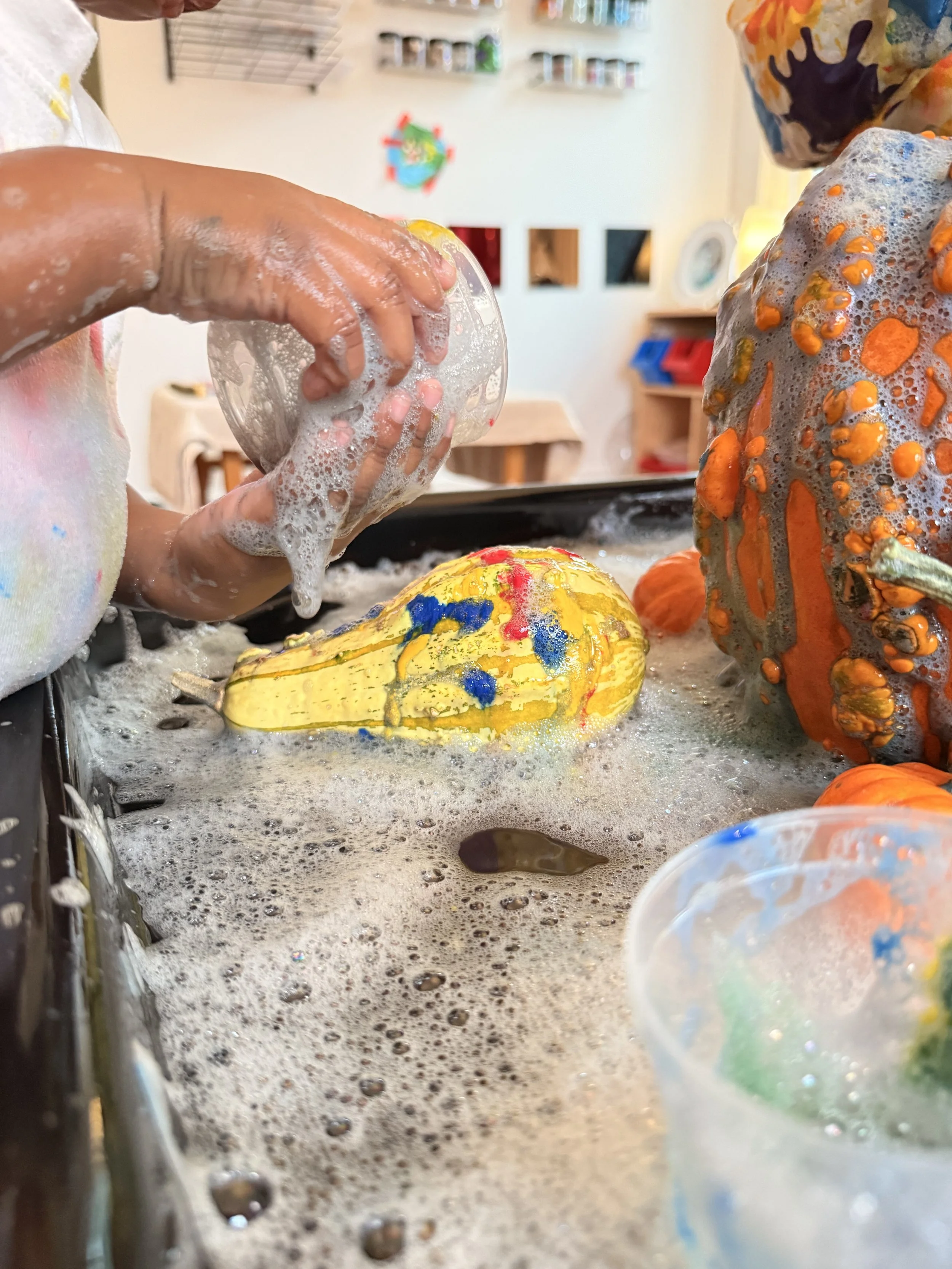
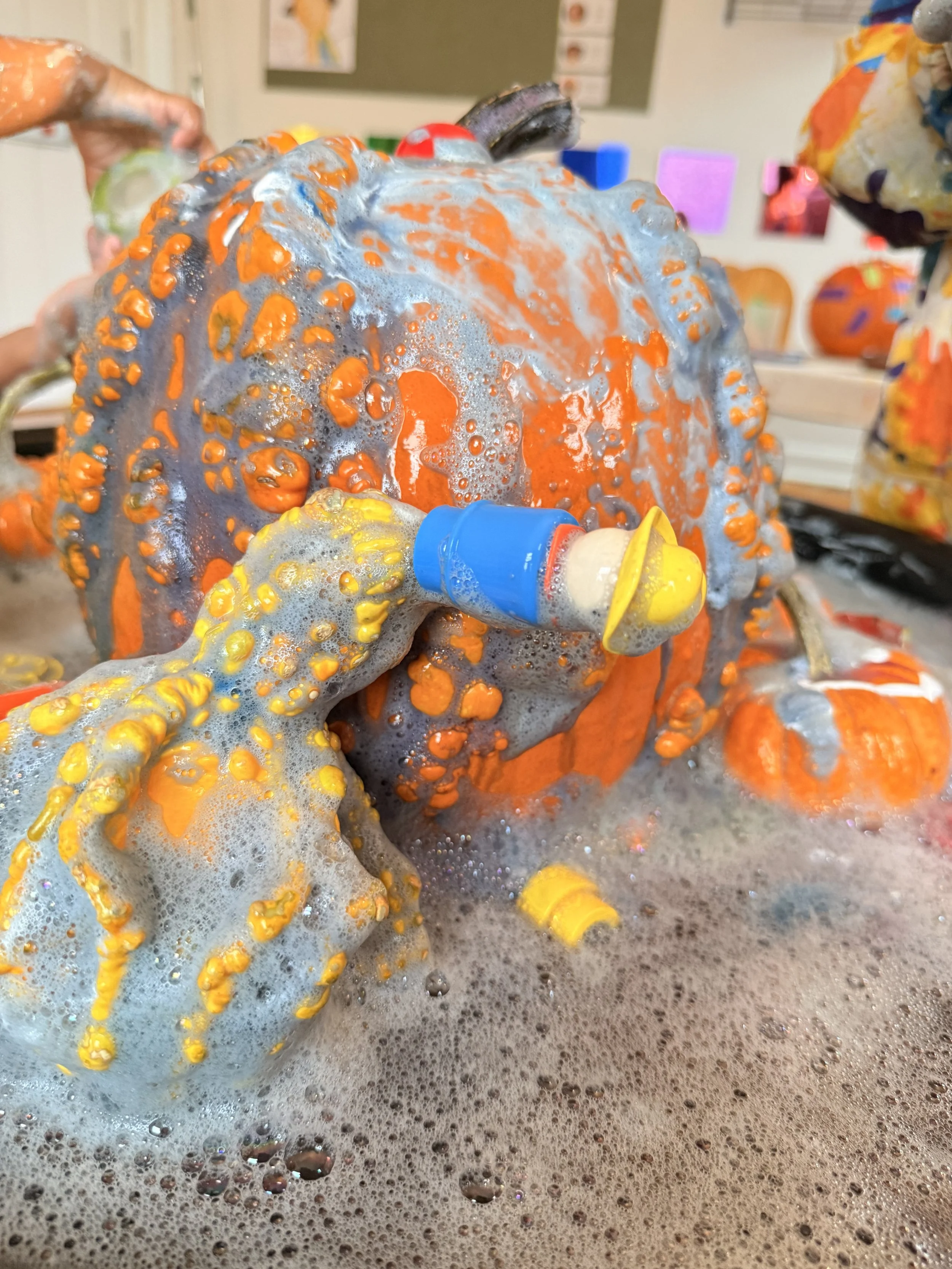
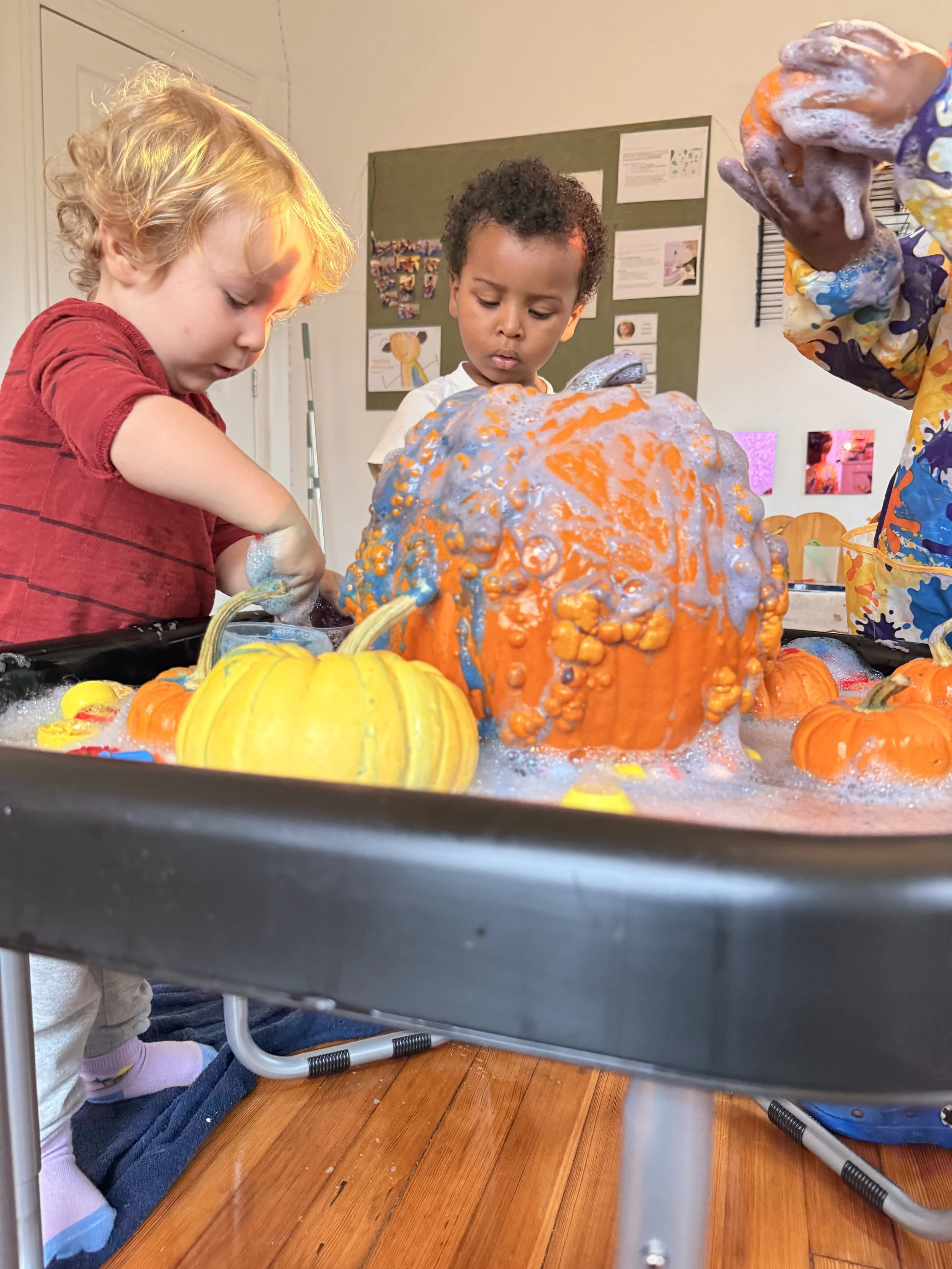
Aden’s investigation did not end with the bubbles. He eventually brought toy cars into the water, introducing yet another material to the experience. During our earlier pumpkin explorations, the children had discovered that pumpkins could become uneven roads for their toy vehicles. Now, Aden returned to this idea in a different setting. He moved his cars across the pumpkins while they rested in the water, revisiting the ridges and curves he had previously encountered. The addition of water introduced a new quality to the experience. The pumpkins were wet, their surfaces covered with paint and bubbles, yet they still offered opportunities to test how the cars moved across them. What I found meaningful was Aden’s decision to return to an earlier discovery without being prompted. He appeared to recognize a familiar possibility within a new environment. The same pumpkin that had once been a bumpy road on the floor was now a bumpy road in the water.
As I reflected on today’s exploration, I found myself returning to three particular moments. The first was Teo’s declaration, “We’re making it beautiful.” His words reminded me that children bring their own sense of beauty and purpose into their work. What might appear to an adult as a pumpkin covered in golf tees and tape held a different meaning for the children who had carefully transformed it.
The second was Bryce’s decision to use his hammer on the contact-paper wall. This moment challenged the idea that materials have only one intended purpose. By allowing Bryce to experiment with his technique, we were able to observe his ability to make connections, rethink a tool’s function, and develop an idea independently.
The third was Aden’s fascination with the bubbles. His repeated swishing caught my attention before he communicated his discovery through words. By observing rather than immediately directing, I was able to recognize what interested him and introduce soap as a way to extend his investigation. It reminded me how much children communicate through their actions, even before they find the words to explain their thoughts.
In a Reggio Emilia-inspired environment, documentation helps us recognize these moments as more than simple play. It allows us to observe the children’s developing theories, revisit their experiences, and make thoughtful decisions about what to offer next.
These moments reminded me that learning is not always found in the materials we offer, but in the relationships children build with them. A hammer becomes a tool for artistic expression, water becomes an opportunity for scientific investigation, and a pumpkin becomes a surface filled with possibilities.
As educators, our role is to recognize the thinking behind these seemingly simple actions. When we observe closely, we begin to see the questions children are asking through their movements, choices, and interactions.
What matters most is not what we expect children to create or discover, but what they reveal to us about how they think, experiment, and make sense of the world.
Because sometimes, the most meaningful learning begins with a familiar object and a child’s simple curiosity:
What else can I do with this?