Reflecting on our Light Experience 💡
From our very first session, the children entered into light as if it were a new language, one they could touch, chase, shape, and slowly begin to understand.
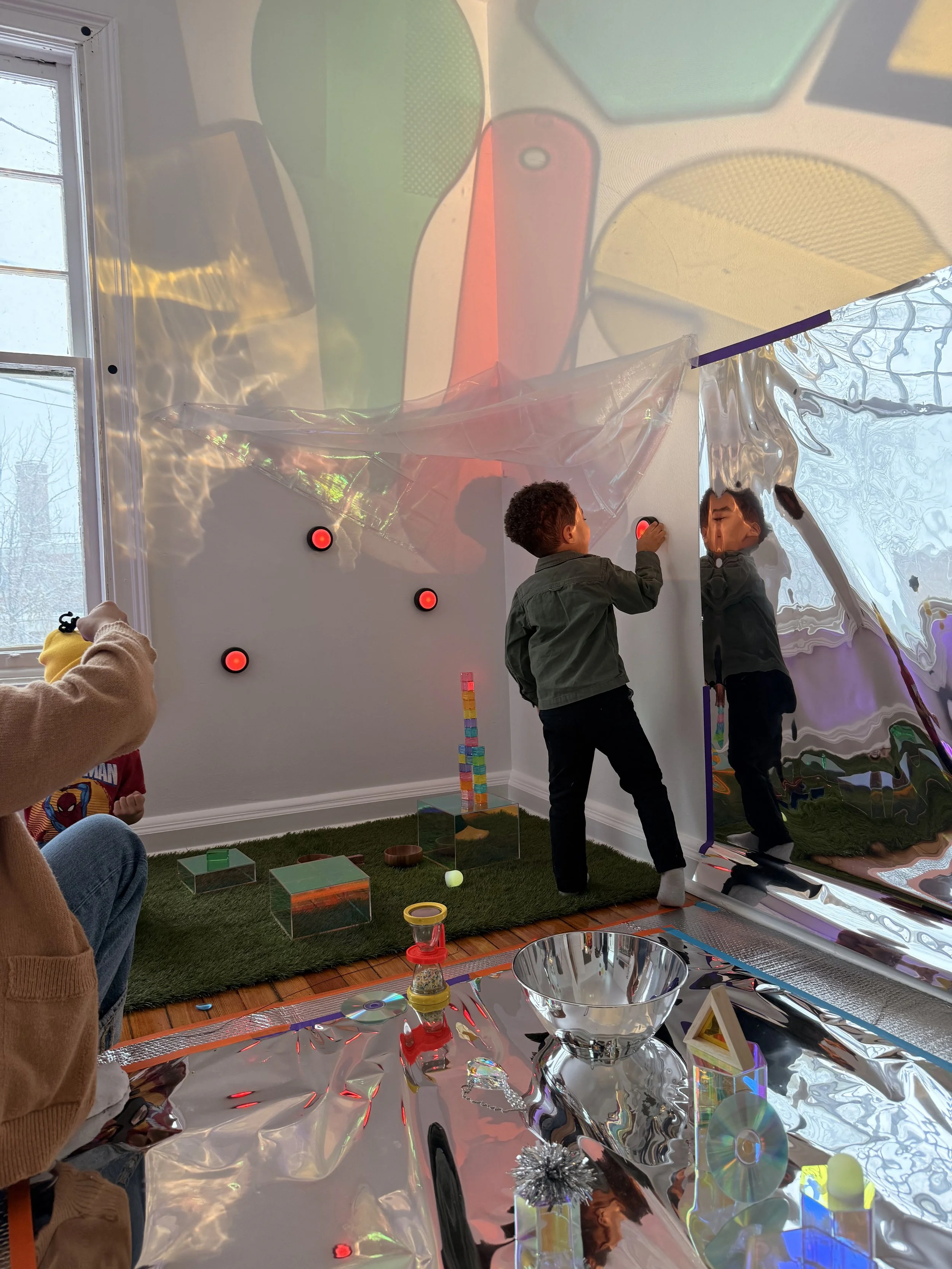
In the beginning, the room was dimmed and filled with carefully chosen materials, mirrors, translucent objects, flashlights, and glowing elements. The children approached cautiously at first, observing before acting. Soon, they began experimenting with light through movement and control. They pressed buttons to activate lights, explored reflections, and watched colors change as they held palettes and gems up to their eyes. Some children were drawn to their own reflections, while others used dinosaurs and loose parts to create stories, testing how light transformed familiar objects.
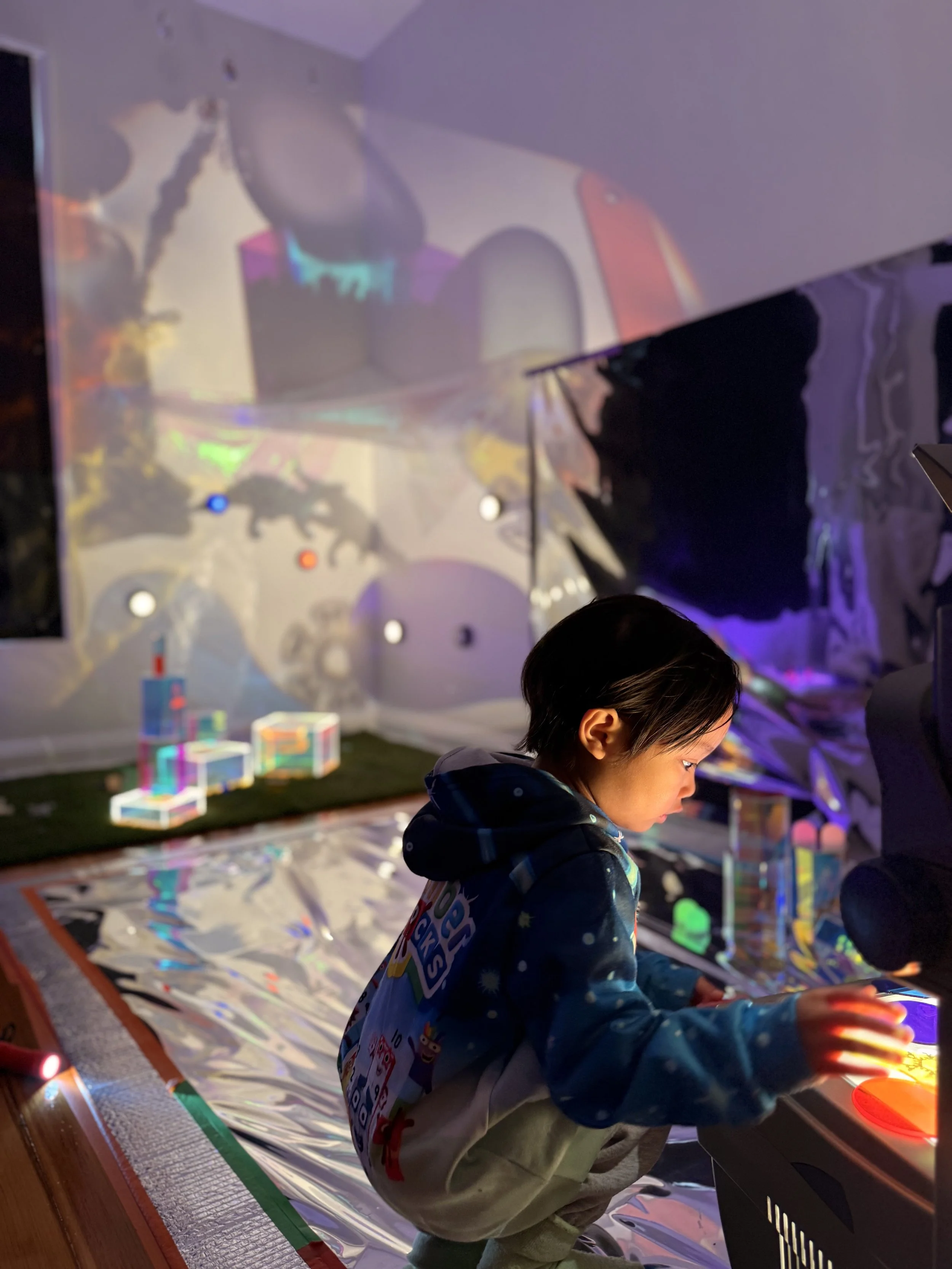
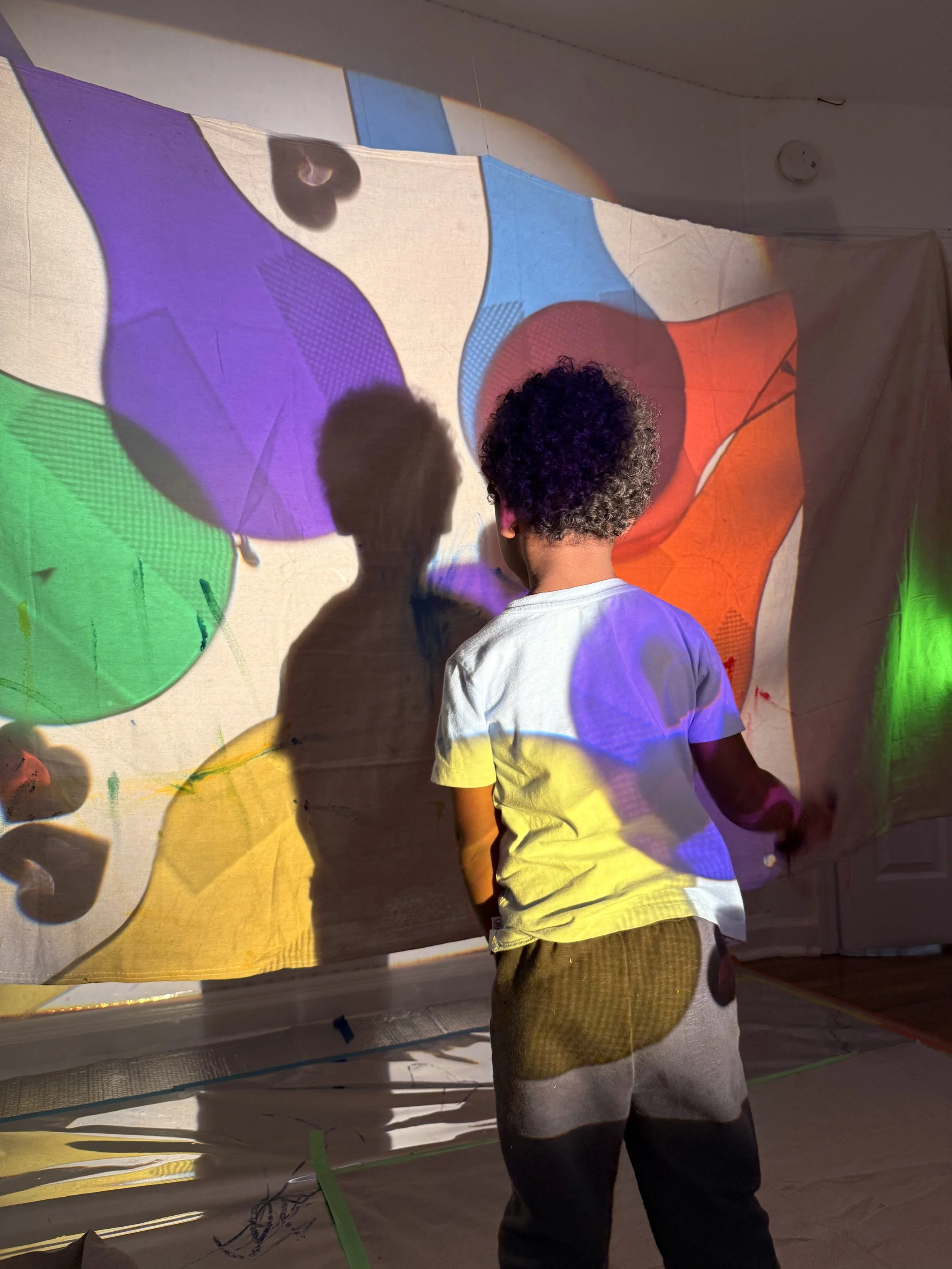
As the sessions progressed, the overhead projector was introduced, deepening the children’s investigations. What was once small became enormous on the wall. Shadows appeared, disappeared, and shifted with every movement. Children began forming theories, discovering that blocking the light created darkness, that placing objects closer or farther changed size, and that color and transparency could transform what was projected. Their experiments became more intentional, with repeated testing and joyful surprise.
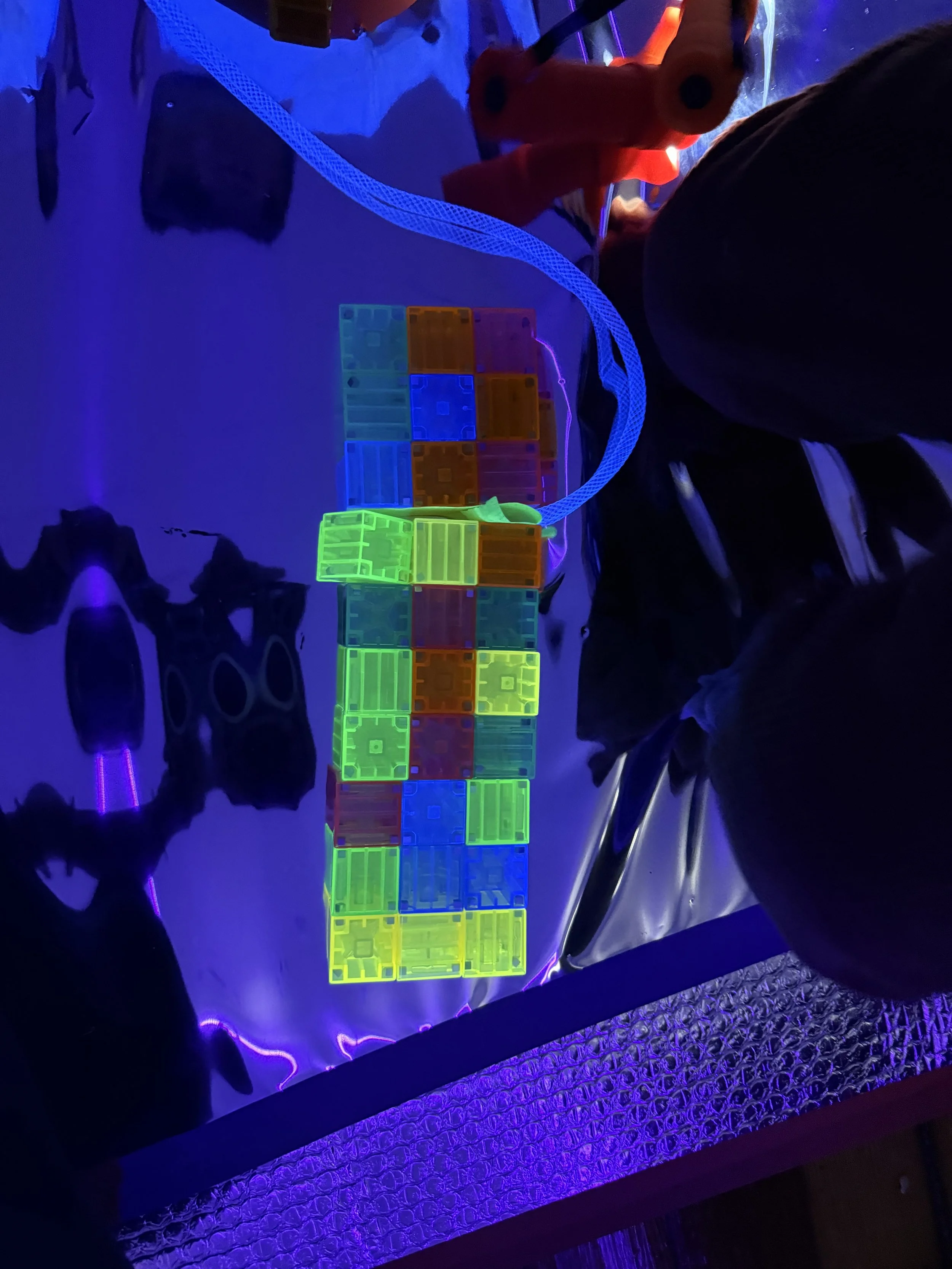
In the next phase, we explored black light and neon. The environment became even more mysterious, glowing with materials that reacted under ultraviolet light. Children observed which objects changed and which stayed the same. They used flashlights and neon paint sticks to compare surfaces and brightness, noticing that dark backgrounds made colors appear stronger. Lasers were introduced, and the children chased the beam across the room, fascinated by how something so small could travel so far. They experimented with refraction as light split through Mylar and water, watching it bend and scatter in unexpected ways.
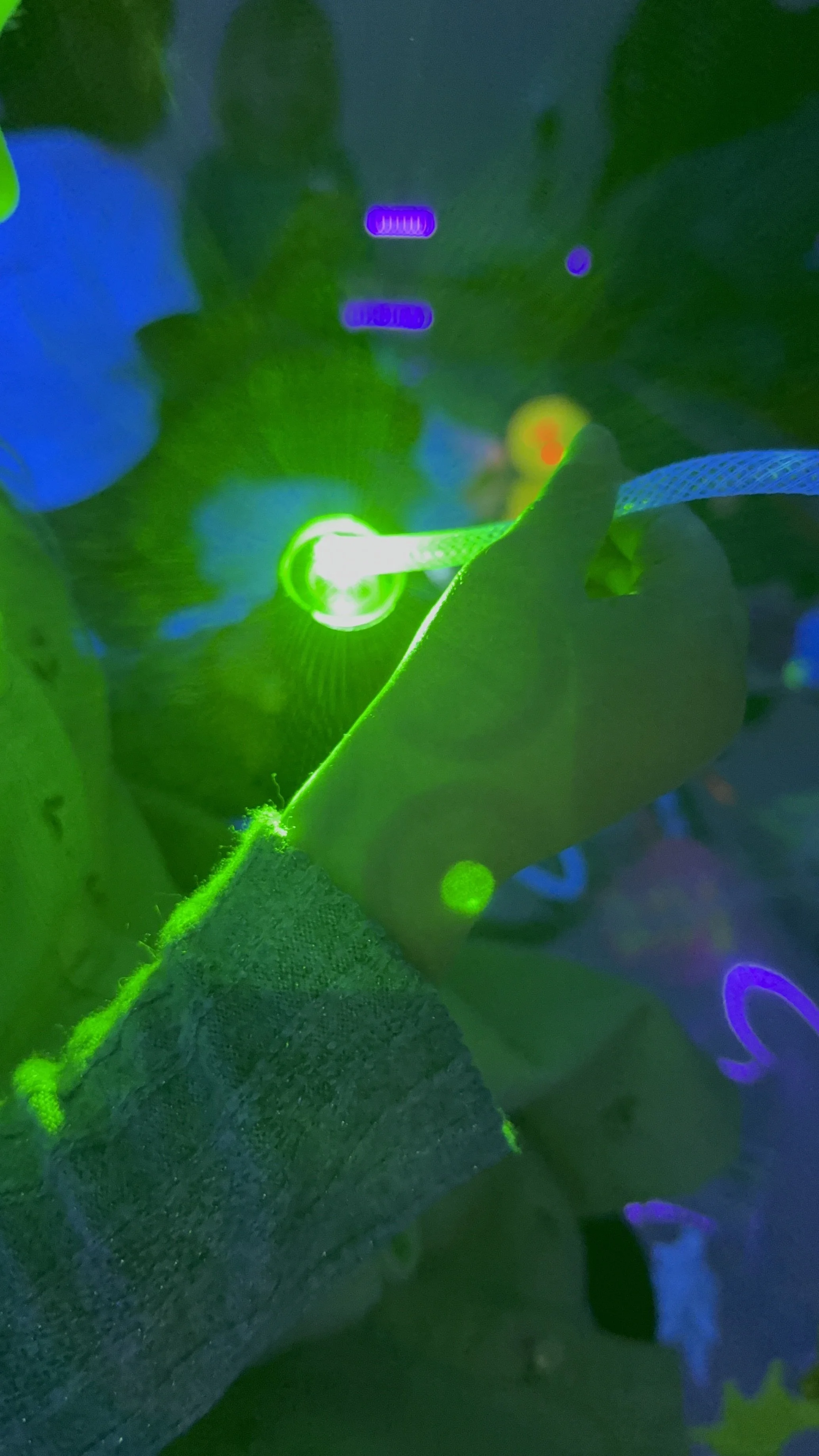
In our final session, the children explored light through space, fabric, and shadow. A hanging canvas became a moving surface for projection and silhouette. Children discovered their shadows behind the fabric, watching how motion shifted what appeared on the other side. They turned off the lights completely, creating darkness on purpose, and used lasers to explore how light reflects, splits, and transforms when it meets different materials. The experience ended with creation, each child designing their own lantern using recycled materials, tissue paper, and small color-changing lights, bringing the exploration full circle: from observing light to making light.
Across every session, the children moved from curiosity to theory-building. They learned that light can be reflected, blocked, refracted, and transformed. They discovered that darkness is not the absence of learning, but the condition that makes light more visible. Most importantly, they experienced light not as a concept to memorize, but as a living material, one that invites wonder, experimentation, collaboration, and imagination.