
“What if we turned off all of the lights?”
The children entered the room and immediately noticed something unusual above them, canvas fabric hanging from the ceiling, gently draping down like a floating wall. They stood still for a moment, staring upward, watching how the light filtered through the fabric. The room felt transformed. The canvas didn’t just hang, it glowed, catching reflections and soft shadows as the light moved around it.
Julie invited the children to begin painting.
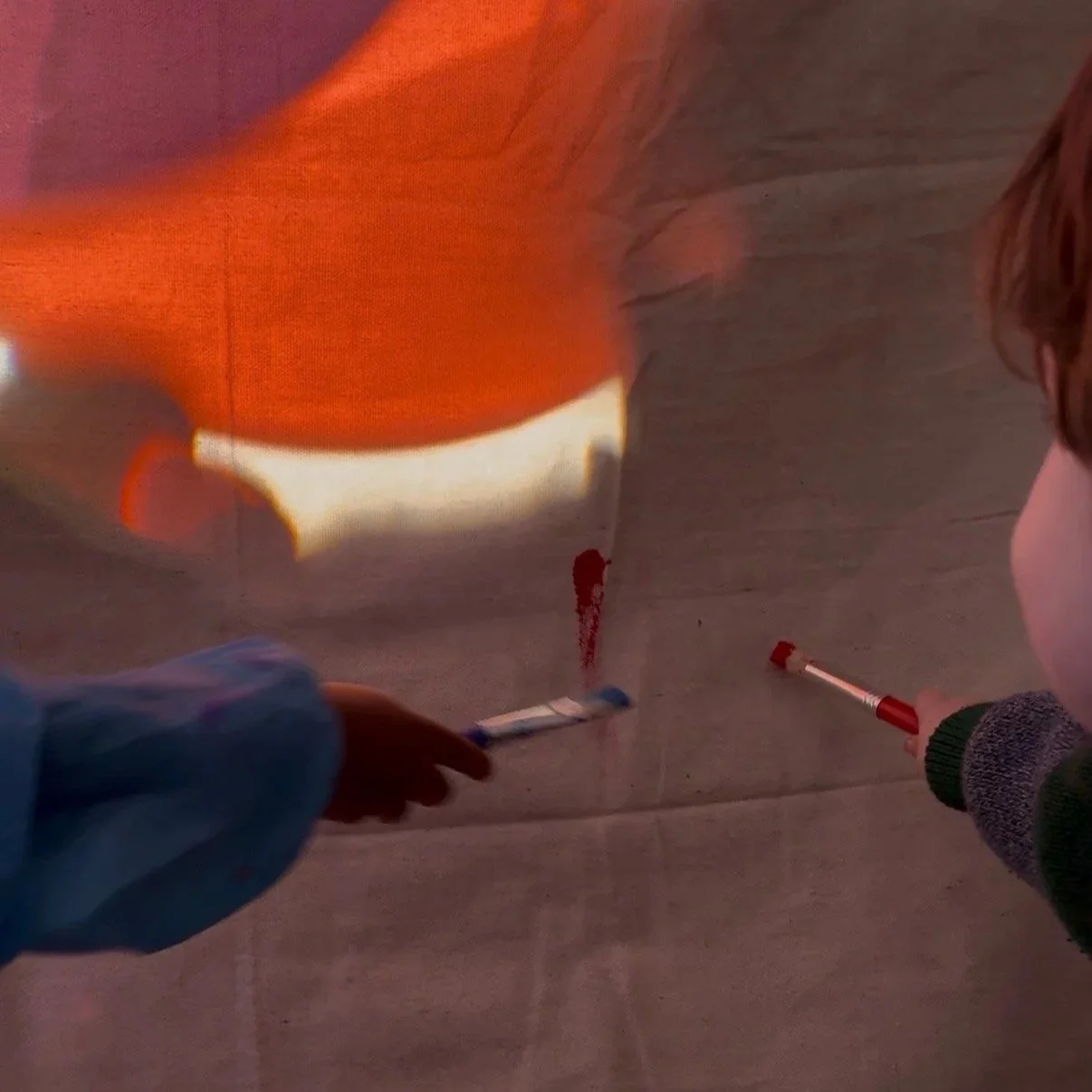
Mateo and Aksel bent down to pick up brushes and approached the canvas with excitement. Their movements were confident and expressive, as if they were waking the canvas up.
Across the rug, Theo sat down with the translucent magnetic blocks. He lined them up carefully, one by one, arranging them with intention. Without looking up, he explained,
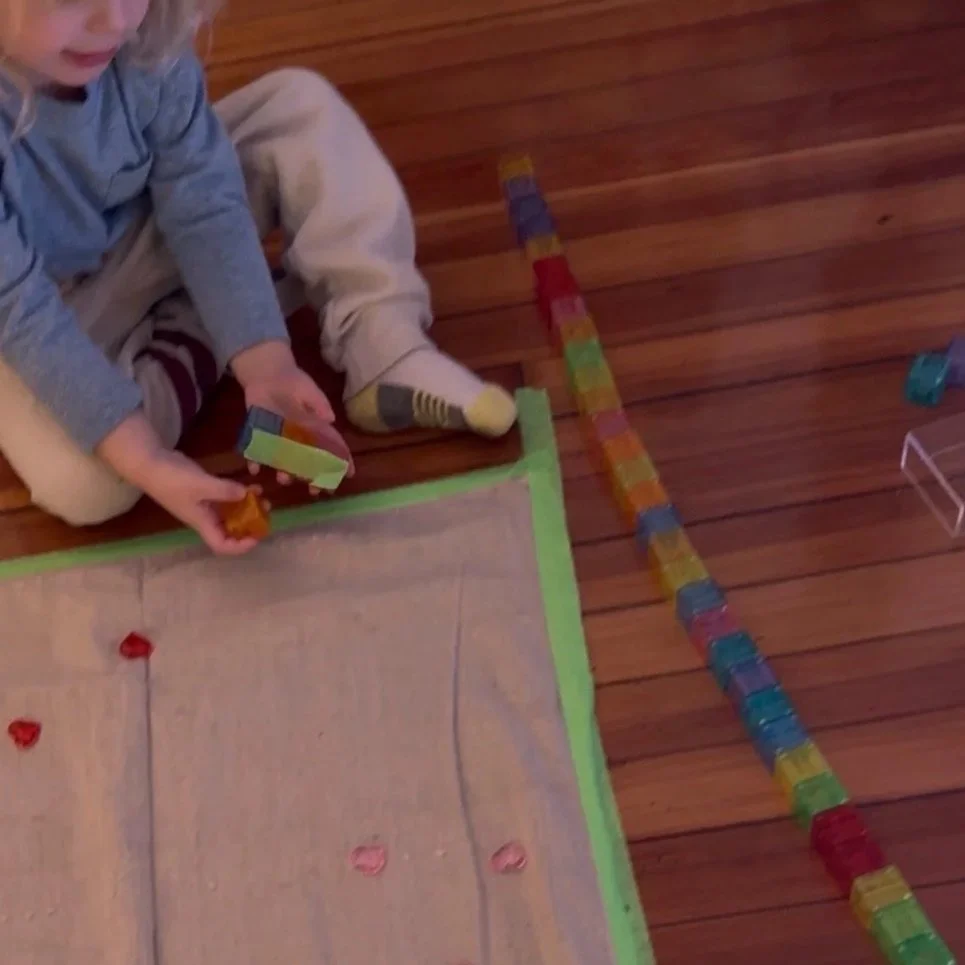
“I’m building a train.”
Next, the children shifted into a quieter kind of creation.
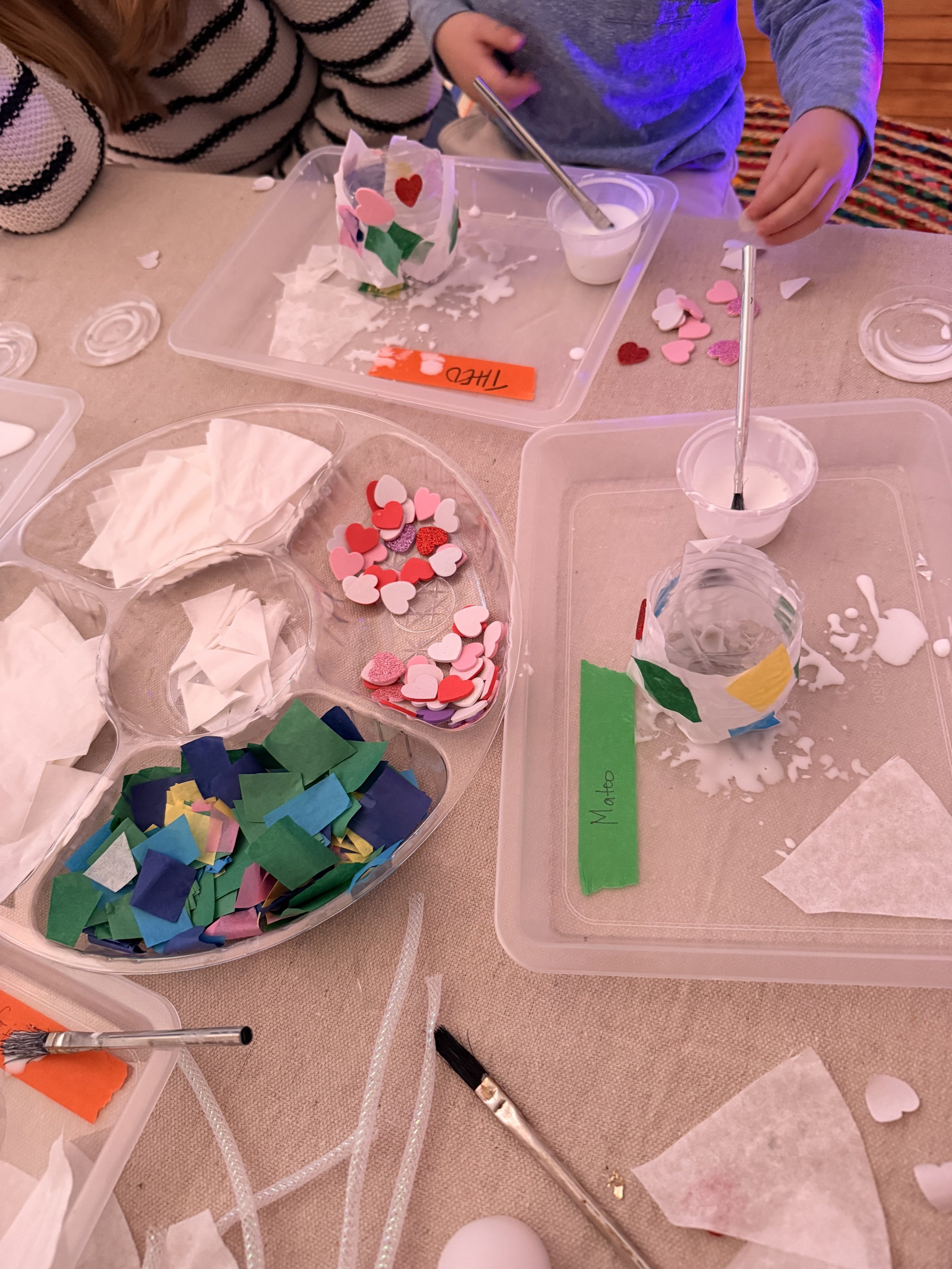
They sat down to make their own lanterns using recycled plastic bottles, tissue paper, glue, and heart stickers. Each child carefully decorated their lantern, then placed a tiny color-changing light inside. As the lights flickered through the tissue paper, their lanterns transformed into glowing creations, each one unique.
Next, Aksel moved toward the back side of the hanging canvas. From where we stood, we could see light flickering through the fabric as he explored behind it. He walked in circles, around and around, studying the wall behind the canvas where the light didn’t shine as strongly. Then he wandered toward the grassy area and paused, watching the light shimmer across the iridescent fabric. The small lights nearby reflected onto the surface, making it sparkle and shift as he moved.
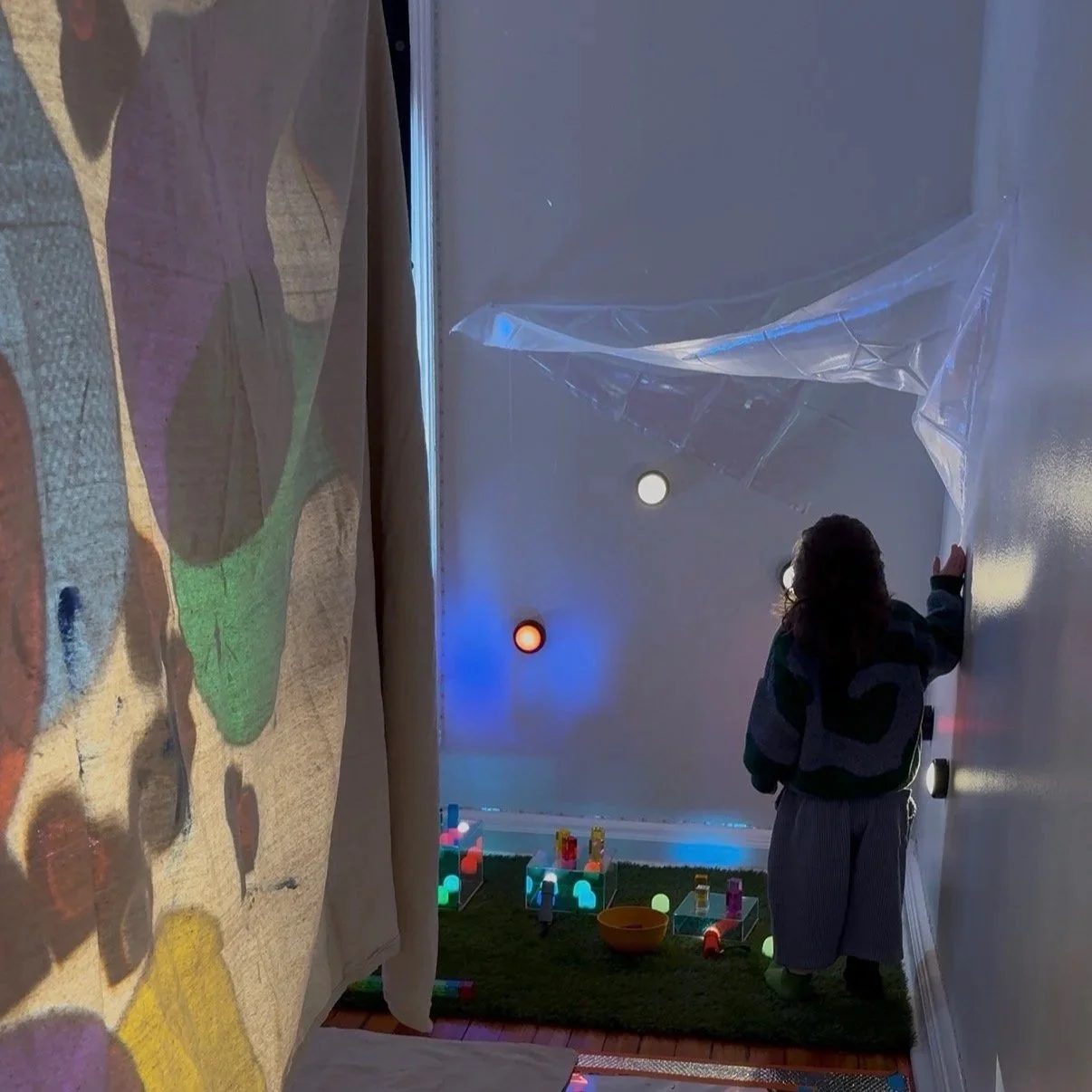
Soon, Mateo joined Aksel behind the hanging canvas. The two children noticed each other’s shadows immediately. They waved their arms, stepped forward, stepped back, watching their silhouettes appear and disappear. When they pushed the fabric gently back and forth, the projected image moved with it, almost like a living screen.
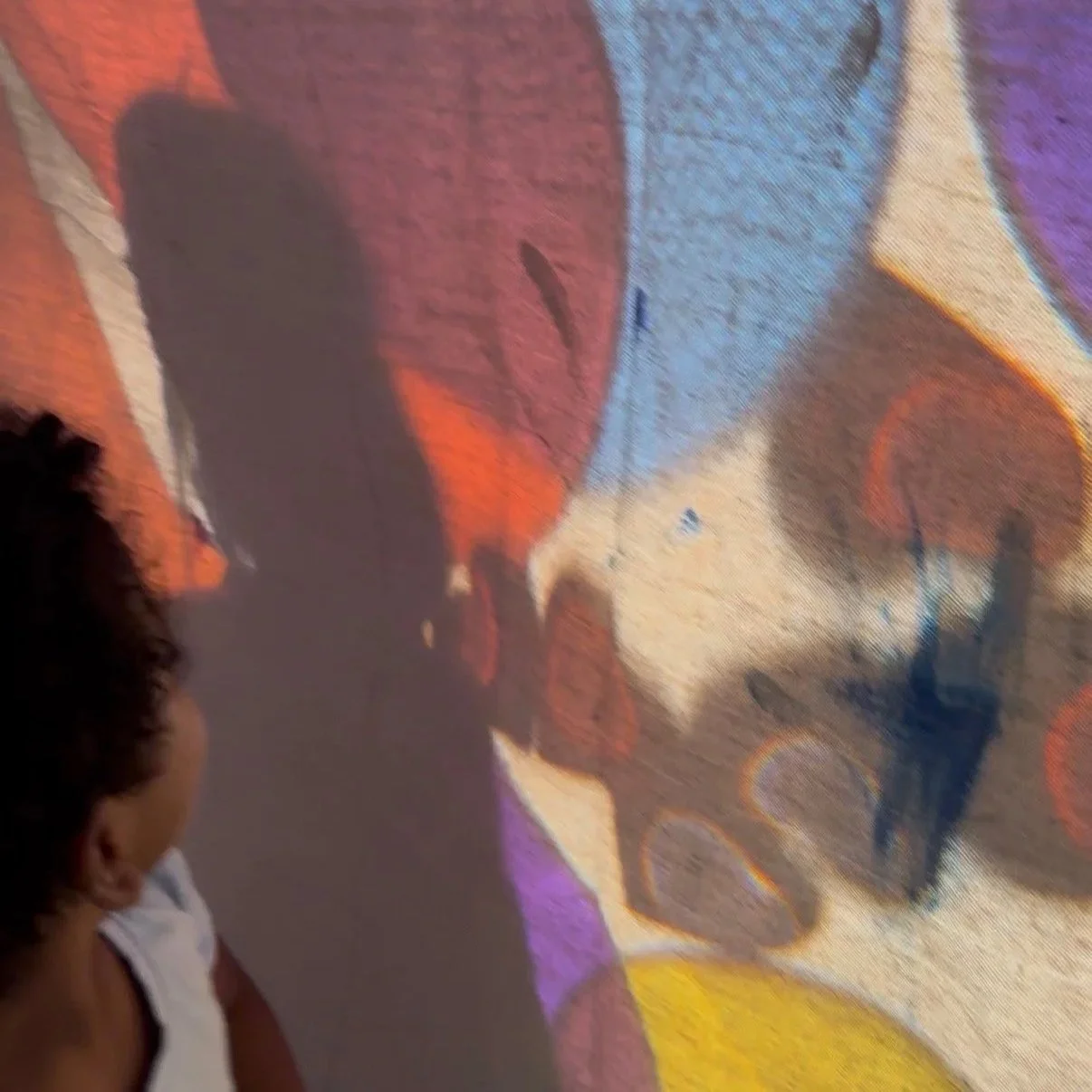
Then Mateo experimented further. He blocked the light completely.
Suddenly, it was dark.
His eyes widened with excitement as he asked,
“What if we turned off all of the lights?”
Before anyone could answer, Mateo was already moving, walking around the room and turning off every light source he could find. The room shifted again. The darkness became deeper, and the remaining glows became brighter.
Mateo picked up the lasers and began shining them across the room, on the floor, across the walls, and toward the hanging fabric. Theo joined him quickly, drawn into the new investigation. Mateo suggested they combine their lasers to see what would happen.
Together, they aimed the beams toward the iridescent box.
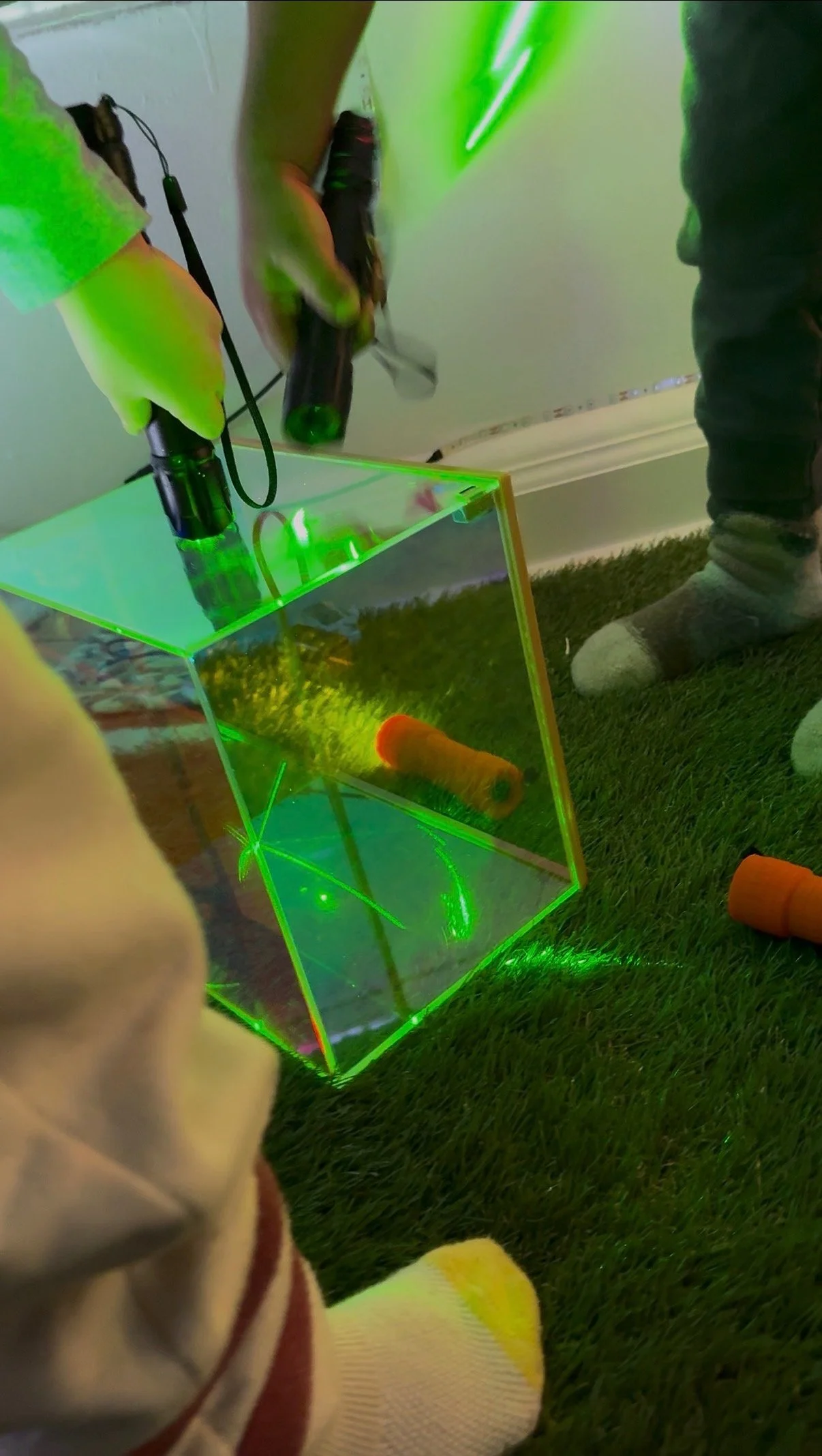
The light split in multiple directions.
Theo placed a red translucent magnetic block in front of the laser, and it lit up instantly, glowing from within like it was holding the light inside. The children watched closely, amazed at how the beam changed when it passed through different materials.
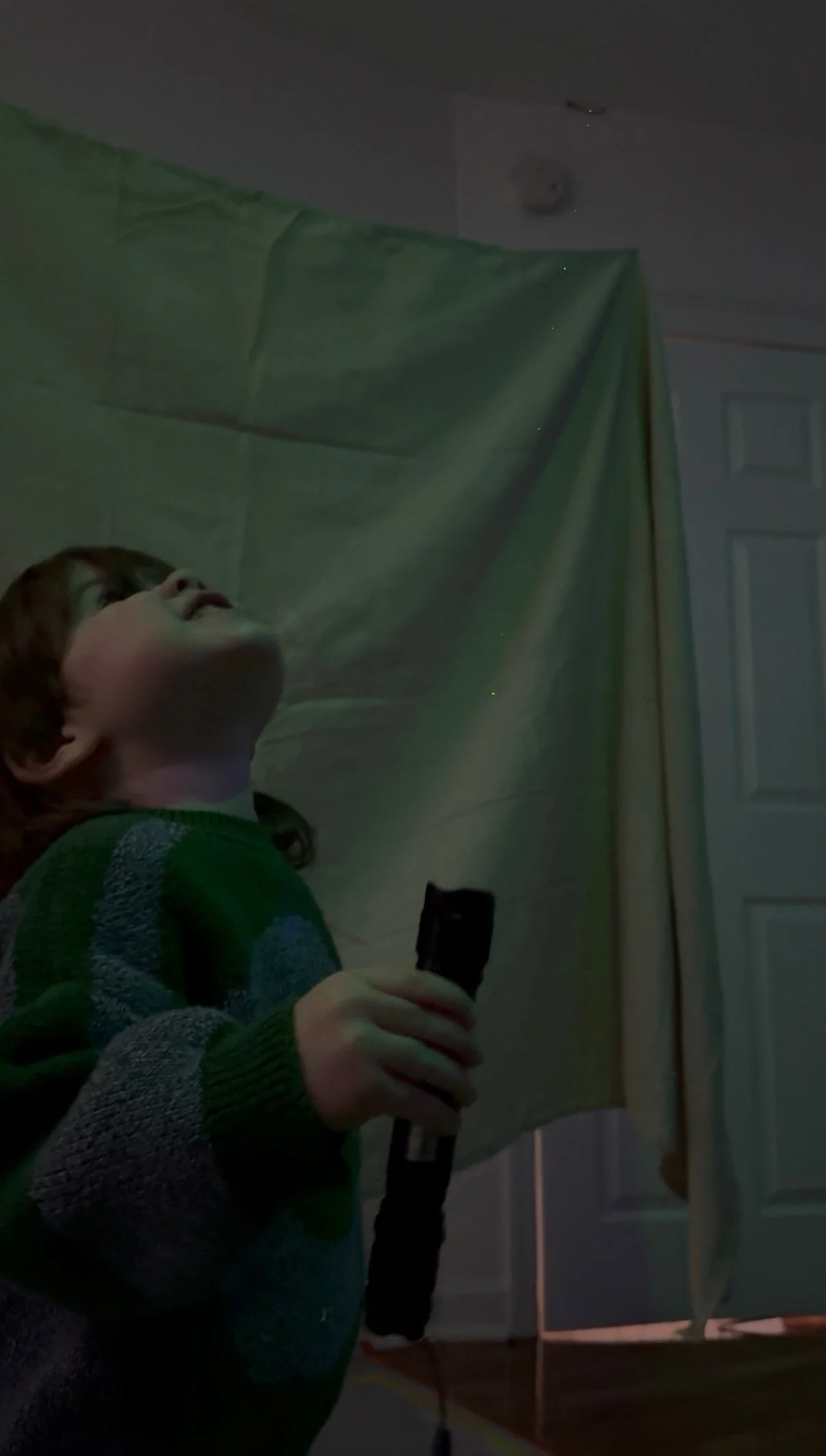
Across the room, Aksel shone his light toward the ceiling. His face brightened as he noticed the ceiling glow. Above him, the paper lantern cast soft shadows, and the laser light trail glistened across the space like tiny stars.
To close the experience, the children gathered together to read All About Light, returning to the story of light with new understanding and lived experience behind their eyes.
What the Children Were Learning
Through this exploration, the children were learning that light is not just something we turn on and off, it is something we can investigate, manipulate, and transform.
They explored how light behaves when it moves through different materials, noticing that some surfaces allow light to pass through, while others block it completely. Through the hanging canvas fabric, they discovered how light can create shadows, silhouettes, and reflections, and how movement changes what we see.
By turning off the lights and experimenting with lasers, they explored cause and effect, learning that darkness is not the end of light, but a condition that makes light more visible. They also discovered refraction and reflection, noticing how the laser beam could split and scatter depending on the object it touched.
They practiced collaboration, problem-solving, and scientific thinking: asking questions, testing ideas, observing results, and trying again.
Most importantly, they learned that light can be both science and storytelling, something they can chase, shape, build with, and even create for themselves.
This was not just an exploration of light.
It was an exploration of wonder!