
What happens when children discover that their actions can make something unexpected happen?
Over the past few days, the children have been particularly fascinated by bubbles. What began as an exploration of water and soap gradually developed into an interest in how bubbles form and how their own movements can influence what happens to a material. Noticing this curiosity, I wanted to offer another opportunity for the children to revisit their discoveries, this time through a different process. Rather than creating bubbles by swishing soap through water, could we introduce materials that would produce bubbles in an entirely new way?
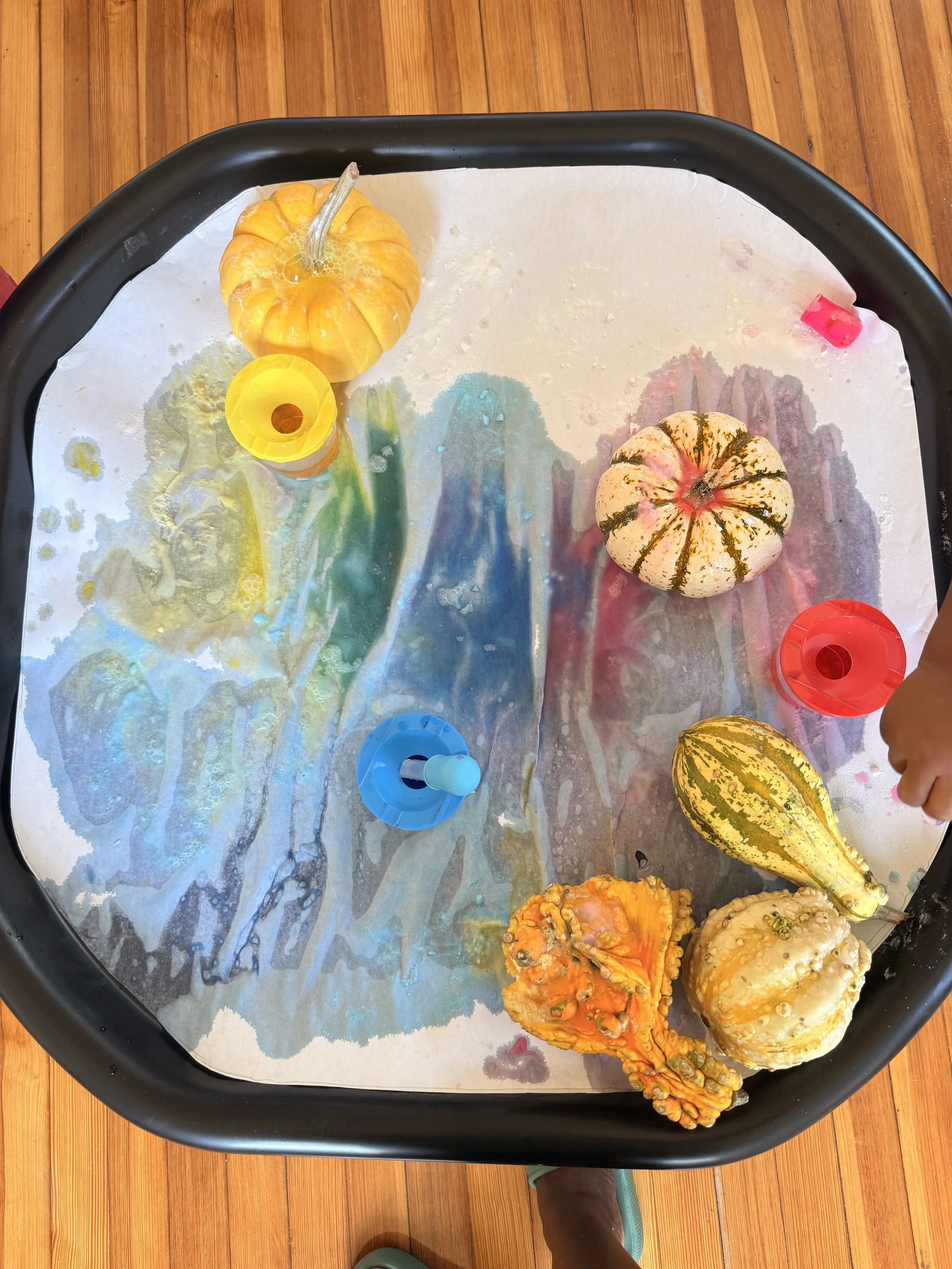
On the Tuff tray, a large sheet of paper became the foundation for our investigation. Bumpy gourds and pumpkins were arranged across its surface, surrounded by a generous sprinkling of baking soda. Nearby, cups of red, yellow, and blue watercolor mixed with vinegar were accompanied by pipettes, inviting the children to experiment with transferring and releasing liquids.
The arrangement was intentionally open-ended. The children could explore the colored liquids, observe the pumpkins, or investigate what happened when the materials came into contact with one another.
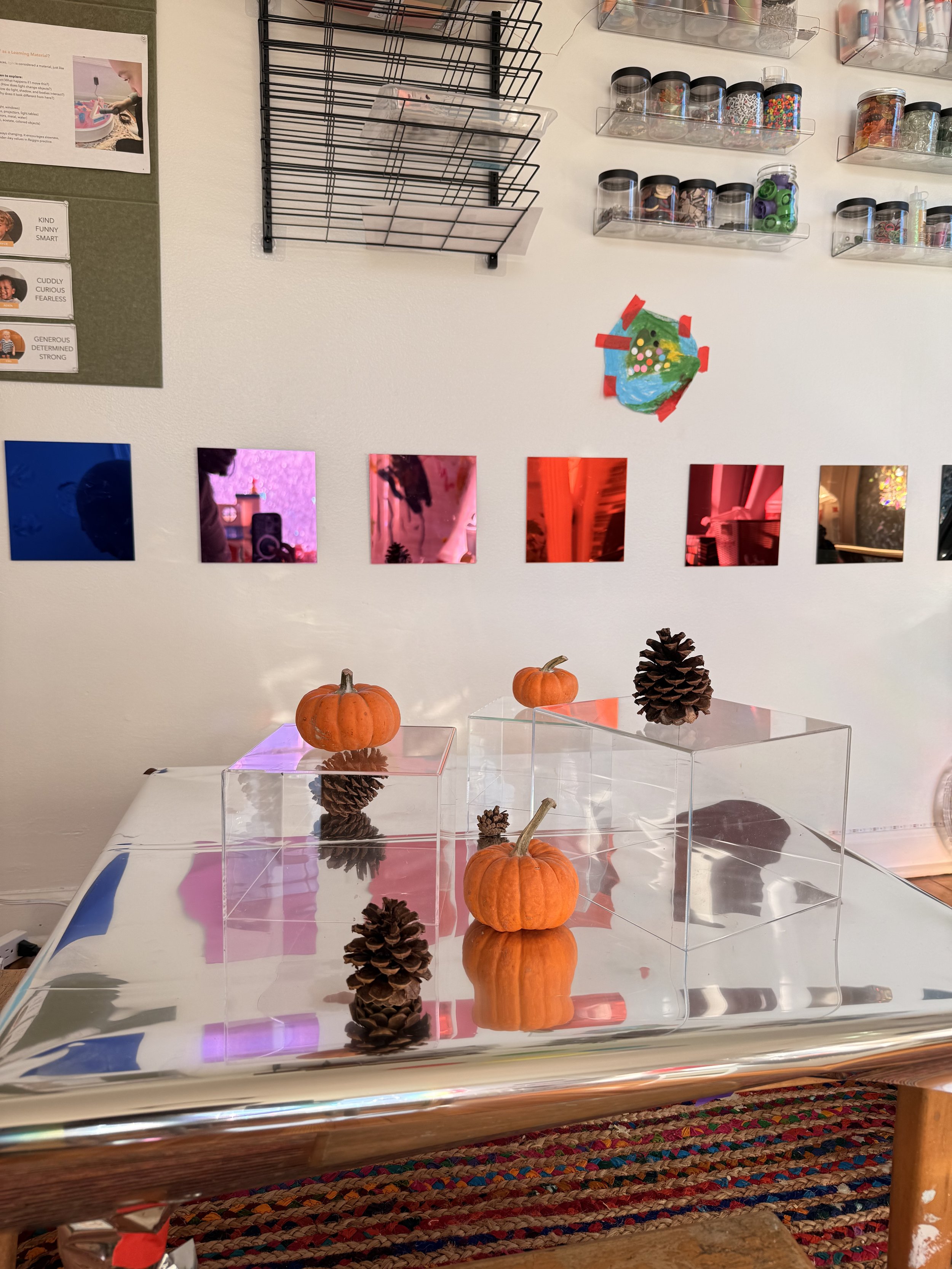
At the table, another invitation awaited. A reflective mirror film covered the surface, with three large transparent acrylic boxes placed over pumpkins and pinecones. The reflective surface and transparent containers offered possibilities for examining objects from different perspectives, hiding and revealing them, and experimenting with their arrangement.
I was curious to see what would capture the children’s attention and how their ideas might unfold.
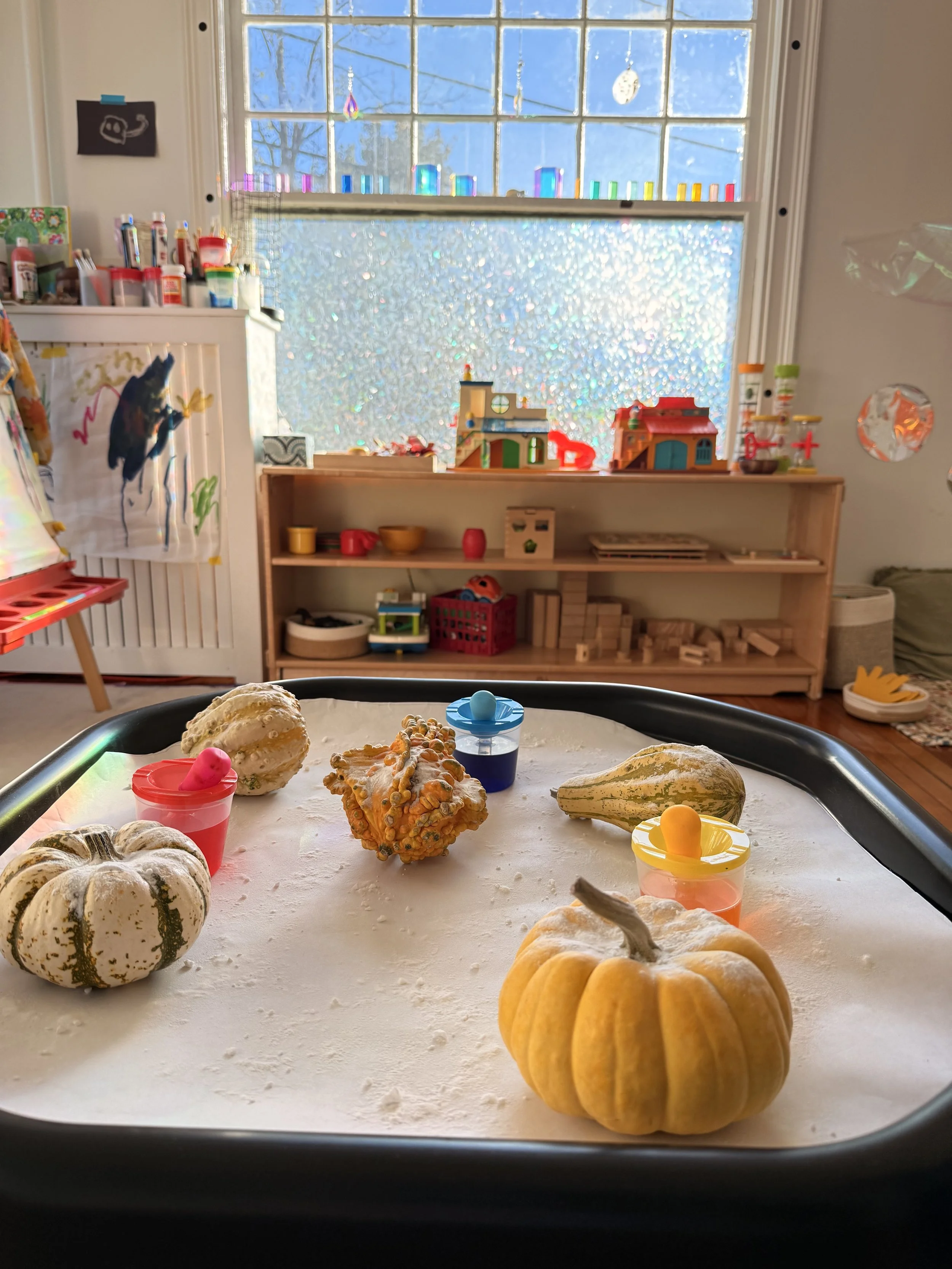
Aden was immediately intrigued by the materials on the Tuff tray. He reached for a pipette and selected the cup of blue liquid. Eager to explore, he began moving the pipette across the paper, dragging it along the surface and spreading the blue watercolor. As more liquid met the baking soda, tiny bubbles began emerging. Aden noticed almost immediately. “Bubbles!” he exclaimed.
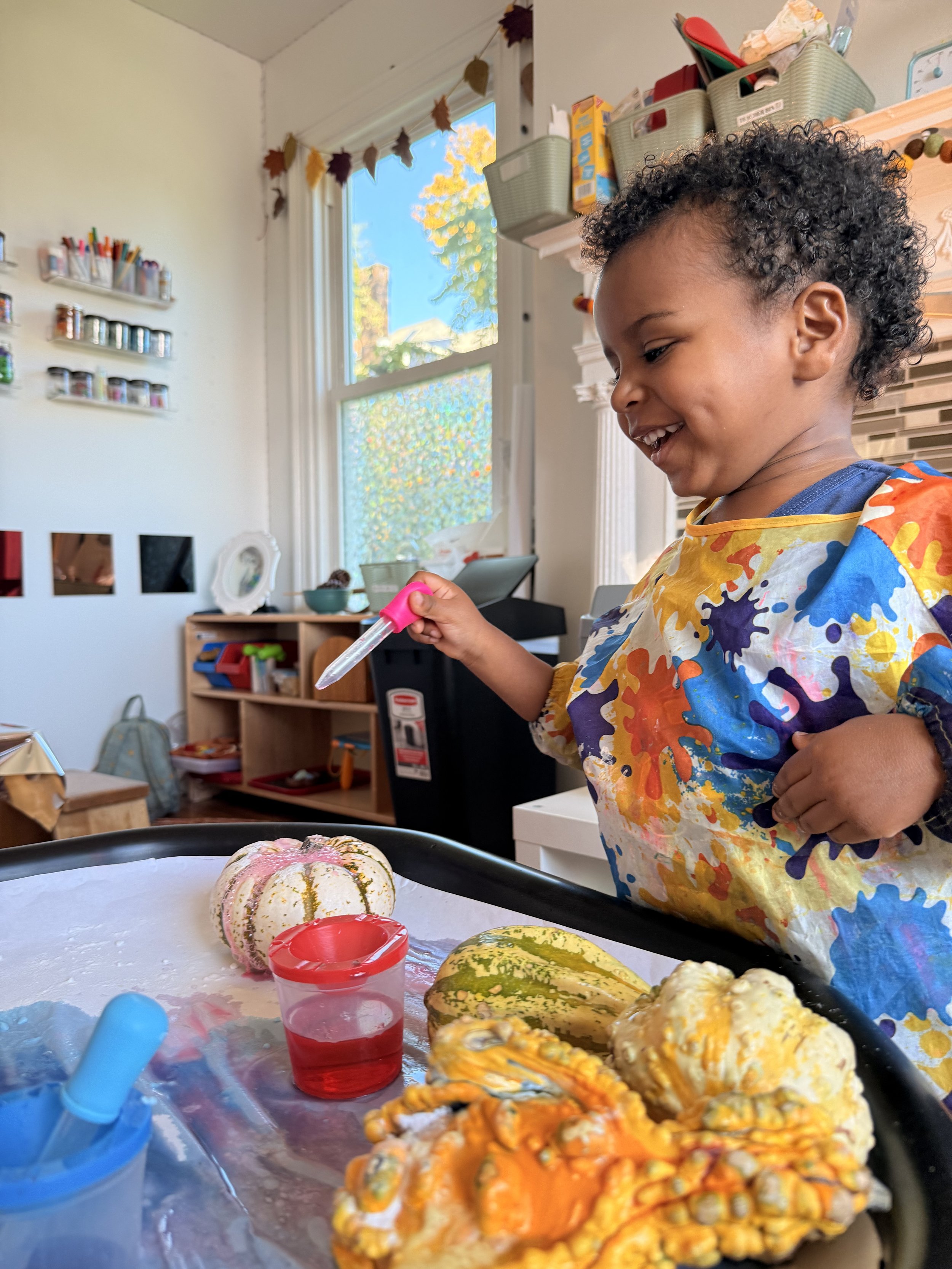
It was a familiar discovery, but this time the bubbles were appearing without the vigorous swishing movements he had previously used with soap and water. Instead, the vinegar was reacting with the baking soda, producing carbon dioxide gas that appeared as bubbles and created a gentle fizzing sound. The paper became increasingly colorful as Aden continued experimenting, leaving trails of blue while the mixture bubbled beneath his movements.
What interested me most was the way he returned to the bubbles with such excitement. Although the materials were different, he seemed to recognize something familiar in the reaction. His earlier experiences had given him a point of connection, allowing him to encounter a new process with a sense of recognition and wonder.
Ciel soon approached the Tuff tray, drawn toward Aden’s excitement. He selected the yellow liquid and paused to observe what was happening on the paper. For a moment, he simply watched. The fizzing surface appeared to capture his attention before he decided to contribute to the investigation. Using the pipette was not as simple as it first appeared. To collect the liquid, the children needed to squeeze the bulb, place the tip into the watercolor mixture, and release their fingers to draw the liquid inside. They then needed to squeeze again to dispense it. It required coordination, concentration, and repeated attempts.
As Ciel experimented with the pipette, he gradually discovered how to control the liquid. Once he understood the movement, he began transferring yellow watercolor from the cup onto different areas of the paper. The reaction began again. Tiny bubbles appeared, accompanied by the soft fizzing sound. Aden and Ciel watched with delight, giggling as the bubbles formed and the sound continued. There was something particularly beautiful about the shared excitement. Neither child needed an elaborate explanation of the chemical reaction to find meaning in what they were observing. Their curiosity was evident through their gestures, laughter, and desire to repeat the process. Each squeeze offered another opportunity to test what would happen.
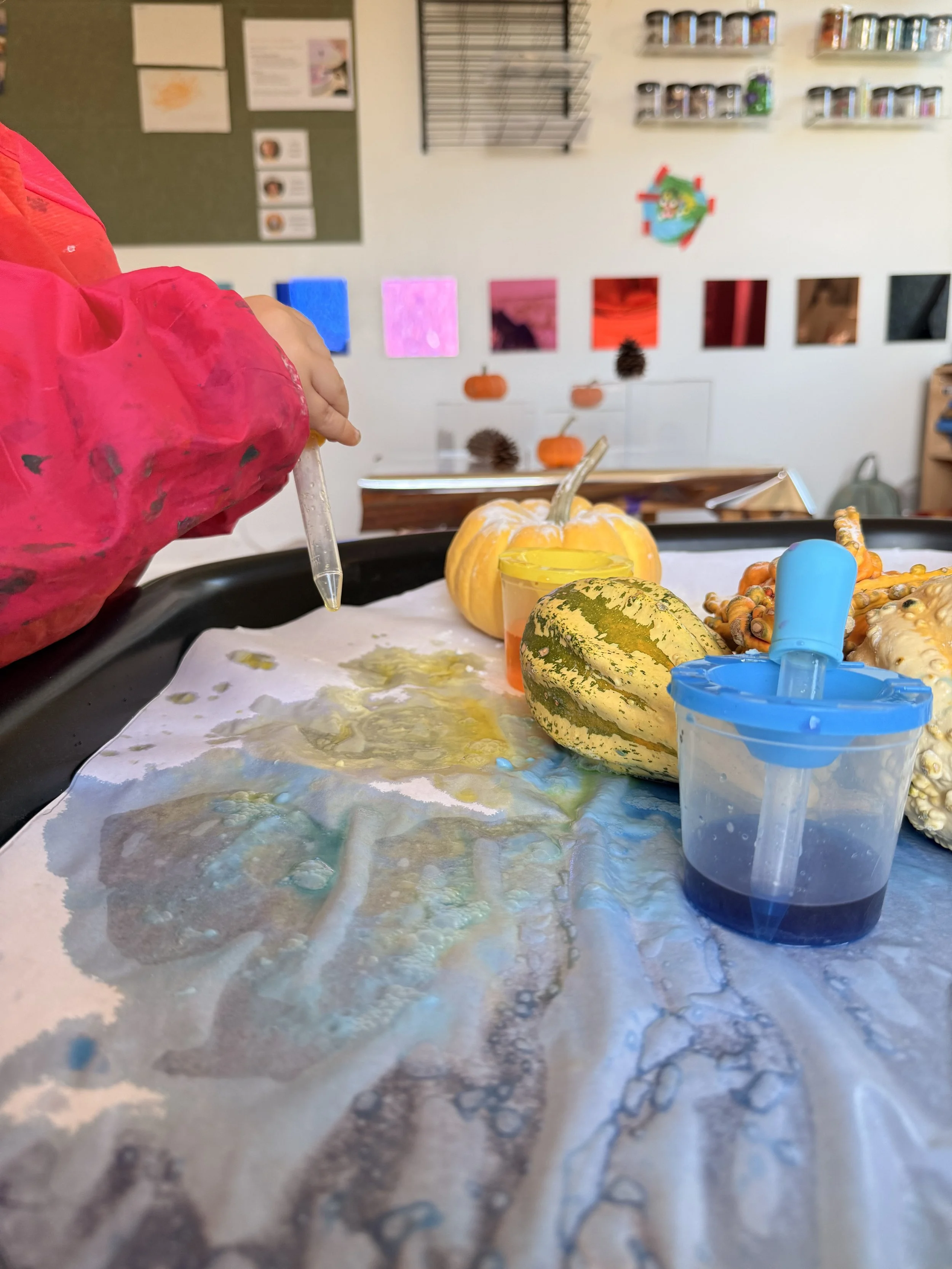
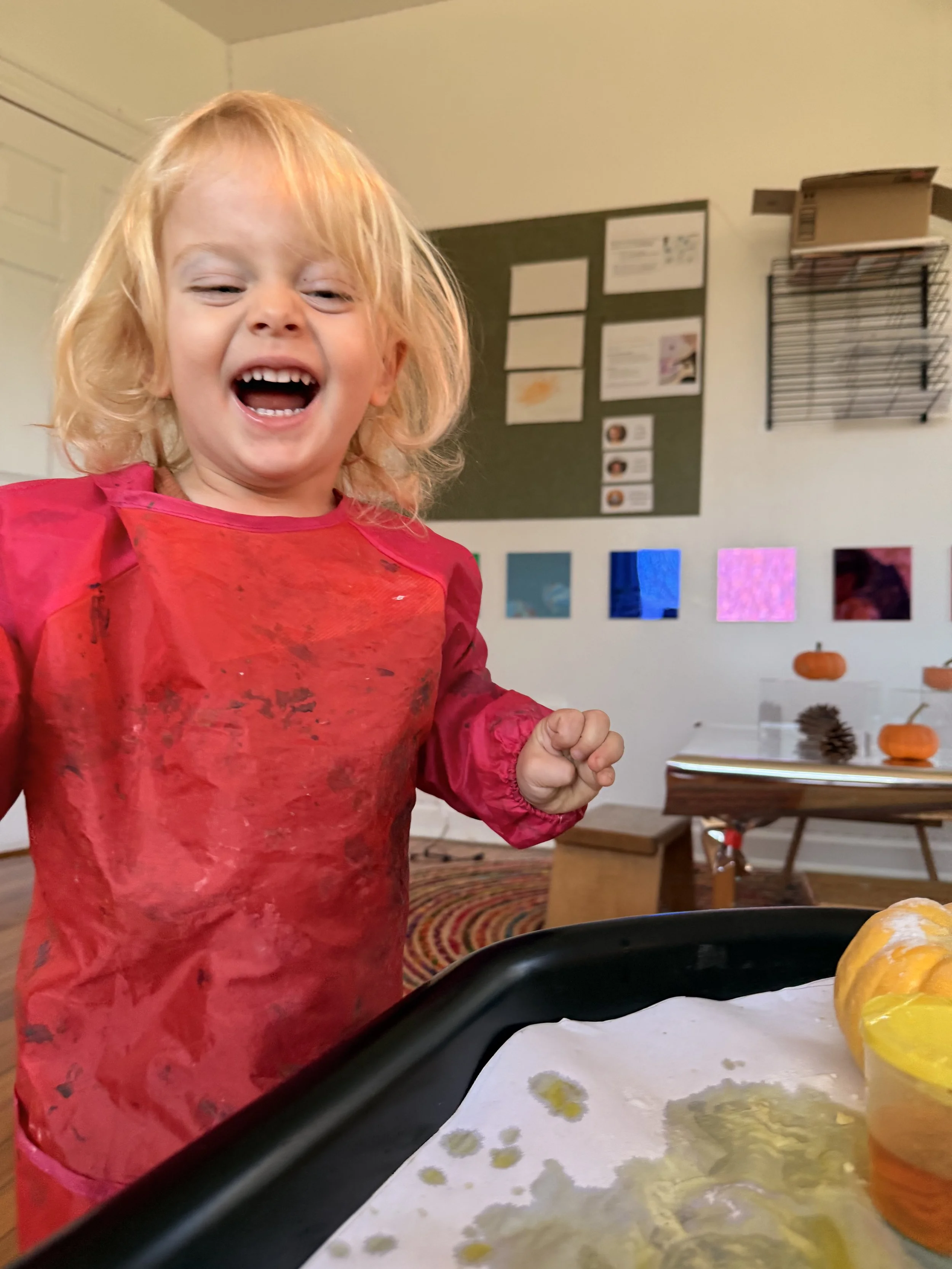
As Ciel continued adding yellow liquid to the paper, another transformation began to emerge. Some of the yellow watercolor traveled across areas already covered in Aden’s blue paint. Ciel noticed the colors changing where the liquids overlapped. The investigation was no longer only about bubbles. The children were also encountering color mixing through the movement of liquid across the paper. Unlike painting with a brush, where colors can be deliberately blended, the pipettes allowed the watercolor to travel, spread, and meet in unexpected ways. The children could observe how one color influenced another while the fizzing reaction continued beneath them. What began as an investigation of bubbles had opened the possibility of exploring color, movement, and transformation simultaneously.
I was reminded that children’s learning rarely follows one fixed direction. A carefully prepared invitation may begin with one intention, but the children’s discoveries often reveal possibilities we did not anticipate.
After spending time with the bubbling watercolor, the children gradually made their way to the table. Their attention shifted toward the transparent acrylic boxes resting on the reflective surface. Aden and Ciel began lifting the boxes, revealing the pumpkins and pinecones hidden beneath them. Soon, a playful investigation emerged. The children began placing objects underneath the boxes, covering and uncovering them as though playing a game of hide-and-seek. The transparent material introduced an interesting contradiction: the objects were hidden beneath the containers, yet they remained visible. The children continued experimenting, lifting the boxes, rearranging the objects, and placing the containers on top of one another. Then Aden introduced a new idea. He lifted an acrylic box and placed it over his head, pretending to hide. He giggled at his own discovery. Ciel watched his friend and joined the playful investigation, appearing curious about whether he, too, could hide beneath a box in the same way as the pumpkins. What had begun as an exploration of objects under transparent containers was becoming a game involving their own bodies. Aden then brought two toy cars to the table, introducing another familiar material. He began testing whether the cars could also be hidden beneath the boxes. The investigation continued as the children stacked the transparent containers, creating layered arrangements above the reflective surface. From certain angles, the objects appeared almost as though they were floating. The children giggled as they discovered new ways to arrange, conceal, and reveal the materials.
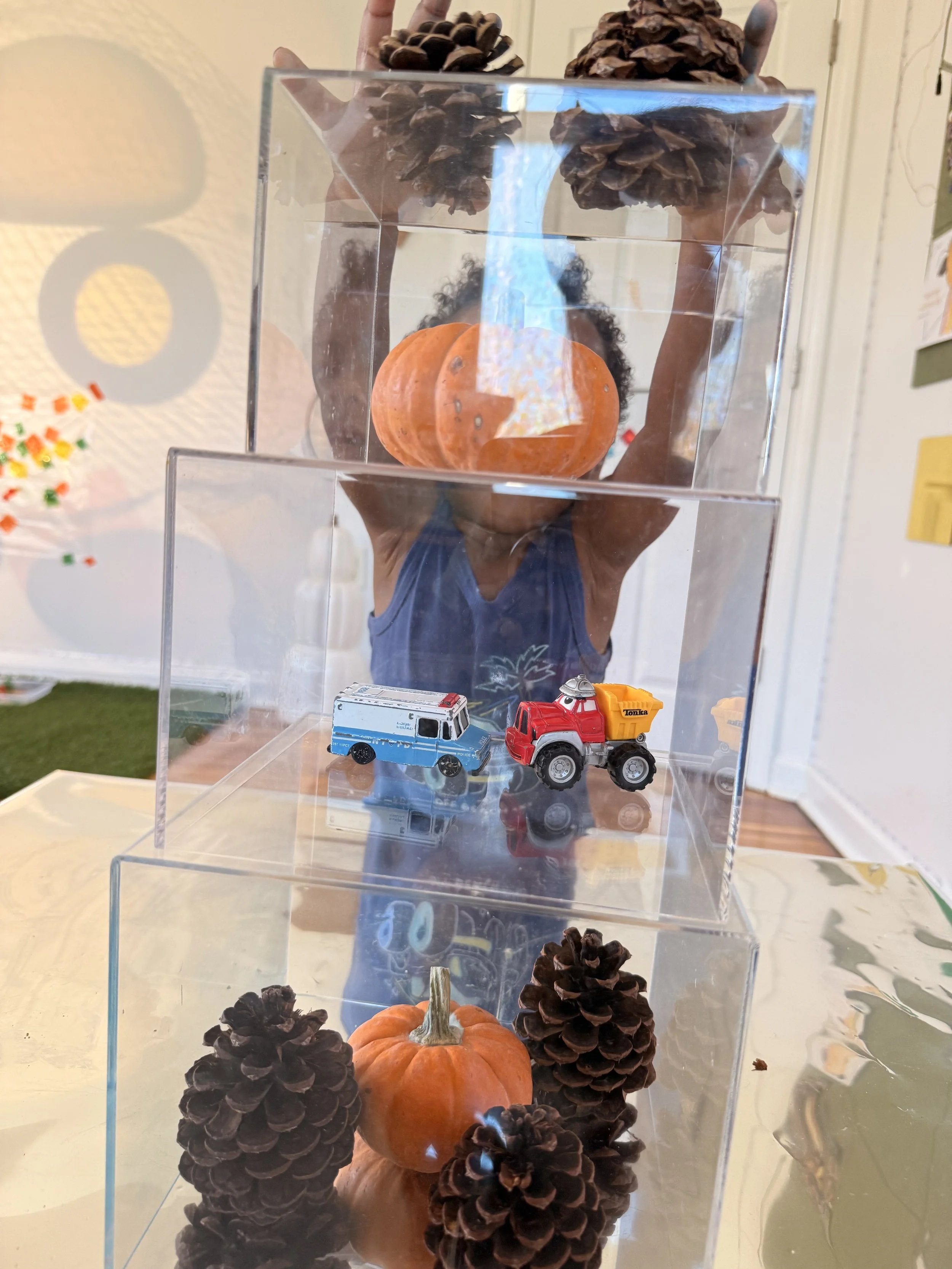
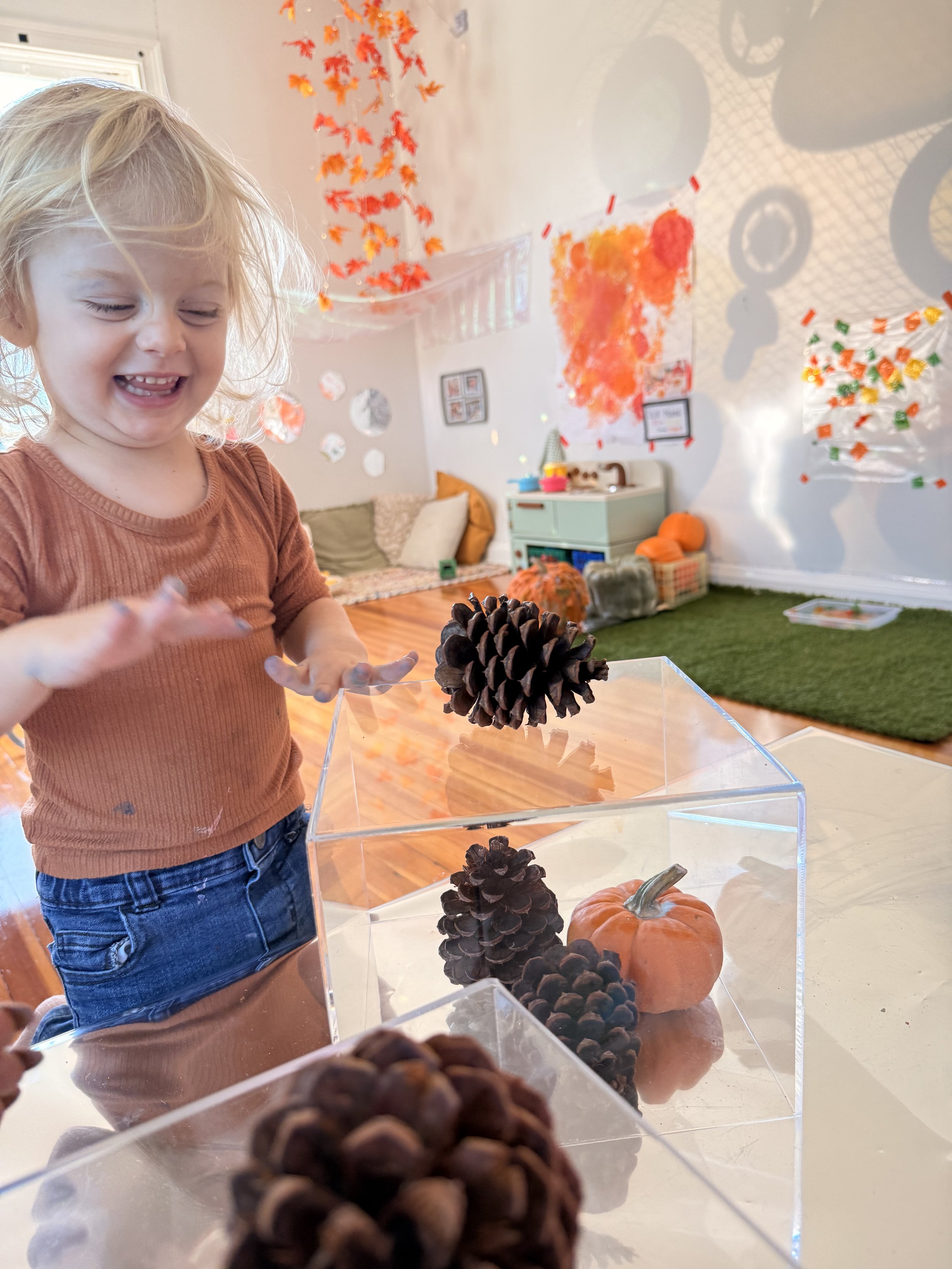
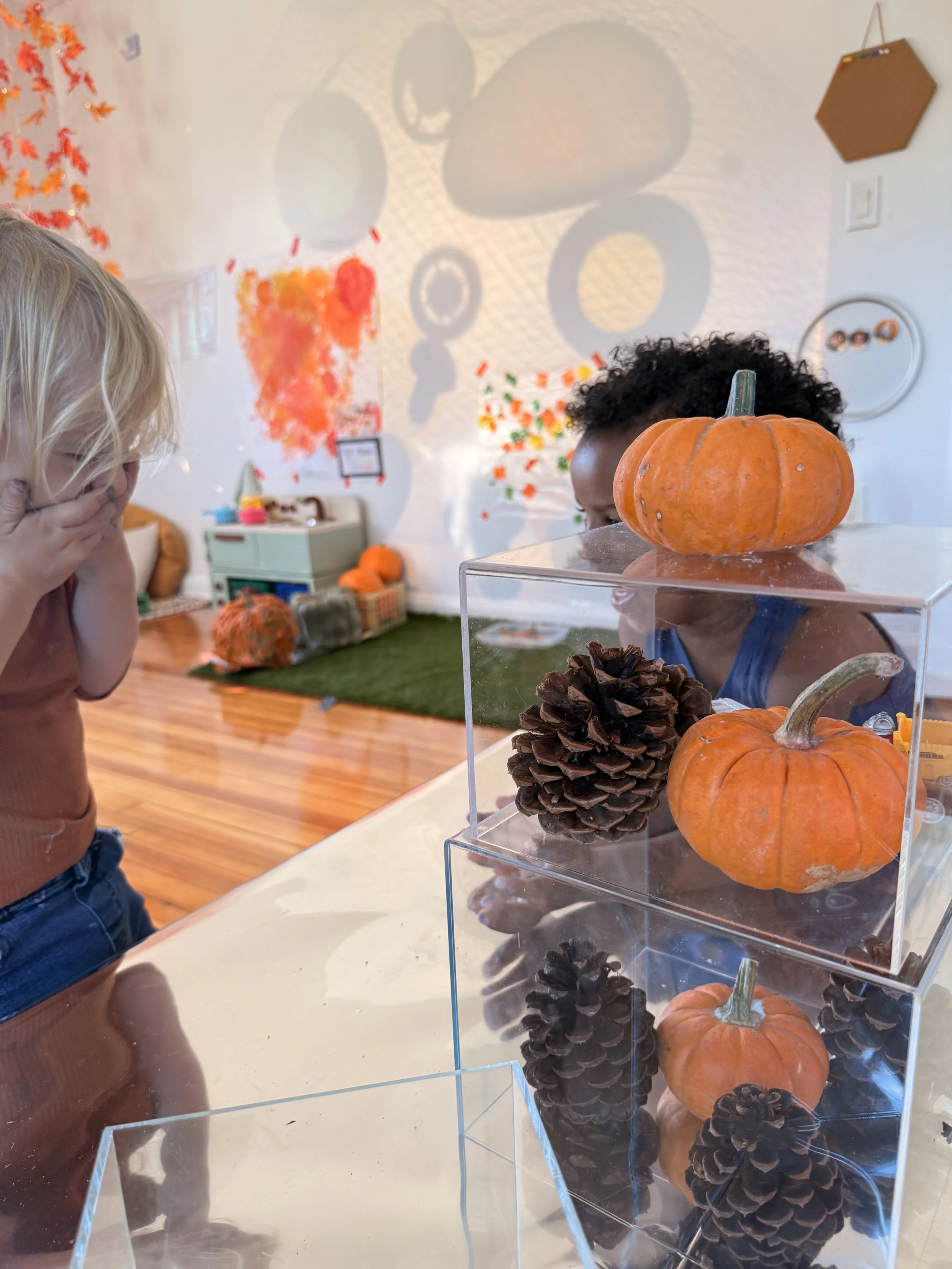
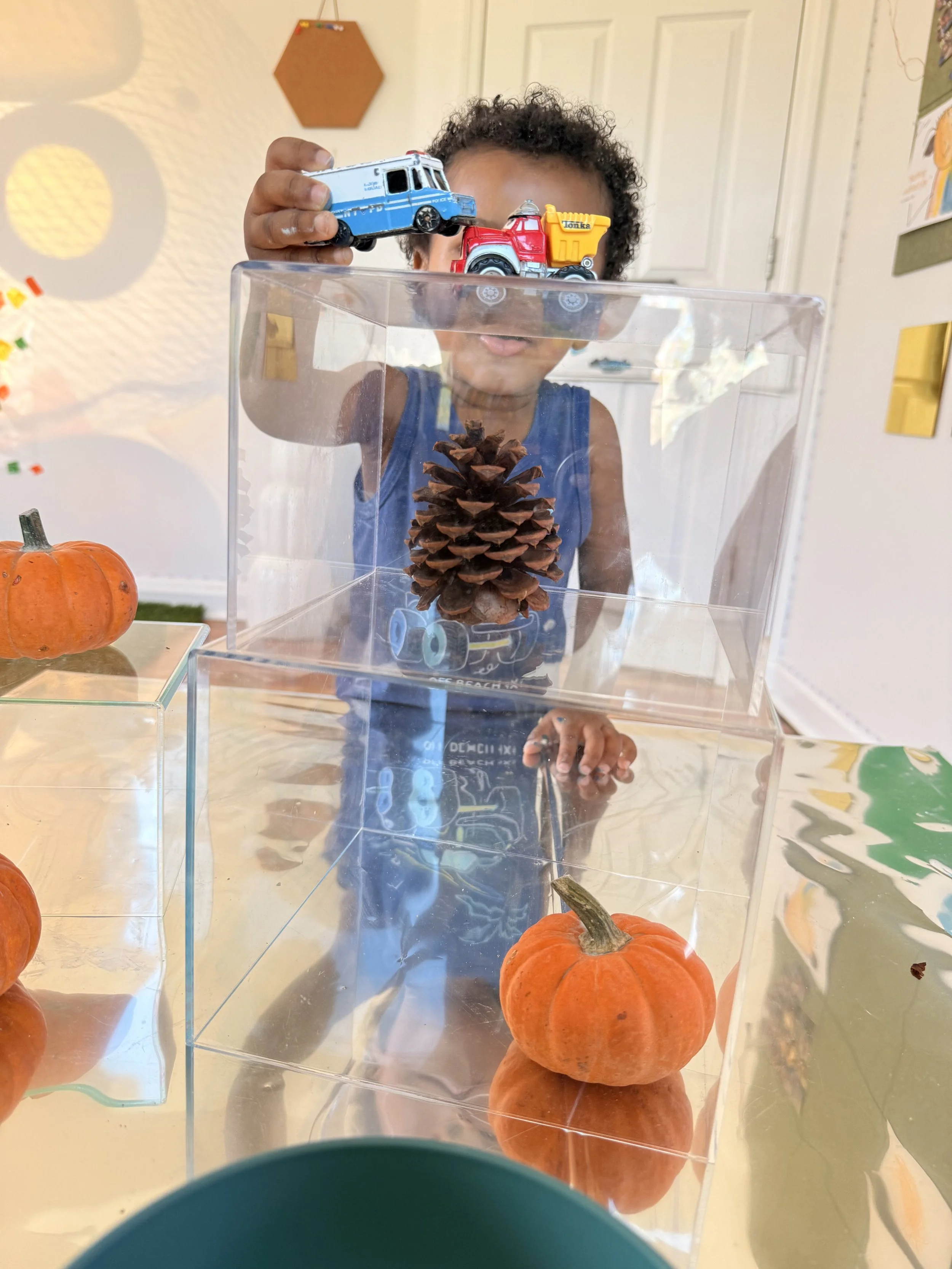
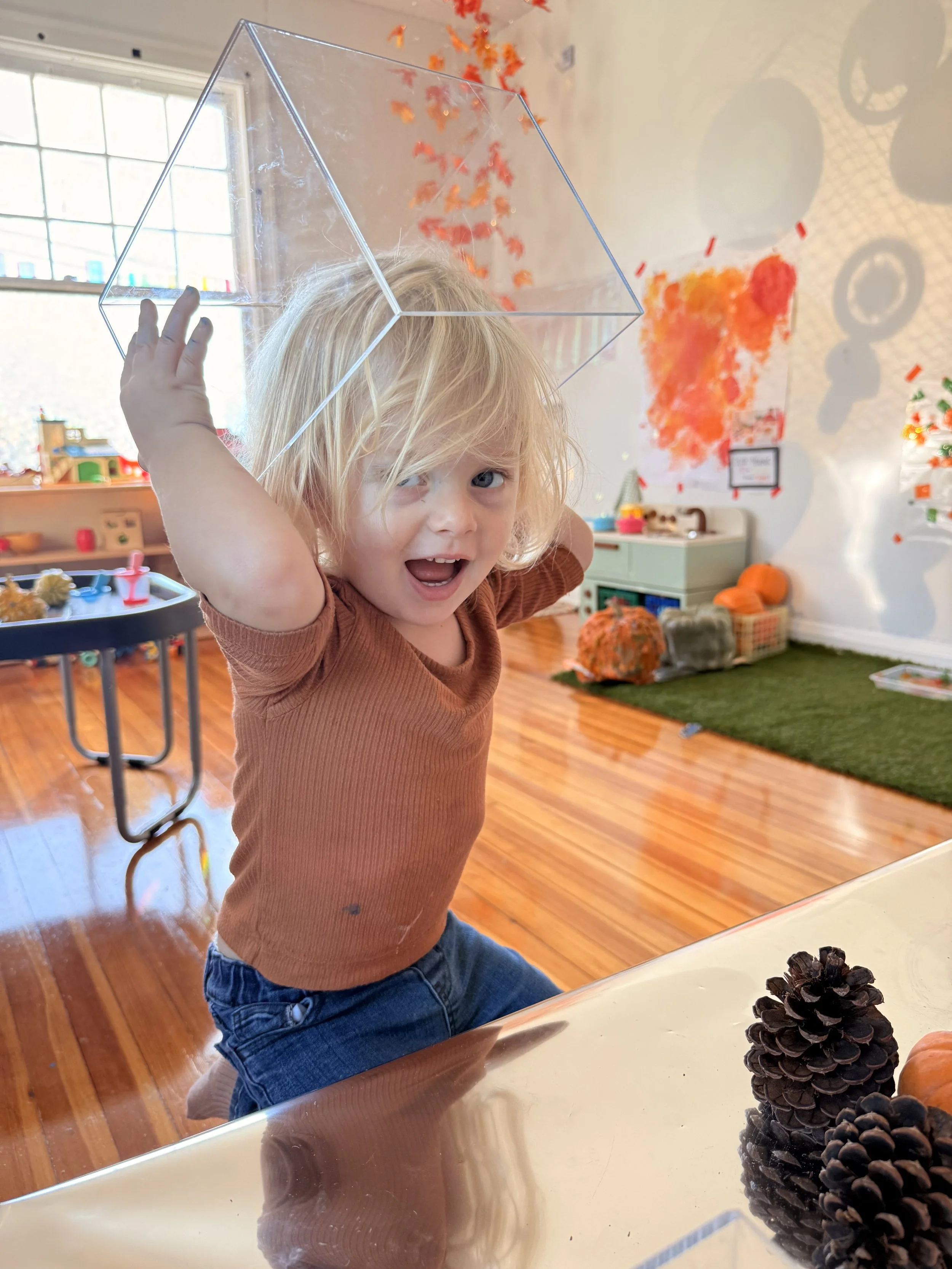
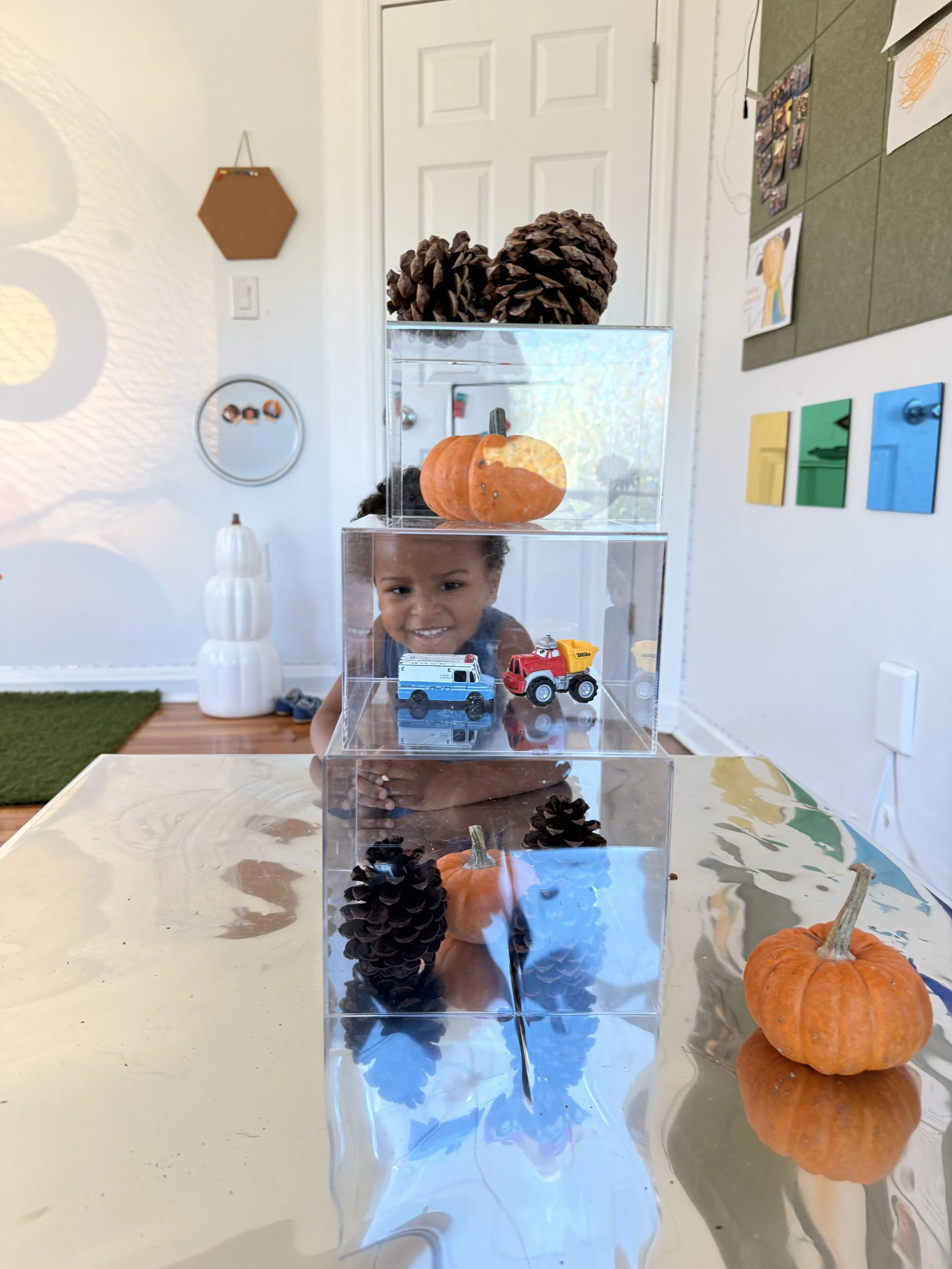
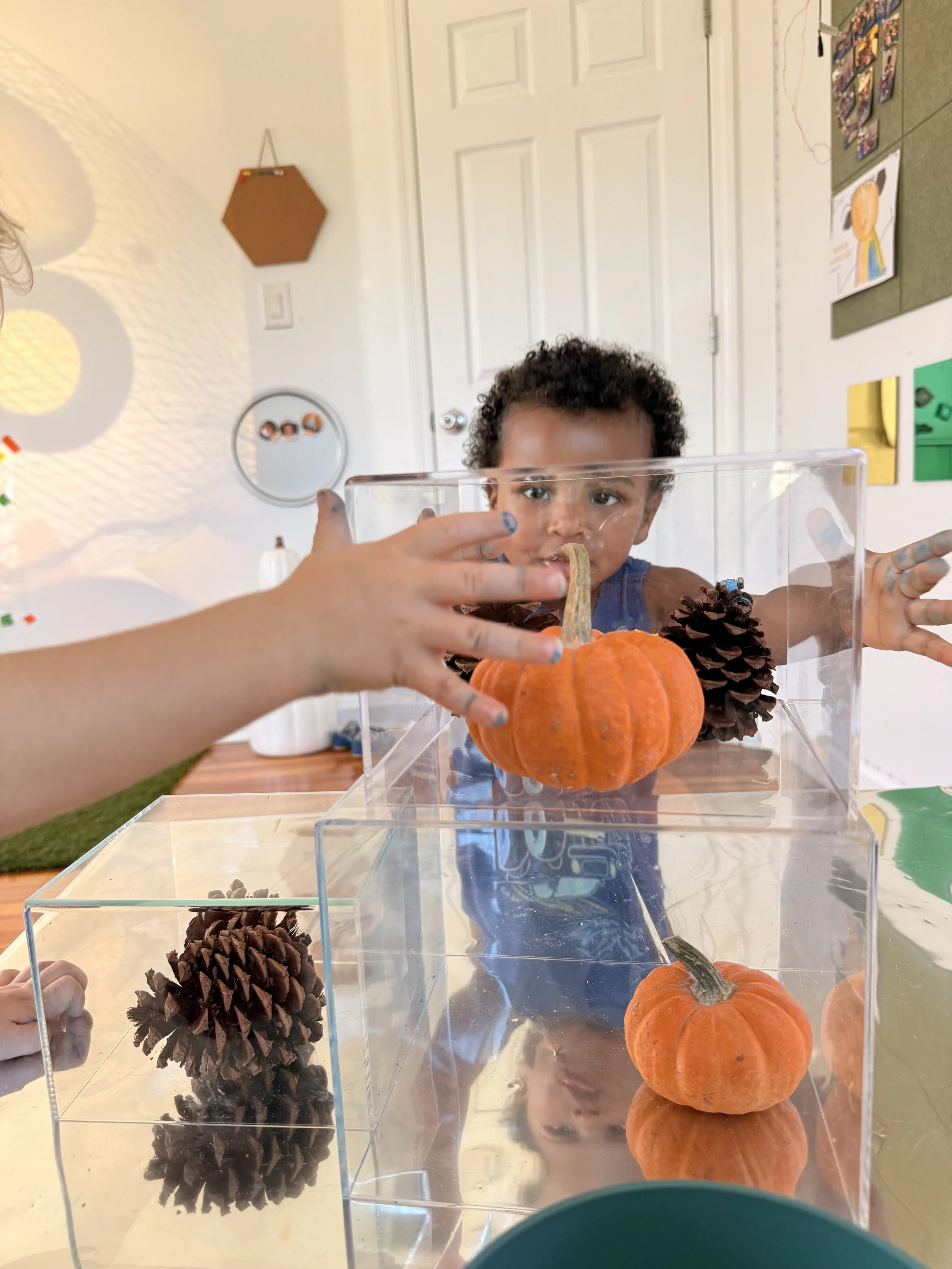
I found this moment particularly interesting because the children were exploring the meaning of hiding in their own way. The boxes did not completely block their view, yet that did not prevent them from imagining that the objects, and even themselves, were hidden. Their game brought together observation, imagination, and a developing understanding of space.
What stood out to me throughout this exploration was how the children approached two very different invitations with the same sense of curiosity. At the Tuff tray, Aden and Ciel were investigating visible changes: liquids spreading, colors overlapping, bubbles forming, and sounds emerging. At the table, their attention shifted toward what could be seen, hidden, stacked, and imagined. Both experiences involved the children taking an action and observing its effect, but the learning unfolded in different ways.
I was especially drawn to the moment when Aden recognized the bubbles. In previous days, he had explored bubbles through soap and water. This time, he encountered them through a new combination of materials. His excitement reminded me that repetition in early childhood does not necessarily mean doing the same thing over and over. It can also mean recognizing a familiar phenomenon in a new context and discovering another way it can occur.
Ciel’s quiet observation before joining the bubbling investigation was equally meaningful. He took time to watch, make sense of what was happening, and then participate through his own actions. Later, when the children began hiding objects beneath the acrylic boxes, their imaginative thinking became more visible. What might have appeared to be a simple game involved experimenting with visibility, space, and the relationship between themselves and the objects around them.
By observing how children interact with materials and one another, we gain insight into what interests them and how they are beginning to make sense of their experiences.