“They don’t glow in the dark.”
Today, we explored the effect of black light on objects and began to investigate the idea of neon.
As the children entered the space, they slowed down almost instinctively. The room was darker than usual, yet it was not empty, objects glowed softly, scattered across the space. I could see the children adjusting their eyes, their bodies, their expectations. Something had shifted.
Aksel was one of the first to move. He gathered the dinosaurs into his hands and brought them together, then laid himself down on the floor beside them, bringing his body close to the glowing world they were entering. From this low vantage point, the light felt larger, more immersive.
Theo arrived with a plan already forming. He wanted to build a train track.
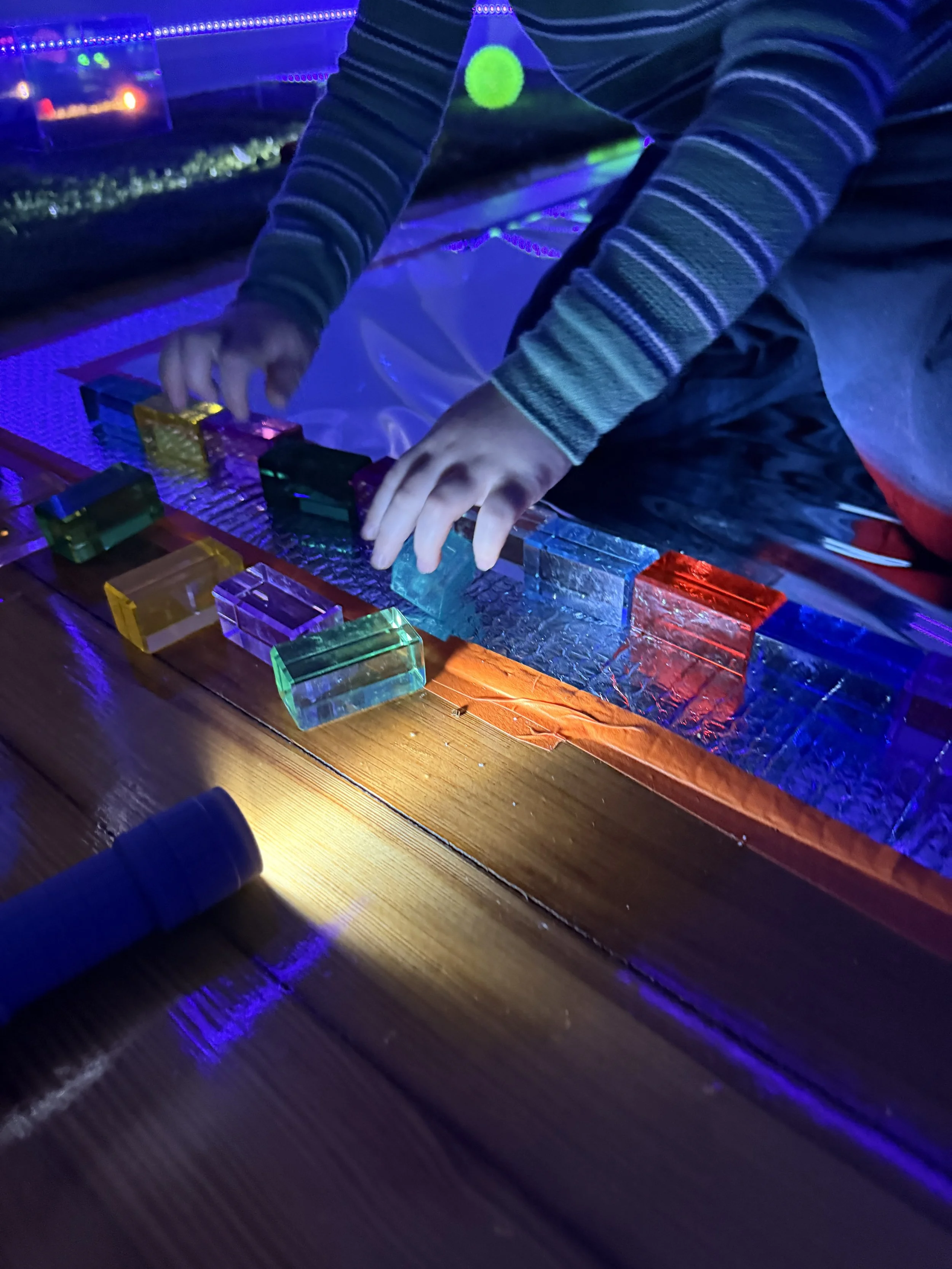
We wondered together: What could we use to make a train track in this room? Theo thought carefully, then walked over to the grassy rug and picked up the clear stacking gems. He carried them to the Mylar paper and began laying them out, first horizontally, then adding another layer vertically. Mateo rushed in to help, immediately understanding Theo’s idea. Together they adjusted and refined.
When they finished, Theo stepped back, studied his work, and nodded.
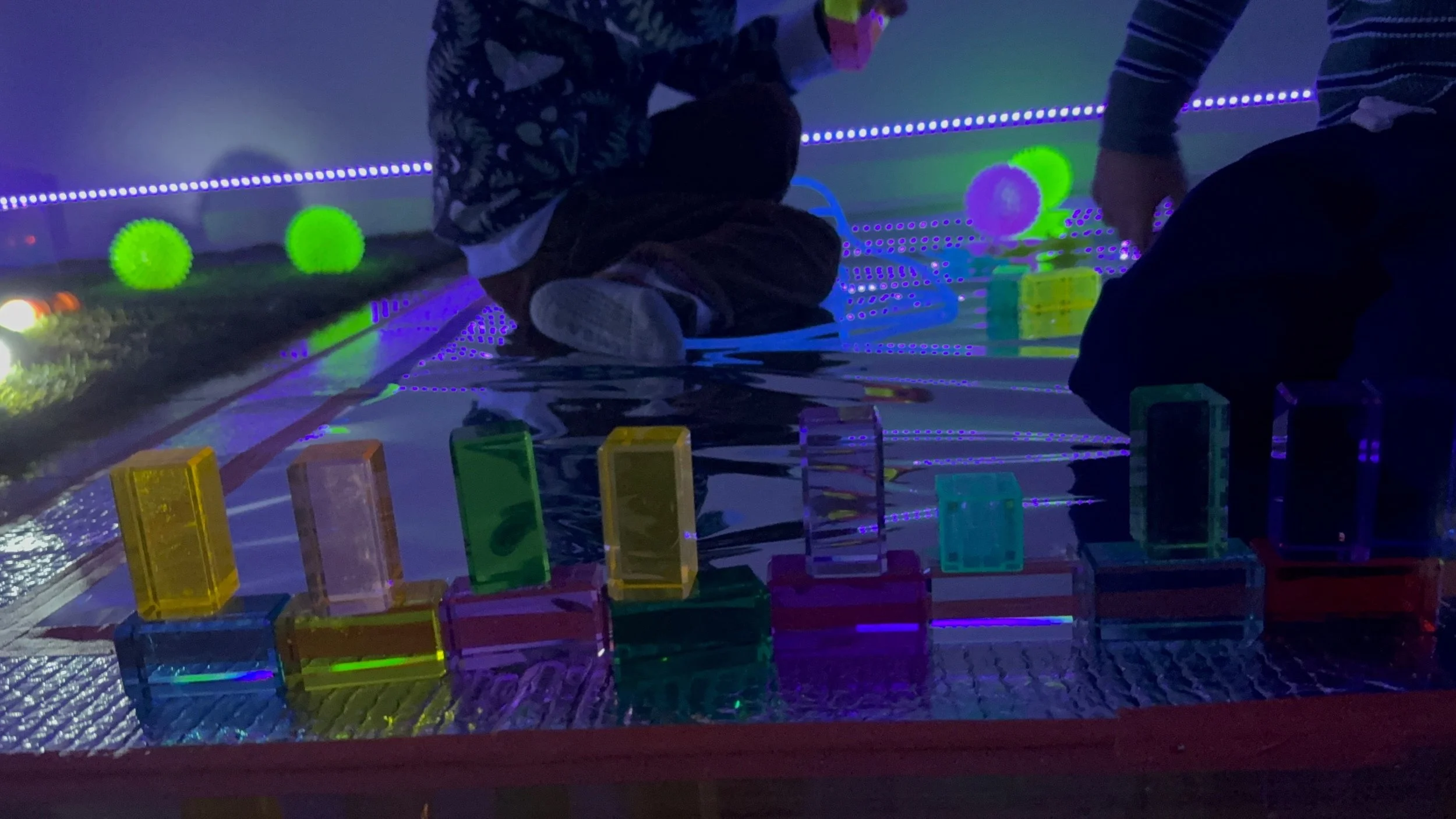
“Yup. It’s a train.”
Then he noticed something new.
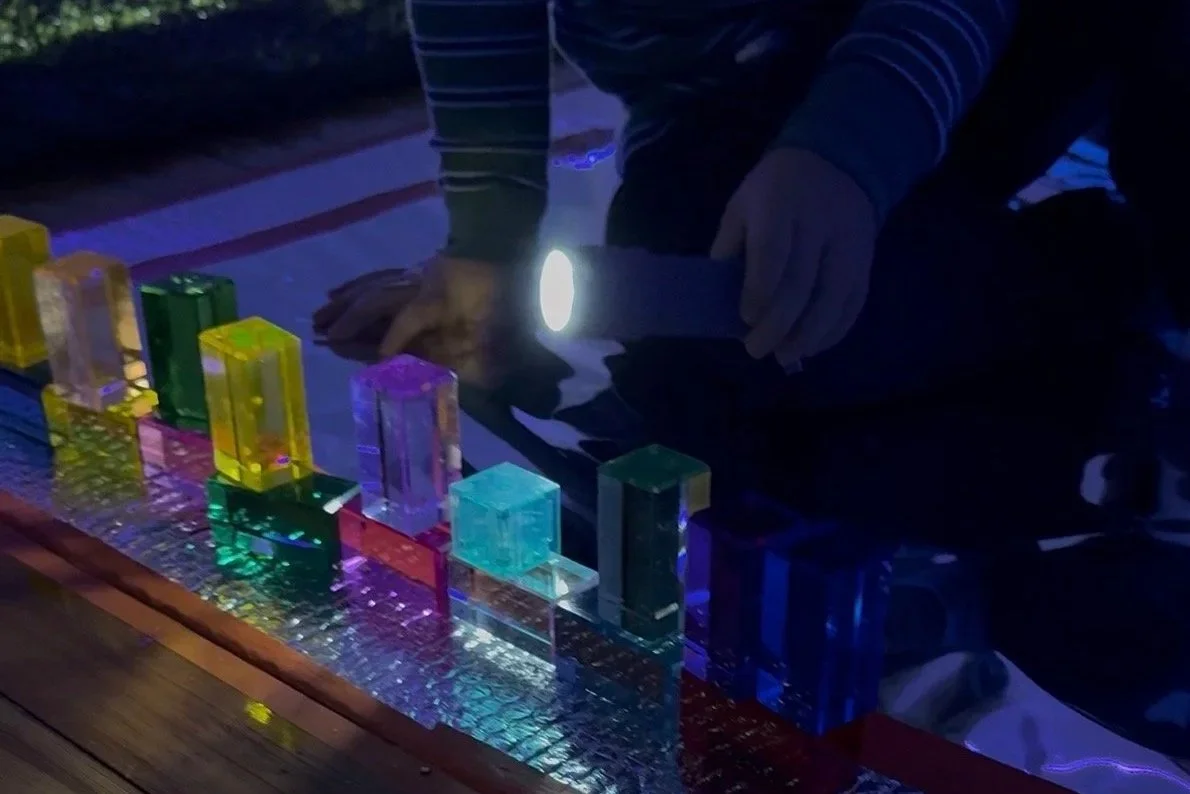
“They don’t glow in the dark.”
He picked up a light and passed it through the gems. As the beam moved, the gems became transparent, and color spilled onto the floor. The train had transformed, not by being rebuilt, but by being illuminated.
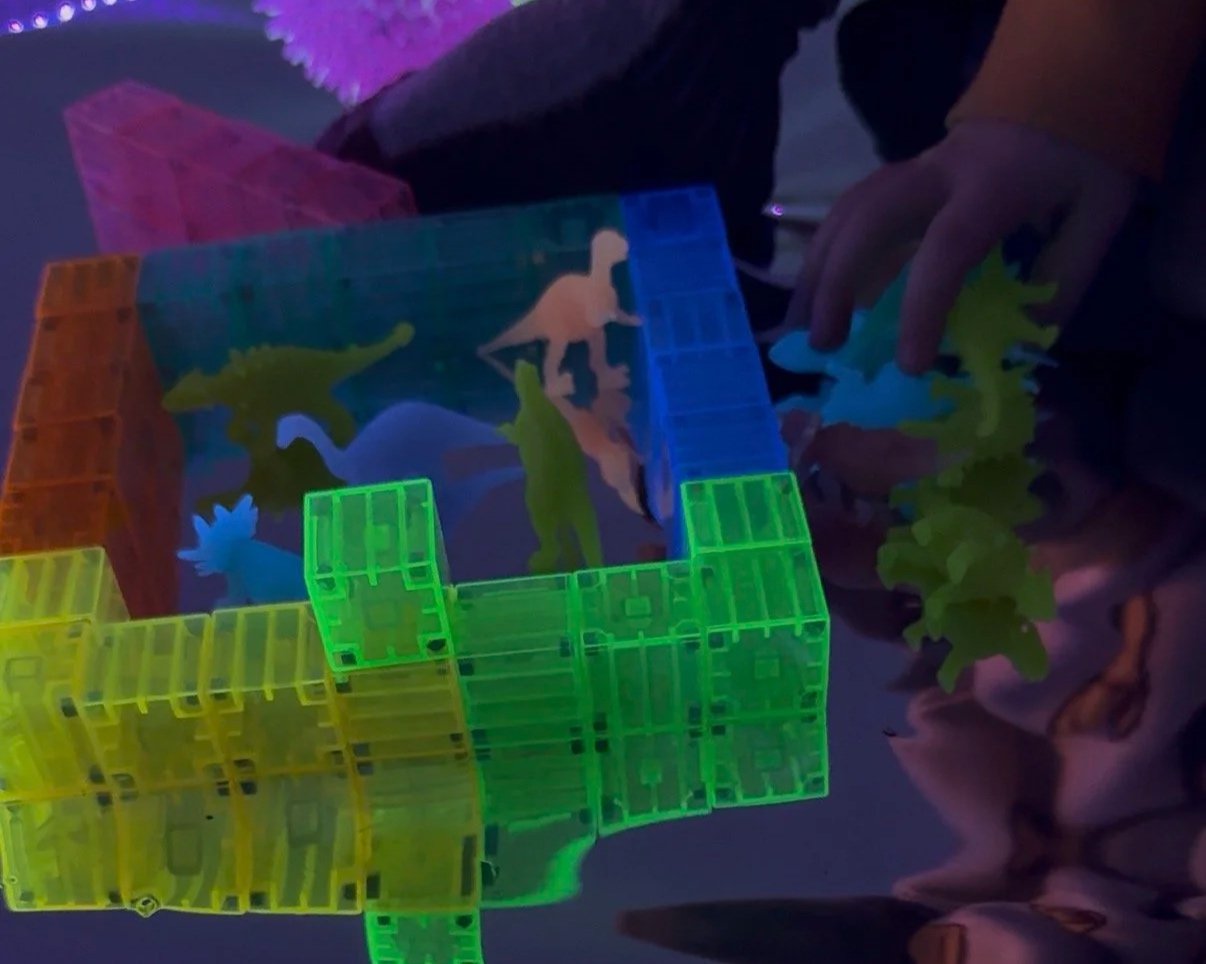
Across the room, Río worked with glowing magnetic blocks. He stacked them vertically, then placed a glowing string between the blocks. When he tried to build the structure horizontally, it collapsed. He rearranged it and tried again, but the magnets wouldn’t hold.
I asked, “What could we use to help them stay together?”
When I offered tape, Río immediately got to work, folding it, flipping it, testing different ways to secure the blocks. When the structure finally held, he paused, satisfied. His idea had worked.
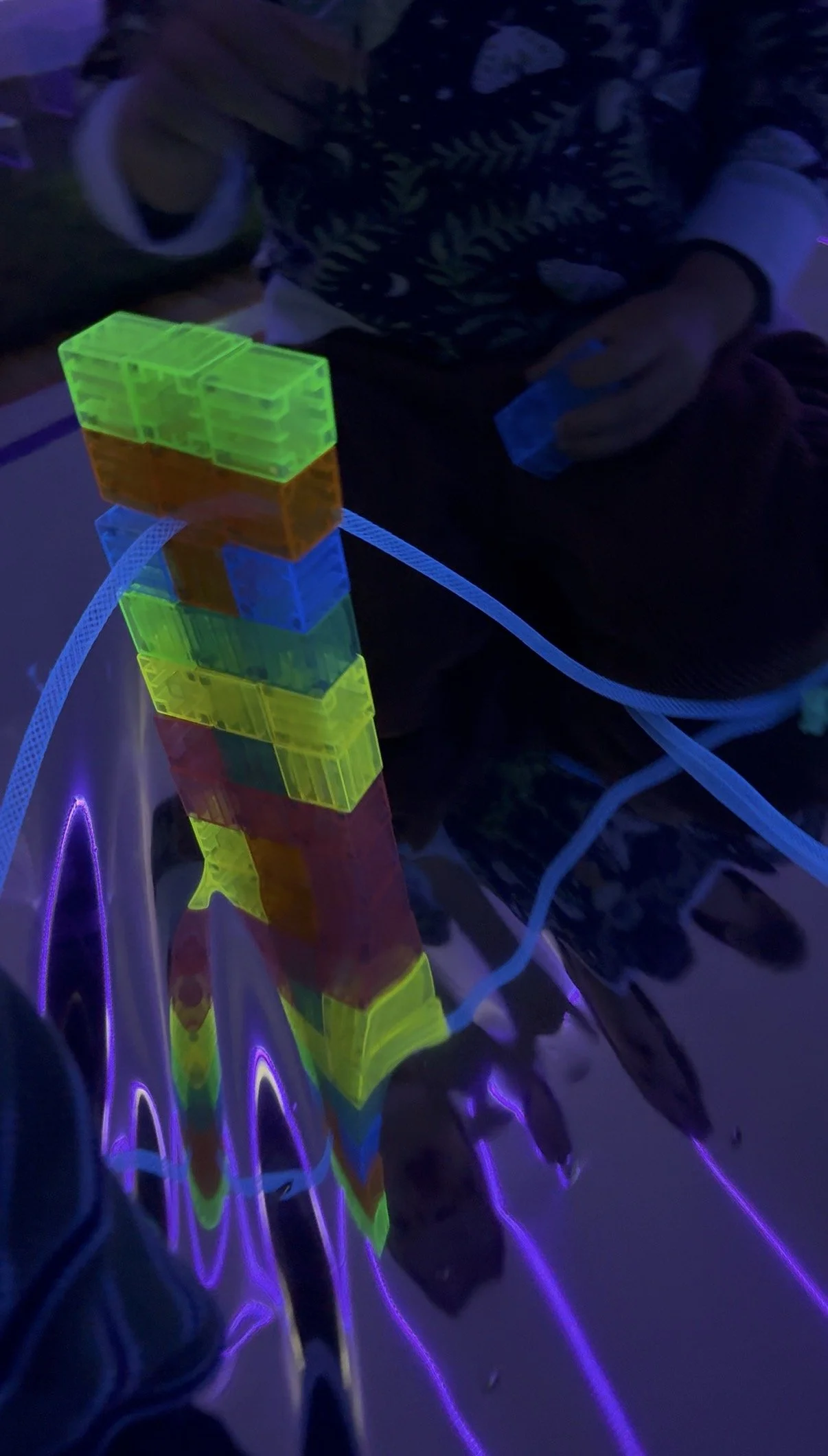
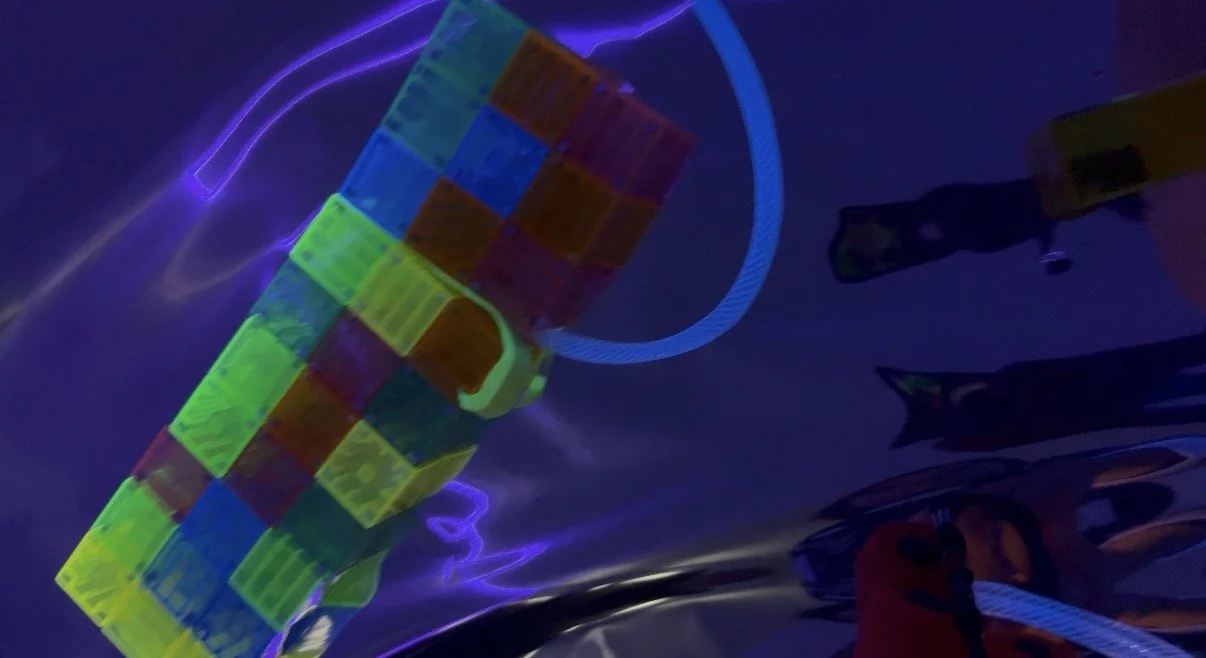
Nearby, Mateo picked up a flashlight and began moving it around the room, sweeping the beam across walls, floors, and materials. He watched closely as the light revealed glowing edges, reflections, and sudden bursts of color, noticing how the room responded each time he shifted his hand.
At the art easel, Gigi twisted open a yellow neon paint stick and drew two lines across the paper. She froze.
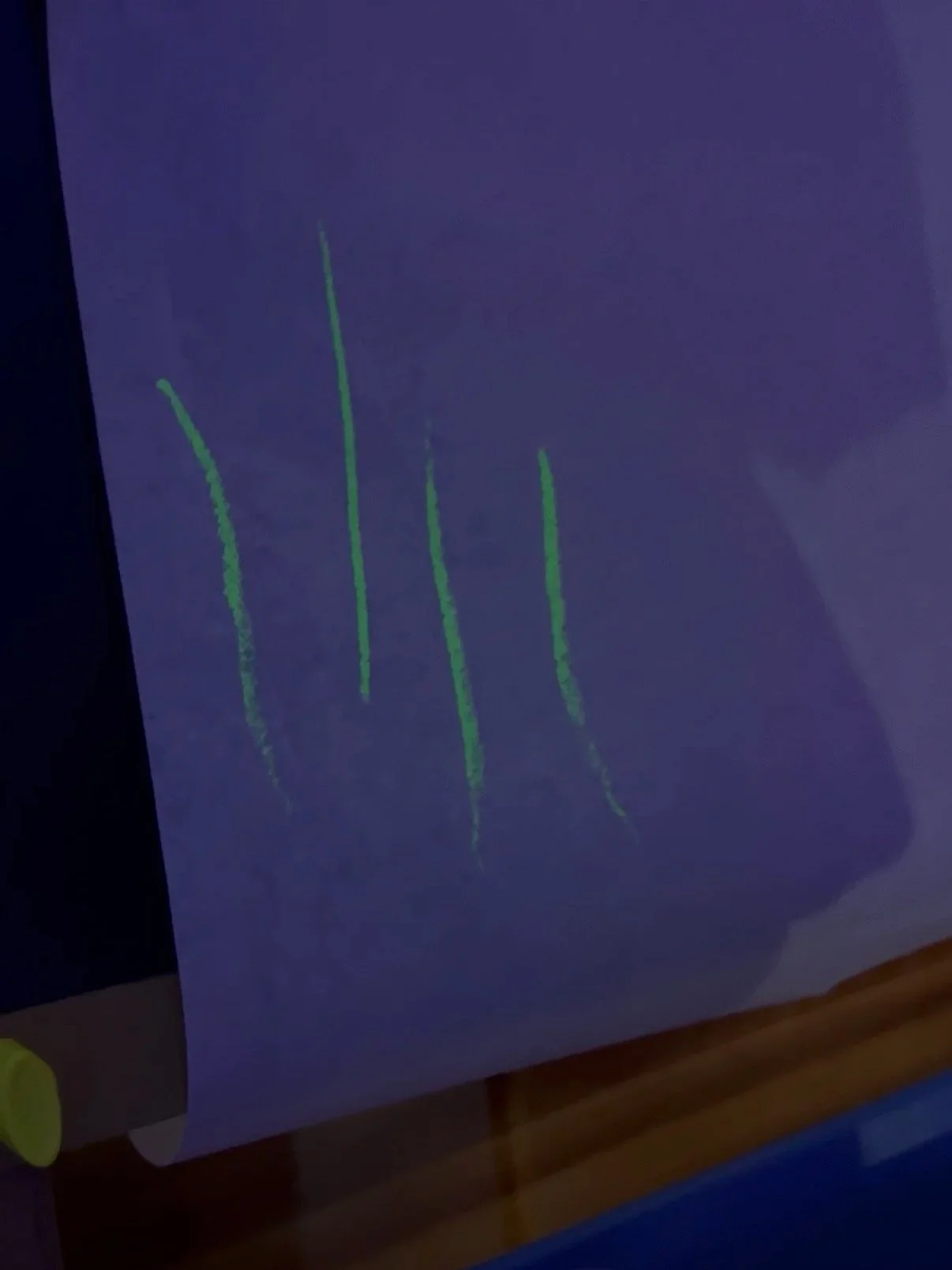
The lines were glowing.
She added two more strokes and watched closely. I wondered aloud if the glow would change on a different surface and taped black paper to the floor. Gigi knelt down and began drawing again. This time, the glow was deeper. When she tried the white paint stick, it shone even brighter against the dark background. She moved between papers, comparing, testing, noticing.
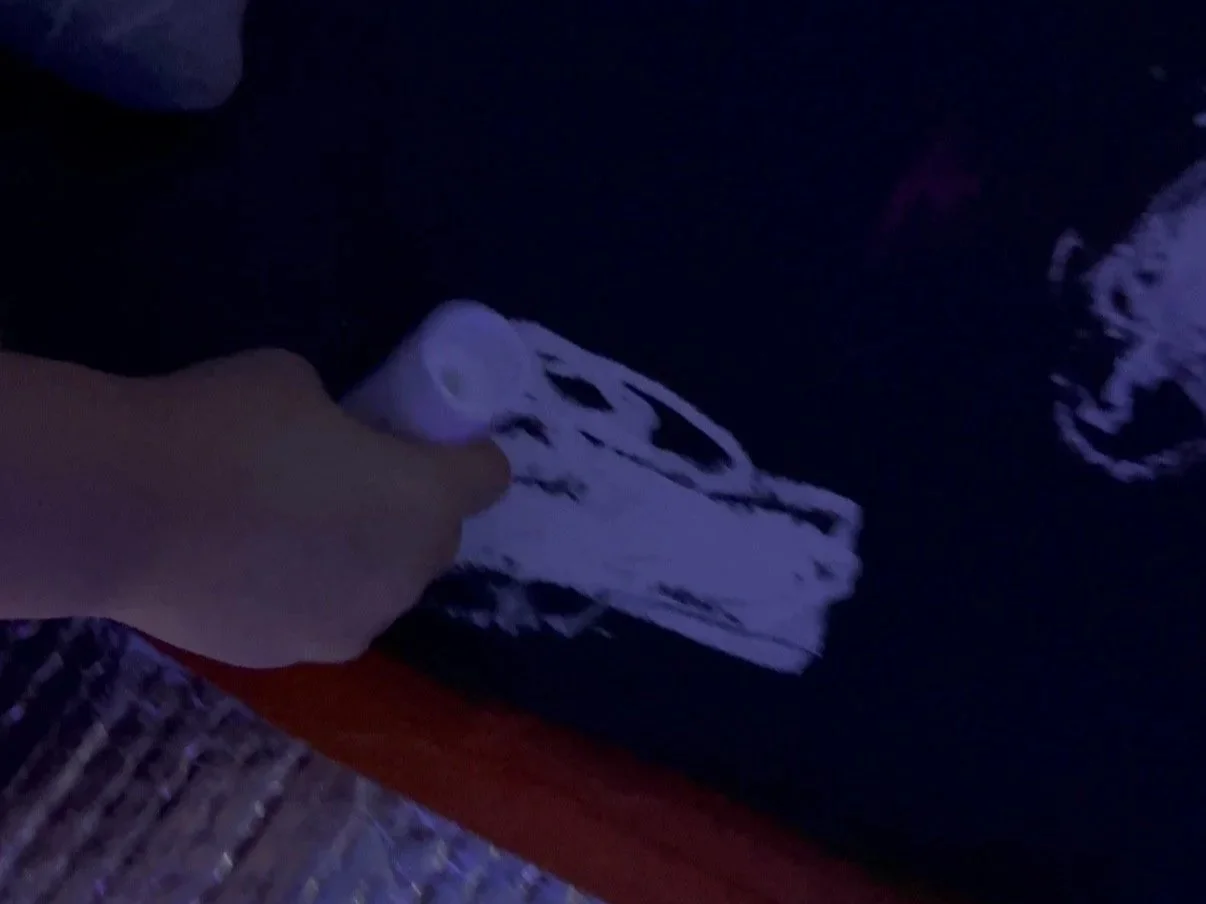
Toward the end of our time together, I introduced something new, a laser. I explained how it worked and began moving it slowly across the room.
The children gasped, and then they moved.
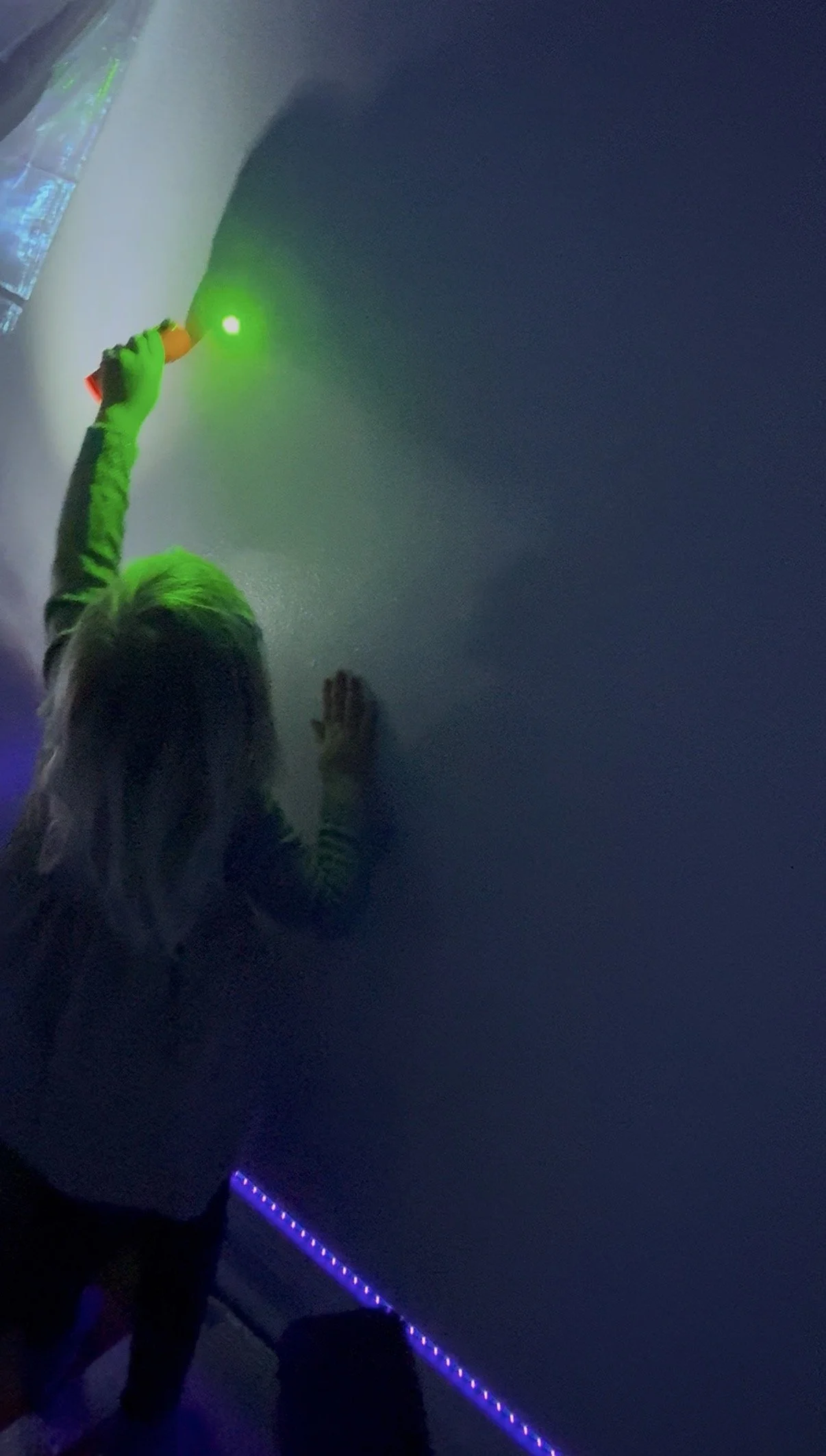
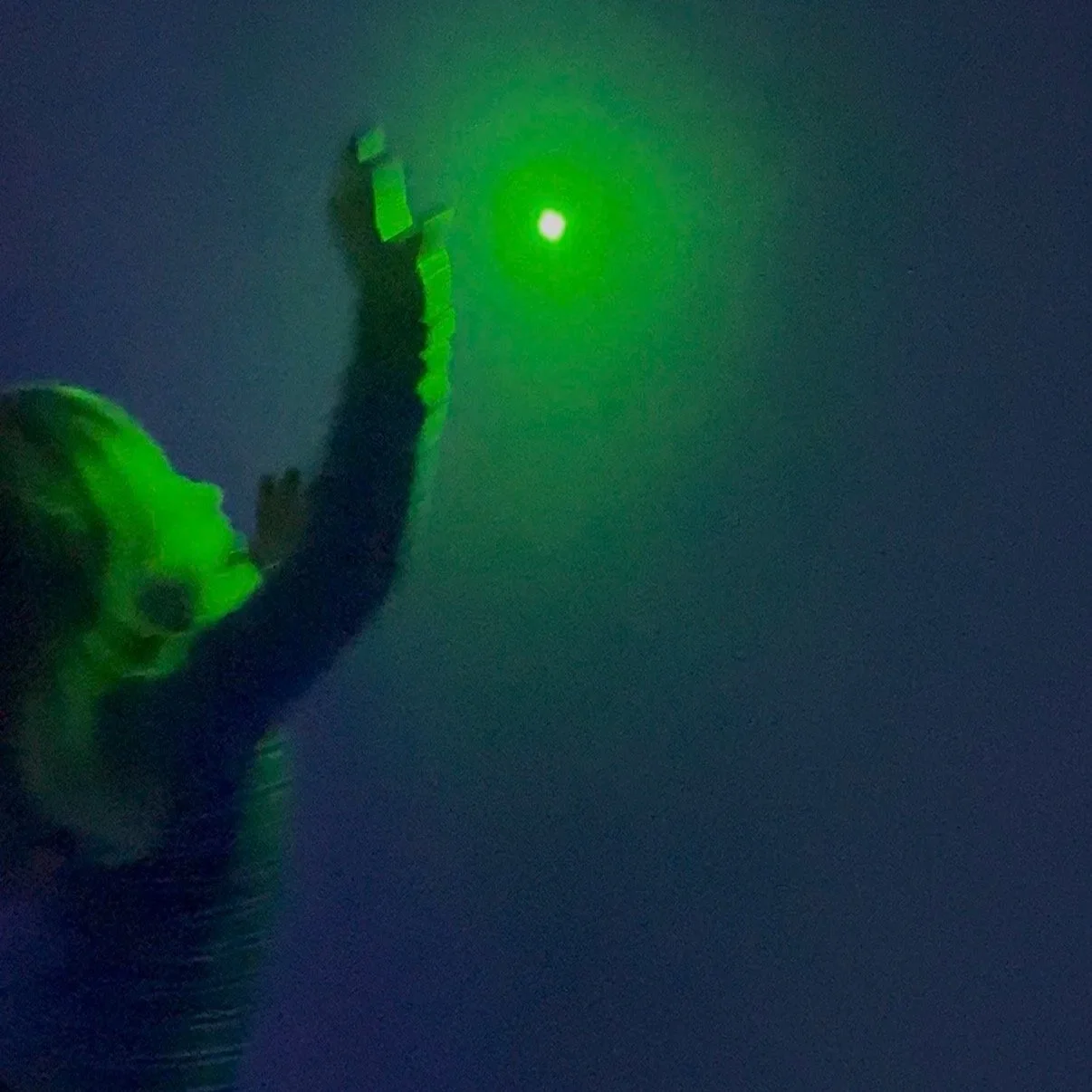
As I swept the light across the walls and floor, the children chased it, their bodies following the beam. They reached, ran, laughed, and pointed, tracking how the light slipped away and reappeared somewhere else. Light was no longer something they watched, it was something they followed.
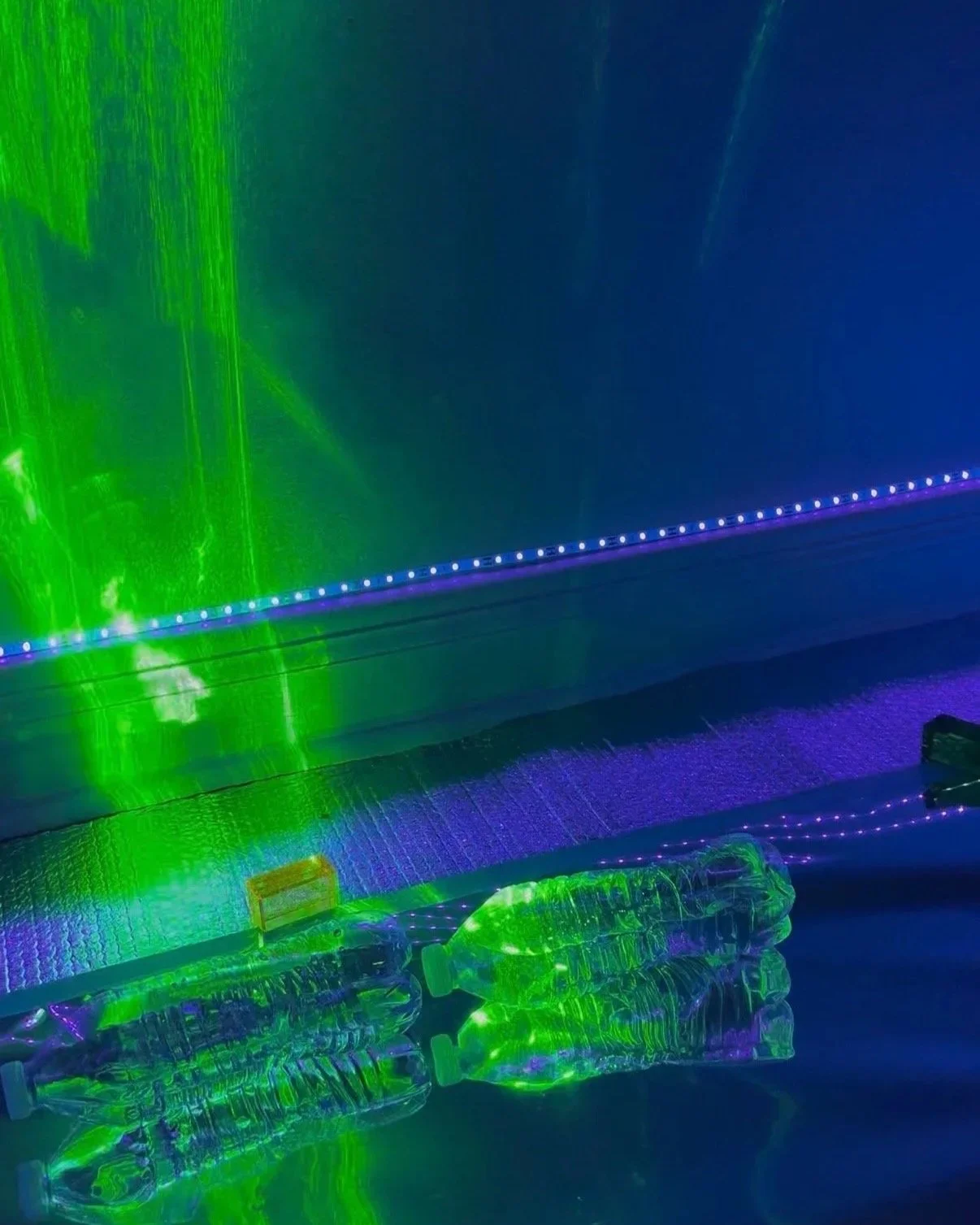
When we aimed the laser at the mylar paper, two strings of light appeared as the beam refracted. Each child took a turn holding the laser, pointing it toward fabric, walls, and the ceiling, watching how such a tiny light could travel so far.
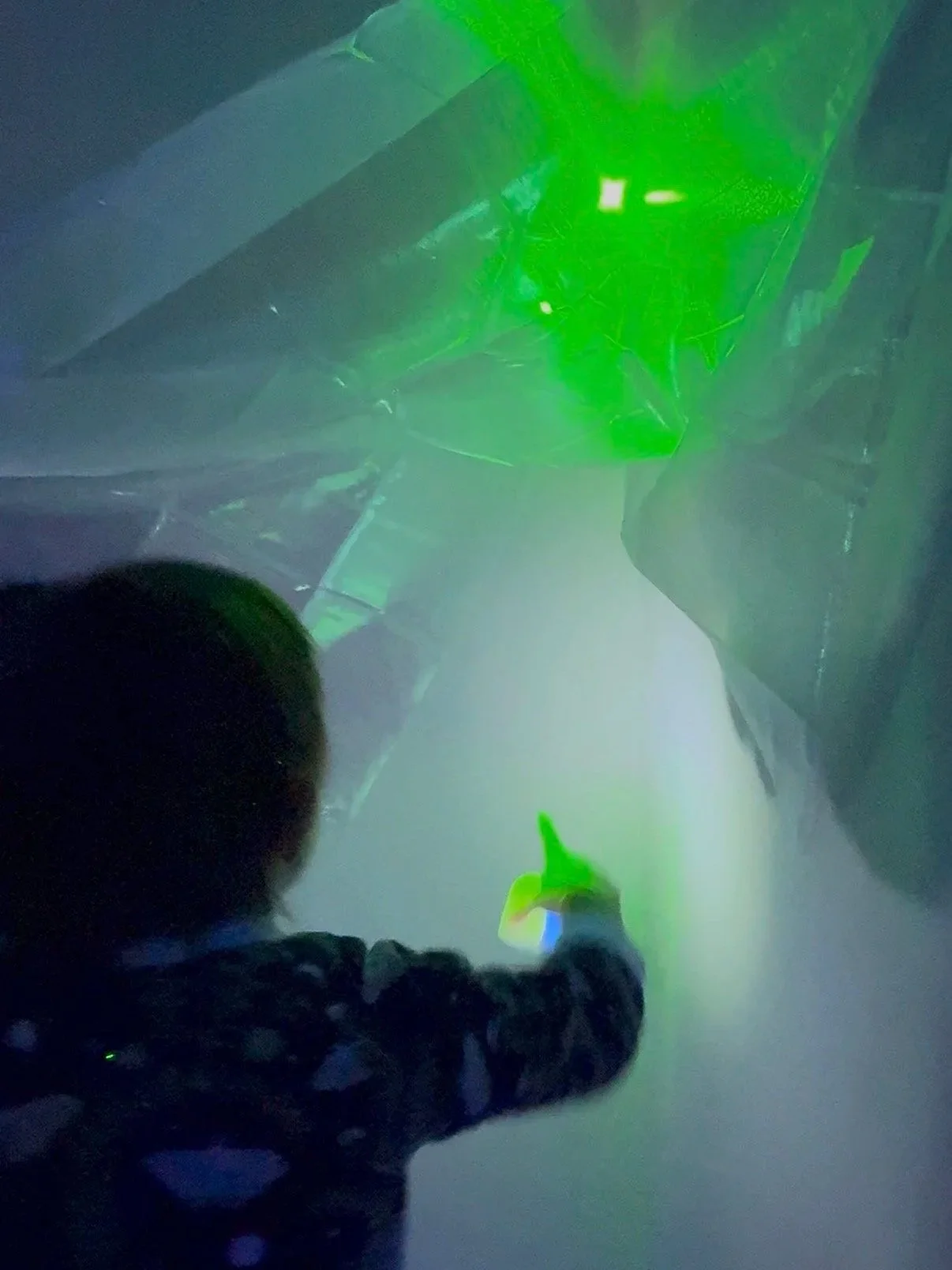
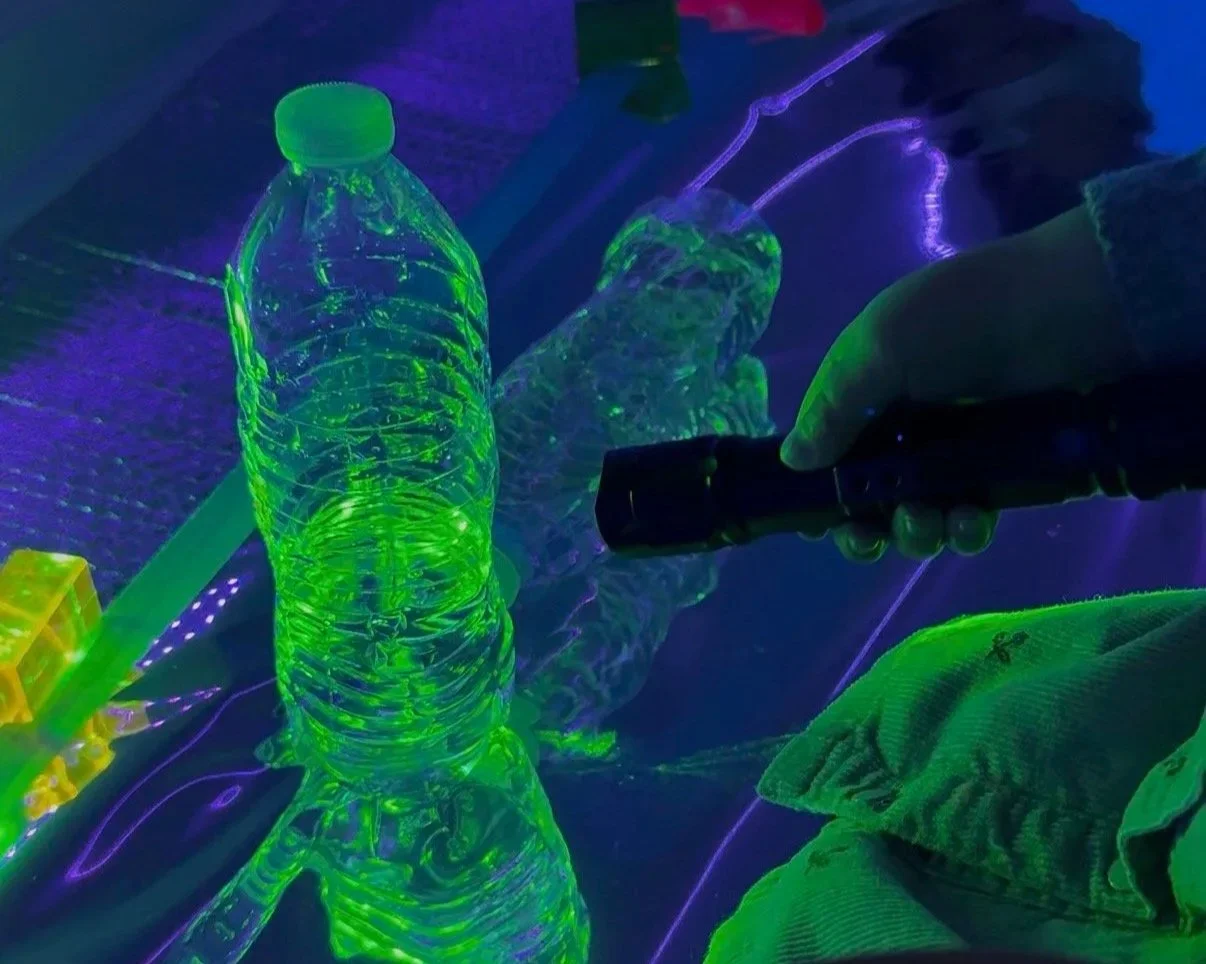
Then we aimed it at two water bottles.
The light bent, scattered, and danced. The children leaned in close, eyes wide, watching as the beam transformed again.
What the Children Were Learning
Through this exploration, the children were learning far more than how black light works.
They were learning that light is active, it moves, changes, and responds. By chasing the light, they discovered that learning can happen with the whole body, not just the hands or eyes.
They noticed that objects behave differently under black light, some glow, some reflect, some transform only when light passes through them. They explored how surfaces matter, how darkness makes light visible, and how materials can either absorb or reveal color.
They practiced problem-solving and persistence, revising ideas when structures collapsed and testing new tools to make their thinking work.
They explored cause and effect, transformation, and scale, watching small beams become powerful and ordinary materials become extraordinary.
Most of all, they learned that light is something they can wonder about, test, chase, and play with.
Today’s materials invited an investigation of light, movement, and refraction. As the laser passed through water and across the room, children observed how light changed, traveled, and responded to its environment, leading the exploration.
In this darkened room, glowing with neon and movement, learning did not sit still, and neither did the children.